Infiniti Q50 Transmission Valve Body Replacement Cost: What Drives the Price
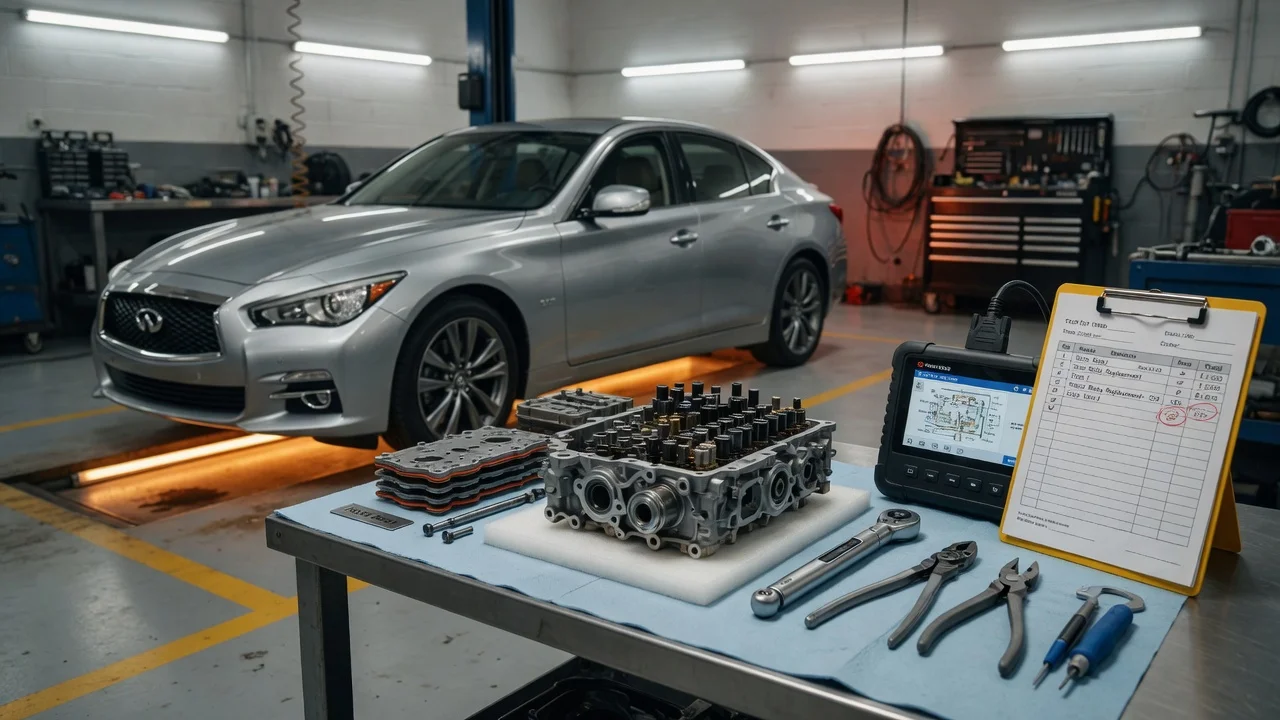
Replacing the valve body on an Infiniti Q50 is a specific transmission repair. The price you are quoted depends on what is actually being replaced, which transmission your car has, and how the shop confirmed the fault. This guide explains how to read an estimate for this job, what moves the total up or down, and how to compare offers fairly. It does not list current prices, because parts availability, labor rates and diagnostic findings vary by car and by shop.
What the estimate includes
The valve body is the hydraulic control assembly inside the automatic transmission. It routes pressurized fluid to the clutches and brakes that select each gear, using valves and electrically controlled solenoids. On a Q50, the job usually involves draining the fluid, removing the oil pan, disconnecting the internal electrical connector, unbolting the old valve body and installing the replacement. The shop then refills with fluid that meets the specification for that transmission and checks the level under the conditions the factory procedure requires. Depending on the transmission and the replacement part, the shop may also need to load calibration data or run a learning procedure so the control module adapts to the new hardware.
A complete estimate covers diagnosis, the valve body, the pan gasket and any filter or seals the procedure calls for, fluid, labor, programming or adaptation, and a road test. A partial quote may list only the part price or only the labor hours, which makes it look cheaper than a full one. Ask whether the figure is an out-the-door total or a starting number that leaves out diagnosis, fluid, programming, shop supplies and tax.
Before comparing numbers, confirm the valve body is really the problem. Harsh or delayed engagement, flare between gears, slipping and stored diagnostic codes can also come from low or degraded fluid, a wiring or connector fault, a sensor, outdated software, the control module or internal mechanical wear. A code pointing to a solenoid circuit identifies a circuit to test, not a part already proven bad. A credible estimate follows diagnosis that explains why the valve body, and not something else, is causing the shift behavior.
What changes the cost
The transmission type comes first. The Q50 has been built with several engines, including turbocharged and hybrid versions, in rear-wheel and all-wheel drive, and not every version shares the same automatic transmission or valve body. Model year and production changes can also affect part numbers. The shop should identify the exact transmission and confirm part fitment by VIN rather than by model name, because a wrong part can mean a second teardown and another fluid fill.
The part itself varies widely. Options may include a new part from the dealer, a new aftermarket unit, a remanufactured valve body that has been bench-tested, or a used part from a salvage vehicle. Some replacements arrive with solenoids installed, while others are sold without them, which means transferring the old solenoids or buying new ones. Whether the replacement needs programming, and whether the shop has the equipment to do it in-house, affects both the price and whether a second visit is needed.
Labor depends on the shop's hourly rate, the book time it uses and any extra access work required on your configuration. A dealer, an independent transmission specialist and a general repair shop will typically charge different rates and may use different parts sources. Additional findings can expand the job: fluid contaminated with clutch material, a leaking connector seal or damaged wiring all add work. If the inspection reveals internal wear, a valve body alone may not fix the car, and the estimate should say so.
Compare like-for-like options
The realistic repair options are replacing the valve body alone, repairing or replacing individual solenoids where the unit and shop support that, rebuilding the transmission, or installing a remanufactured or used transmission. Valve body work is narrower and less invasive than a full transmission replacement, but it is only the right choice when diagnosis shows the rest of the unit is healthy. If the pan holds heavy debris or the clutches are worn, a new valve body may not last, and a larger repair becomes the fairer comparison.
To compare offers, line them up on the same scope: the same type of part, the correct fluid specification and quantity, programming, a road test and comparable warranty. Check how long the warranty lasts, whether it has a mileage limit, whether it covers parts only or parts and labor, whether other shops can honor it, and what voids it. A low quote using a used valve body with a short parts-only warranty is not equivalent to a remanufactured unit backed by parts-and-labor coverage.
Your service history and coverage matter too. If the car is still within any applicable powertrain warranty or an extended service contract, or if a manufacturer campaign applies to your VIN, part or all of the repair may be covered. Ask a dealer to check the VIN for open campaigns and technical service information before paying out of pocket, and keep records of previous fluid services in case coverage is reviewed.
Read an itemized quote
A useful written quote shows the VIN and the identified transmission; the diagnostic fee and whether it is credited toward the repair; the codes retrieved and the tests performed; the part number, brand and type of valve body, and whether solenoids are included; the gasket, filter and seals; fluid type and quantity; labor hours and hourly rate; programming or adaptation charges; shop supplies, disposal fees and tax; warranty terms; and the expected completion time. If any of these lines is missing, ask for it before agreeing to the work.
Watch for open-ended wording such as fluid extra, programming if required or additional parts as needed. Ask the shop to call you for written approval before adding anything beyond the quoted scope. Also ask what happens if the original symptoms remain after the valve body is installed: whether the shop will rediagnose at no charge, and whether any of the cost would be credited toward a larger transmission repair.
Decide the next step
Start by writing down the symptoms: which gears are affected, whether the problem appears cold or warm, and whether it is constant or intermittent. Have the codes read and saved along with freeze-frame data, and have the fluid level and condition checked using the correct procedure for your transmission. Confirm the transmission and part fitment by VIN, check for warranty coverage or open campaigns, and then request at least two itemized written quotes covering the same scope, including programming and warranty terms.
Avoid shortcuts that tend to cost more later. Do not buy a valve body based on a code alone, and do not top up with fluid that does not meet the specified rating for your transmission. Be cautious with used parts whose fitment and condition cannot be verified, and do not count on a fluid change or additive to cure a confirmed hydraulic or electrical fault. A repair choice based on clear diagnosis and comparable quotes is the most reliable way to keep the total under control.