Identifying an Infiniti Q50 Valve Body for 2014–2015 Models
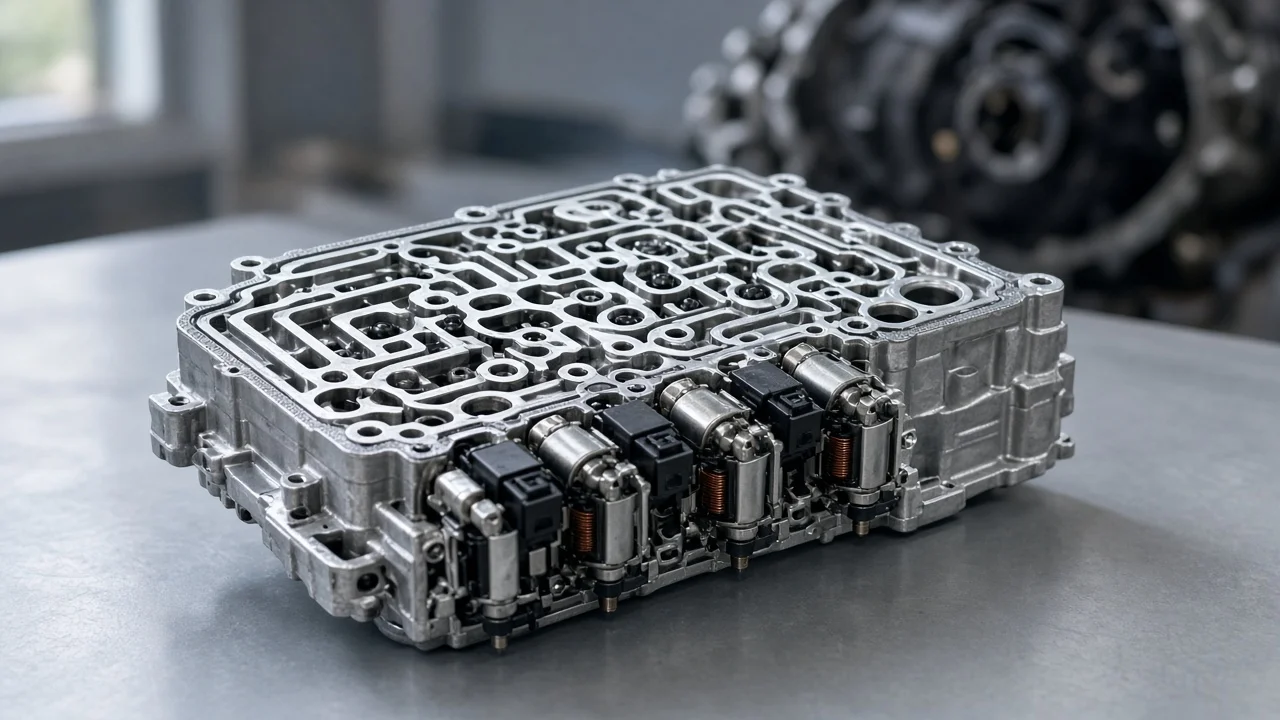
If your 2014 or 2015 Infiniti Q50 is shifting harshly, dropping into a fail-safe gear or storing transmission codes, the valve body is often named as a suspect. Before you buy one, you need to know exactly which unit your car uses and how the part is built into the transmission. A symptom alone also does not prove the valve body has failed. This guide covers identification and the decisions that come before a purchase, for these two model years only.
Which valve body fits a 2014–2015 Q50
In the US market, the 2014 and 2015 Q50 were sold with the 3.7-liter V6 and as the Q50 Hybrid. Gasoline versions use Nissan's seven-speed automatic, commonly identified as the RE7R01A, part of the Jatco JR710E family. The hybrid uses a seven-speed automatic adapted to work with its electric motor and additional clutches, so you should not assume its hydraulic control parts interchange with the gasoline car's. The correct valve body depends on three things: the exact transmission model code, whether the car is rear- or all-wheel drive, and the part number on the assembly you are replacing. Model year alone does not settle it.
On this transmission family, the valve body is usually supplied as a control valve assembly, with the transmission control module mounted on it inside the oil pan. That makes the replacement part partly a hydraulic component and partly an electronic module. After installation, it normally needs calibration data written or reset. A VIN-based lookup at a parts counter is the most reliable way to confirm fitment for a 2014 or 2015 Q50 transmission valve body.
How the valve body controls shifting
The valve body is a machined aluminum casting full of fluid passages, spool valves and electrically operated solenoids. Pressure from the transmission pump is routed through it to the clutches and brakes that produce each forward gear and reverse. The control module reads vehicle speed, throttle position, internal shaft speeds and fluid temperature. It then commands the solenoids to open, close or modulate pressure, so one clutch releases while the next applies.
Shift quality depends on precise pressure timing, so the system stores learned values and unit-specific characteristics. Several different faults can produce the same shift behavior: a worn valve bore, a sticking solenoid, contaminated fluid or incorrect learned data. Typical results are flare between gears, a hard bang on downshifts, delayed engagement into drive or reverse, or a fail-safe mode that holds a single gear. Because these causes overlap, diagnosis has to come before parts.
What changes the answer for your car
Several factors decide both fitment and whether the valve body is the real problem. The first split is gasoline versus hybrid powertrain. The second is drivetrain: rear-wheel-drive and all-wheel-drive Q50s use different transmission assemblies, and their part numbers may differ. Production changes and software updates can also change the part number or the calibration a replacement expects. Two cars from the same model year may therefore not share an identical unit.
Condition and service history change the diagnosis. Each of the following can cause bad shifts even when the valve body is healthy: original fluid at high mileage, a fluid service done with the wrong fluid specification, a low fluid level, or a cooling problem. Earlier software updates, a used transmission swap or a previous valve body replacement also matter, because mismatched data between the module and the hydraulic unit can mimic a mechanical fault. Worn internal clutches cause symptoms that a new valve body cannot fix.
Practical steps before buying a valve body
Start with information you can gather without opening anything. Note when the problem happens: cold or hot, on which gear change, under light or heavy throttle, or after a stop. Scan the transmission module, not just the engine module, and record every stored and pending diagnostic code along with its freeze-frame data. Generic P07xx codes point toward a circuit, ratio or pressure category, but they do not identify the failed part on their own. Review the service history for fluid changes, software updates and any recalls or service campaigns that apply to your VIN.
Next, verify the fluid. This transmission has no conventional owner dipstick. The level is checked through a plug at a specified fluid temperature, usually read with a scan tool. Use only the fluid Infiniti specifies for your unit, and check its condition. Dark, burnt-smelling fluid or heavy debris on the pan magnet points to wear beyond the valve body. If you decide to proceed, order by VIN, confirm the part number against the old assembly and plan for programming.
Repair options generally include a new control valve assembly from the dealer, a remanufactured unit, a used unit from a matching car, or a complete transmission if internal damage is found. A used assembly costs the least but carries the highest risk of mismatched data and unknown wear. Before the car is taken apart, ask the shop whether it can perform the required data procedure.
Limits of DIY diagnosis and when to get help
Without a dealer-level scan tool and factory service information for your exact VIN, you can narrow the problem down but rarely confirm it. A transmission specialist or Infiniti dealer adds real value in four areas: pressure testing, solenoid circuit checks, reading live data during shifts, and the learning or data procedure after installation. If a valve body is installed without the correct procedure, the car may shift harshly, show a warning light or fail to move at all.
The practical next step is to collect your VIN, the transmission label information, the stored codes and a short description of the shift behavior. Then have a qualified shop confirm the cause before you buy anything. That way, the purchase is tied to a verified fault rather than a symptom.