Infiniti Q50 Transmission Speed Sensor Identification
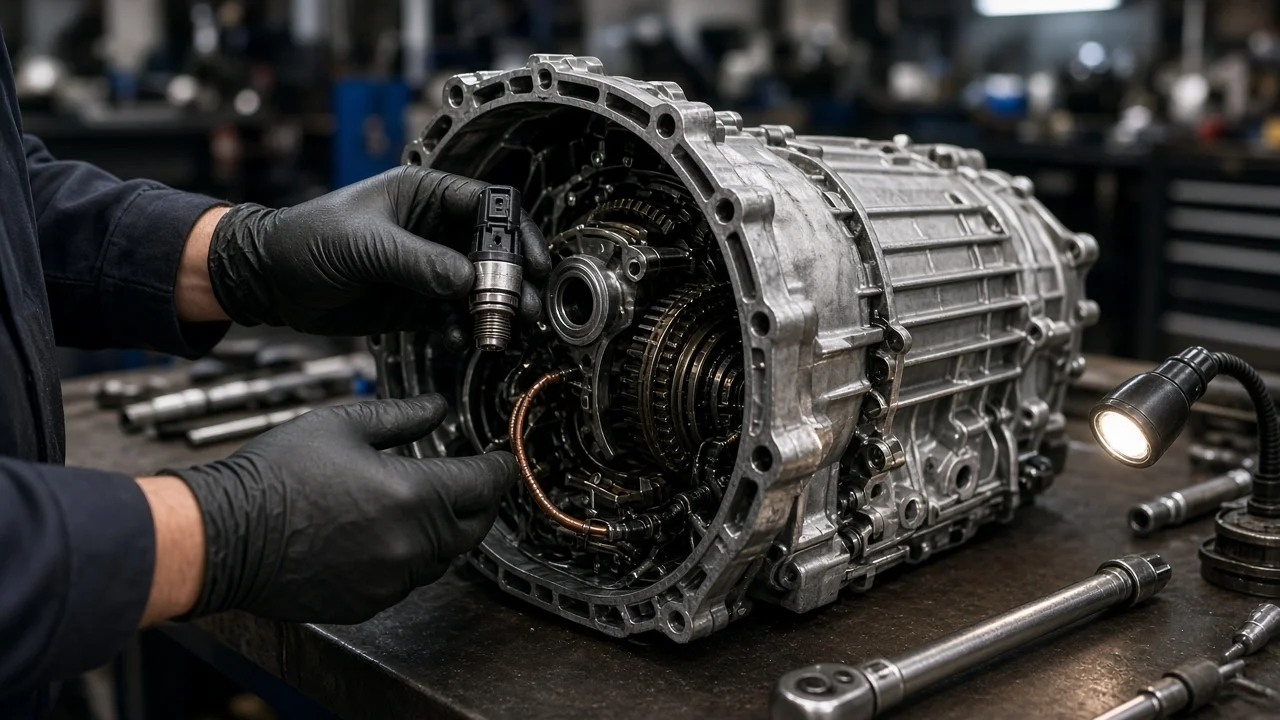
When an Infiniti Q50 starts shifting erratically or sets a speed sensor code, owners usually want to know which sensor is involved and where it is. The answer depends on the exact transmission and powertrain in the car, and on which signal the control module reports as faulty. This guide explains how to identify the right transmission speed sensor, what the related codes point to, and why a symptom alone does not prove that a part has failed.
The Short Answer
Most Infiniti Q50 models use an automatic transmission that relies on more than one speed signal. There is typically an input (turbine) speed sensor, which reports how fast the shaft entering the gearbox is turning, and an output speed sensor, which reports the speed of the shaft leaving it. The transmission control module compares these readings to decide when to shift and to confirm that a gear has actually engaged. So identifying the Q50's speed sensor starts with knowing which of these signals is in question.
The reliable way to find the correct part is to read the stored diagnostic codes, note which sensor or circuit each code names, and then match the part to your car by VIN rather than by model name alone. A Q50 that shifts strangely does not necessarily have a bad sensor. Wiring, connectors, fluid condition, software and internal transmission problems can all produce similar complaints.
How Transmission Speed Sensors Work
Speed sensors in modern automatic transmissions are usually magnetic or Hall-effect pickups. Each one sits next to a rotating toothed ring or a similar target. As the teeth pass the sensor tip, it produces a pulsing signal, and the pulses get faster as the shaft speeds up. The control module converts those pulses into a shaft speed in revolutions per minute.
By comparing input and output speeds, the module calculates the current gear ratio, detects clutch slip, times shifts and manages torque converter lockup. If a signal drops out, becomes erratic or doesn't match what the other sensors report, the module stores a code and may switch to a fail-safe strategy. This often means holding a fixed gear, which drivers notice as limp mode. Keep in mind that vehicle speed for the speedometer and other systems may come from the wheel speed sensors through the ABS rather than from the transmission. A speedometer problem therefore doesn't automatically point to a transmission sensor.
What Changes the Answer
The Q50 has been offered with several powertrains over its production run. These include V6 engines, a turbocharged four-cylinder in some years and a hybrid in early years, with rear-wheel and all-wheel drive versions. The transmission type, sensor design, sensor location and part numbers are not guaranteed to be the same across these combinations. A part listed generically for the Q50 may not fit your car, so confirm fitment against the VIN and the exact transmission.
Construction also matters. Depending on the unit, a speed sensor may be mounted on the outside of the transmission case, or it may be built into the internal valve body and control module assembly. When a sensor is integrated internally, it may not be sold as a separate part. Replacement can then involve draining fluid, removing the pan, installing an assembly and possibly programming or configuring the module. Externally mounted sensors are generally simpler to reach, but access still varies with drivetrain layout and model year.
Operating conditions affect what you observe. Intermittent signal faults often appear only when the transmission is hot, over rough roads, at particular speeds, or after recent work near the wiring harness. A code that sets once and does not return may behave very differently from a fault that is present on every drive.
Matching Diagnostic Codes to the Right Sensor
Generic powertrain codes give a starting point. P0715 refers to the input or turbine speed sensor circuit, and P0717 to no signal from that sensor. P0720 refers to the output speed sensor circuit, and P0722 to no signal from the output sensor. P0500 refers to vehicle speed sensor problems, which may involve a different signal source than the transmission. Manufacturer-specific codes and the exact wording shown by your scan tool can narrow this further.
A code describes a signal or circuit condition, not a confirmed failed component. A missing input speed signal could come from the sensor, its connector, a damaged wire, a module fault or a mechanical issue affecting the target it reads. Gear ratio or slip codes that appear alongside a speed sensor code can indicate an internal transmission problem rather than a sensor fault, so read all stored codes together rather than acting on one.
What the Owner Can Do
Start by recording the shift behavior you notice. Useful details include harsh or delayed shifts, flare between gears, being stuck in one gear, delayed engagement into drive or reverse, speedometer behavior and any warning lights. Note whether the problem appears cold, hot, or at certain speeds. Then scan the car with a tool that can read the transmission control module, not just generic engine codes, and save the freeze-frame data. If the tool shows live data, compare input and output speed readings while a helper drives. A reading that drops to zero or jumps erratically while the car is moving steadily is a useful clue.
Inspect what you can safely reach. Look for damaged harness sections, loose or corroded connectors, and fluid contamination around any externally mounted sensor. Many modern automatics have no conventional dipstick, and checking the level may require a specific temperature-based procedure. Do not guess at the level or overfill. If fluid must be drained for any repair, use exactly the fluid specification listed for your transmission.
Before buying parts, confirm fitment by VIN through a dealer parts department or a parts catalog that decodes the VIN. Compare the connector shape and mounting style with the original. Review the service history for recent transmission fluid service, valve body or module replacement, software updates or wiring repairs, because these can explain new codes. Repair options range from fixing a wire or connector, to replacing an external sensor, to replacing an internal assembly that may need programming.
Limitations and Next Step
General guidance cannot confirm the sensor location, part number or replacement procedure for your specific Q50. Those details depend on the model year, powertrain and transmission, and they need factory service information. Internal sensor or valve body replacement, module programming and fluid level procedures require proper tools and data, and mistakes can damage the transmission.
If the car is in limp mode, shifting harshly or slipping, limit driving until it has been diagnosed. Your practical next step is to write down the VIN and all stored codes with their freeze-frame data, along with your symptom notes. Take that information to a dealer or a transmission specialist who can confirm the transmission type, test the circuit and decide whether the sensor, the wiring or something deeper is at fault.