Infiniti Q50 Adjustable Control Arms: Fitment and Selection
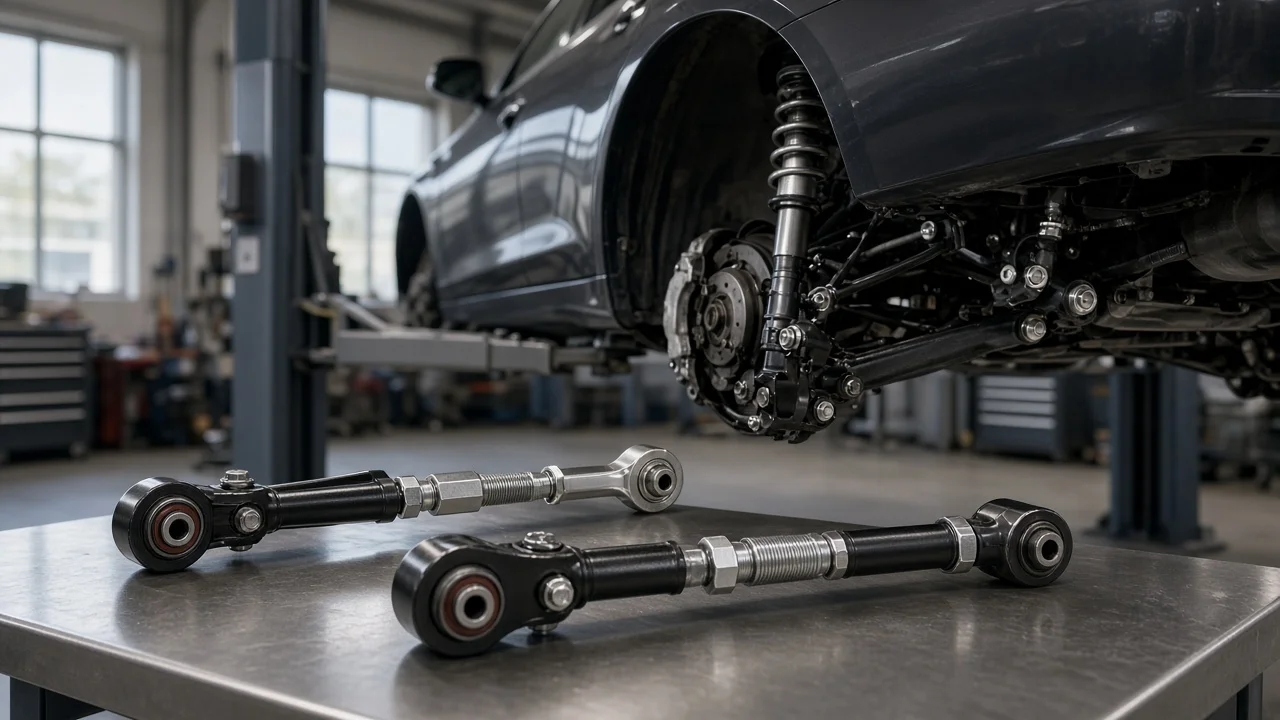
Adjustable control arms let a Q50 owner bring camber or toe back into a usable range after lowering the car. They can also fine-tune alignment for spirited driving and track days. They are not a universal upgrade, though. The right set depends on which arms your car needs, how far it sits from stock ride height, its drivetrain and model year, and how much noise and maintenance you will accept. This guide covers fitment, features and the trade-offs that matter before you buy.
Define the job the arms must do
Start with the problem, not the part. On a lowered Q50, the most common complaint is too much negative camber at the rear, which shows up as wear on the inner shoulder of the rear tires. Adjustable rear upper arms address that. If an alignment shop reports that it cannot bring rear toe into range, adjustable toe links are the relevant part. Front upper arms are usually meant to add or correct front camber, and sometimes caster, for owners who track the car or run a significant drop. A car at factory height with healthy bushings and an in-spec alignment typically gains little from adjustable arms on the street.
Be honest about how the car is used. A daily driver that sees potholes, winter roads and long highway trips needs quiet bushings and sealed joints. A weekend car used for autocross or track sessions can justify firmer pivots and more adjustment range. Budget matters too, because the arms are only part of the total cost of the job.
Check compatibility with your Q50
Check the product listing against your exact model year, trim and drivetrain. Rear-wheel-drive and all-wheel-drive Q50s can use different front suspension components, and some products are listed for only one layout. Many Q50 parts are marketed alongside related Nissan and Infiniti platforms. Treat those shared-fitment claims as something to confirm with the seller using your VIN, not as a safe assumption. Also check whether the kit includes both sides, which arm positions it covers, and whether the hardware is new or you must reuse the factory bolts.
Compare the adjustment range with your setup. A kit designed for a mild drop may run out of adjustment on a heavily lowered car. Extreme-range arms may add length and complexity you do not need. Ask the seller what change in ride height the range is designed to cover. Before ordering, inspect the mounting points on your car. Seized eccentric bolts, damaged subframe brackets or corroded hardware can turn a bolt-on job into a repair. If the arm's shape differs from the factory part, check clearance to the wheel and tire.
Features that affect the choice
The pivot type has the biggest effect on how the car feels. Rubber bushings are similar in character to factory parts and keep noise and vibration lowest. Polyurethane is firmer and flexes less, but it can squeak and transmit more road texture into the cabin. Spherical bearings remove almost all bushing flex and give the most precise response. The cost is more noise and harshness, plus regular inspection. On a street car exposed to water, grit and road salt, joints with protective boots or seals hold up better.
Look at how adjustment is made and locked. Threaded turnbuckle designs can be adjusted on the car if the threads are accessible. Designs that must be removed for every change make alignment slower and more expensive. Locking jam nuts should be easy to reach with a wrench, and the threads should be protected from corrosion. Material and finish matter mainly for durability. Forged or heavy-wall tubular steel and aluminum both work when properly engineered, and a durable coating resists rust. Labels like race-proven or OEM-plus say little on their own. More useful evidence includes a clear fitment list, a published adjustment range, replaceable joints or bushings, included hardware, installation instructions and a stated warranty.
Limitations and ownership costs
Installation requires proper vehicle support. Lift the car at the specified points and secure it on rated jack stands or a lift. Never work under a car held up only by a jack. Follow the factory service information for the procedure and the fastener specification for each bolt. Arms with rubber or polyurethane bushings are generally tightened with the suspension loaded at normal ride height, not hanging, so the bushings are not preloaded. Set each arm close to factory length before installation so the car can be driven to the alignment rack. Then have a shop set the final angles. Count that wheel alignment as part of the purchase price, and expect another one whenever you change the ride height, springs or wheels.
Ongoing maintenance is modest but real. At tire rotations or before track events, check for joint play, torn boots, loose jam nuts and corrosion on the threads. Depending on the design, spherical joints and polyurethane bushings may need cleaning, lubrication or eventual replacement. Adjustable arms also cannot fix everything. They will not cure worn shocks, sagging springs, damaged knuckles or loose wheel bearings. They also cannot make an extreme drop handle well if other suspension geometry is compromised. If a part shows play or damage, replace it rather than continuing to drive on it.
Build a practical shortlist
Narrow the field with a simple checklist instead of rankings. For each candidate, confirm the following: the exact Q50 years, drivetrain and arm positions listed; whether both sides and all hardware are included; the bushing or joint type and whether it can be serviced; the adjustment range for your ride height; whether adjustment can be made on the car; how the adjusters lock; corrosion protection; installation instructions; availability of replacement parts; and warranty terms.
Then weigh the results against how you drive. A street-driven Q50 with a modest drop is usually best served by rear camber arms with rubber or sealed bushings and enough range for its ride height. A car that sees regular track time may justify spherical joints and front arms as well, along with the extra inspections they require. Buy only the arms that solve a measured alignment problem on your car.