Infiniti G35 Adjustable Control Arms: Fitment and Selection
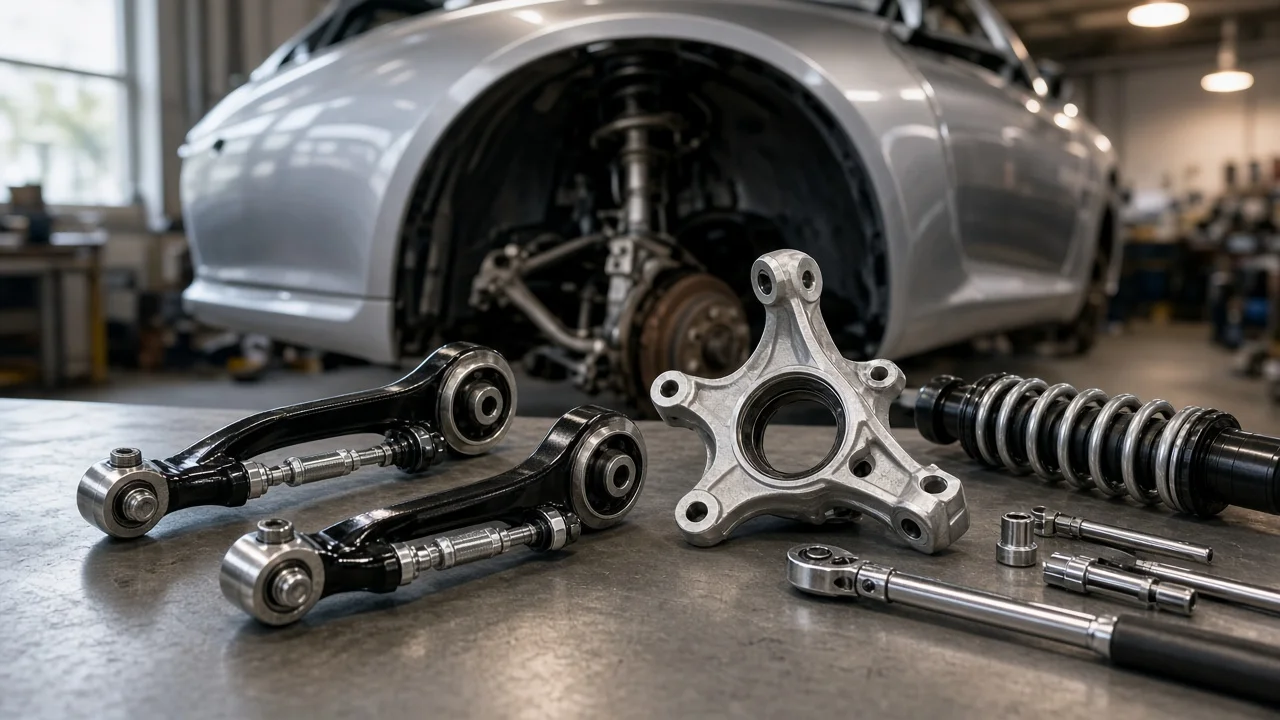
Adjustable control arms let a G35 owner bring alignment back within range after lowering the car, or fine-tune it for track use, but only if the parts match the chassis and the job. This guide covers how to define what you need, confirm fitment for your body style and drivetrain, weigh bushing and construction choices, and plan for the alignment and upkeep that follow installation.
Define the job the arms must do
Most owners shop for adjustable arms after lowering. Reduced ride height changes suspension geometry, often pushing rear camber more negative than the factory adjustment can correct. That can cause uneven wear on the inner tire edges. In that case the goal is restoring a usable alignment range, not changing how the car handles. Other owners want extra adjustment for autocross or track days, where they deliberately run settings the stock hardware cannot reach. In either case the target settings should not come from a parts listing. They come from the alignment specification for your car, or from a qualified alignment technician who knows how you drive.
Be honest about your constraints. A daily-driven car on rough roads benefits from quieter, more compliant bushings, while a dedicated track car may tolerate noise in exchange for precision. Budget for an alignment after installation. Also decide whether you have the tools and safe vehicle support to do the work at home, or whether a shop install makes more sense. If the car sits at stock ride height and aligns within specification, you may not need adjustable arms at all. Worn factory arms can simply be replaced with OE-style parts.
Check compatibility with your G35
Infiniti sold the G35 as a coupe and a sedan across two generations. Most cars are rear-wheel drive, and some sedans are the all-wheel-drive G35x. The 2007–2008 sedan uses a revised chassis, so arms made for earlier cars are not automatically interchangeable. Start by confirming your model year, body style and drivetrain. Then check that the listing names your exact combination rather than a broad G35 label. The early G35 shares its platform with the Nissan 350Z, so many arms are sold for both cars. That is useful, but only when the listing explicitly includes your version.
Next, identify which arm you actually need. Rear upper arms are typically sold to correct rear camber. Separate links address rear toe or traction geometry. Front parts such as tension rods or upper arms affect caster or camber. Compare the bushing or joint size, bolt diameter and mounting points with the factory part, and find out whether the kit reuses OE hardware or supplies its own. Check the stated adjustment range against your ride height. A kit designed for a mild drop may not reach the range a heavily lowered car needs, while an extreme-range arm adds unnecessary length for modest changes.
Features that affect the choice
The joint type drives most of the trade-offs. Rubber bushings isolate noise and vibration best but deflect under load. Polyurethane resists deflection with modest added harshness, and it can squeak without proper lubrication. Spherical bearings locate the arm most precisely, but they transmit more noise, may need protective boots, and are the most likely to develop joint play over time. For a street car, many owners choose rubber or polyurethane. Spherical joints suit cars where feedback matters more than comfort.
Construction and adjustment design come next. Look for a threaded adjuster with jam nuts or a clamp that locks positively. Check whether the arm can be adjusted on the car or must come off for every change, because on-car adjustment saves alignment time. Terms such as forged, billet or chromoly describe how the part is made, not how well it will hold up on your car, so treat them as a starting point only. Better evidence includes: • clear dimensional drawings; • a stated adjustment range; • a corrosion-resistant finish; • installation instructions that reference the fastener specification; • a warranty that covers joint wear; Labels like race-proven or pro-grade say little on their own.
Limitations and ownership costs
Adjustable arms make adjustment possible; they do not align the car. Plan for a professional wheel alignment immediately after installation, and again whenever you change ride height, springs or other suspension parts. The arms also cannot fix worn ball joints, tired bushings in other links, bent components, sagging springs or damaged tires. Inspect the rest of the suspension first and address those problems separately.
Installation requires secure vehicle support. Lift the car at the manufacturer's lift points, set it on rated jack stands on solid, level ground, and chock the wheels. Never work under a car held only by a jack. Take torque values from the factory service manual or the arm manufacturer's instructions; never guess them. Rubber-bushed joints usually need final tightening with the suspension loaded at normal ride height. Tightening them with the suspension hanging builds in preload that shortens bushing life and alters handling. Replace any hardware the service information says to replace, and use thread locker only where it is specified.
Ownership costs go beyond the purchase price. Expect alignment charges, a possible re-check after the suspension settles, and periodic inspection. During tire rotations or oil changes, check adjusters and jam nuts for movement, look for torn boots or cracked bushings, and feel for play. A clunk over bumps or a sudden change in tire wear calls for a prompt inspection. Worn spherical bearings or bushings will eventually need replacement.
Build a practical shortlist
Run each candidate through a short checklist before comparing prices: • Does the listing name your model year, body style and drivetrain? • Is it the specific arm your alignment problem requires? • Does the adjustment range match your ride height? • Is the joint type right for the noise and harshness you will accept? • Can it be adjusted on the car, and does it lock securely? • Does it come with clear instructions and hardware, or point you to the factory hardware and fastener specification?
Compare two or three options that pass every item instead of hunting for a single best product. Ask your alignment shop whether they have worked with a given brand on a G35 or 350Z. Hands-on feedback about adjuster access and noise is worth more than marketing copy. Buy matched left and right pairs, and keep receipts and documentation for warranty claims. Schedule the alignment for the same day as the installation so the car is not driven far on unknown settings.