In-Tank Fuel Pump Assembly: How the Module and Sending Unit Work Together
Direct Answer
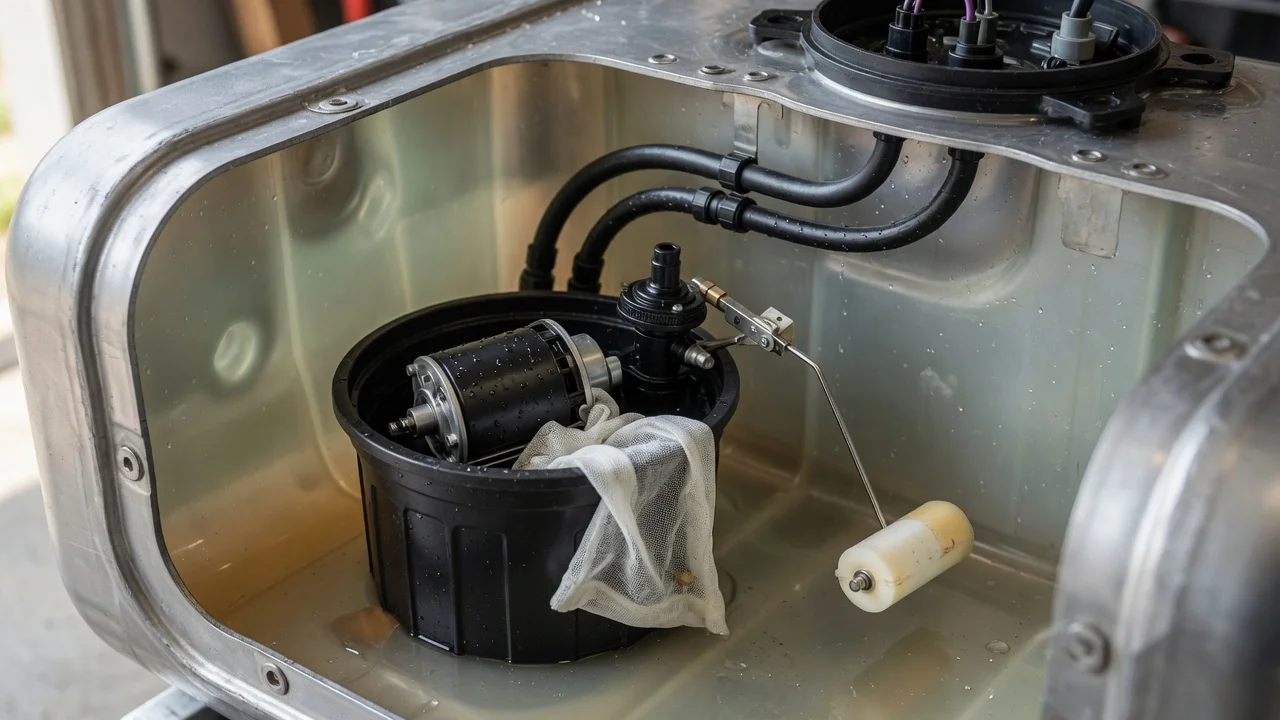
An in-tank fuel pump assembly is the complete module installed inside the fuel tank. It typically combines the electric fuel pump, a fuel level sending unit, a pickup strainer, and related plumbing or wiring into one serviceable part. The assembly is sometimes called a fuel pump module, fuel sender assembly, or fuel pump and sending unit. The exact configuration depends on the vehicle, but the core purpose is the same: pull fuel from the tank, deliver it under pressure to the engine, and report the remaining fuel level to the gauge.
What the Assembly Includes
Most modern in-tank modules have several components. The electric pump pressurizes fuel for port or direct injection systems. A strainer or pre-filter sits at the inlet to catch coarse debris before it reaches the pump. The fuel level sending unit uses a float attached to a variable resistor; as the float moves with fuel level, resistance changes and the gauge reading follows. Some assemblies also include a jet pump or transfer tube to move fuel from one side of a saddle-style tank to the other. The module body often includes ports, a pressure regulator in returnless systems, and electrical connectors.
Common Symptoms of a Failing Assembly
A failing pump or sending unit usually produces specific clues. The engine may crank longer than normal before starting, stumble under load, or lose power at higher rpm. A no-start with good spark and injector pulse often points to a dead pump. If only the sending unit is faulty, the fuel gauge may read incorrectly, stick at full or empty, or move erratically. A noisy pump can produce a whine from the tank area, especially when the tank is low and the pump is working harder to stay cool.
Pump Module Versus Separate Parts
Older vehicles often used a standalone pump with a separate sending unit mounted next to it. Many newer vehicles integrate both into one module. Buying a complete assembly can be more expensive than a bare pump, but it replaces worn wiring, a corroded sender card, and a brittle strainer at the same time. That is often worth the extra cost when the tank is already being dropped. For a vehicle with a known-good sending unit and isolated pump failure, a pump-only repair may be possible, but compatibility depends on whether the module is serviceable.
Compatibility and Replacement Notes
Fitment is not universal. The correct assembly depends on model year, engine, drivetrain, wheelbase, and sometimes emissions package or fuel tank material. A part listed for one trim may not fit another trim with the same engine but a different tank shape or fuel system. When ordering, confirm the part number against the VIN or the original assembly number. Pay attention to whether the new part includes the sending unit, strainer, seal, and lock ring. Some aftermarket assemblies arrive without the tank seal or retaining ring, and reusing a swollen or damaged O-ring can cause leaks or evaporation codes.
Diagnostic Order
Before replacing the assembly, check basics. Confirm the fuel pump relay, fuse, and inertia switch are functioning. A fuel pressure test at the rail or service port helps separate a weak pump from a clogged filter or failed pressure regulator. If the gauge is erratic but the engine runs normally, the problem may be isolated to the sending unit or its wiring at the module connector. If the engine performs well and the gauge is accurate, the issue may be elsewhere, such as an evap system fault or a restricted line.
Installation and Safety
Work on an in-tank assembly involves fuel vapor and, often, lowering the tank or removing the rear seat access panel. Relieve fuel system pressure before opening lines. Disconnect the battery. Have a fire extinguisher nearby. Some tanks must be nearly empty for safe lowering; a full tank is heavy and awkward. Mark or photograph the orientation of the old module before removal. The new float arm must move freely and not bind on the tank baffle. After installation, cycle the key a few times to prime the system and check for leaks at the lock ring and connections.
Returnless and Variable-Speed Systems
Fuel system design affects the module's behavior. Returnless systems control output pressure at or near the module, often using a regulator built into the assembly. Some vehicles use pulse-width modulation to vary pump speed and reduce unnecessary fuel heating. Using a pump with the wrong output curve in these systems can cause pressure problems even if the physical fit is correct. This is another reason to match the assembly to the fuel system type, not just the tank opening pattern.
When to Replace the Whole Assembly
A complete assembly is usually the practical choice when the vehicle has high mileage, the existing part has never been removed, or the sending unit shows wear such as dead spots or a worn resistor card. If the tank is already out for access, the incremental labor to replace associated parts is minimal. Reusing a heavily varnished module body or connector with corroded terminals can create a repeat failure. The assembly approach also covers the strainer, which should never be reused on a failed pump.
Information Gaps
This article does not provide model-specific part numbers, pressure specifications, or labor times. Those values vary by year, market, engine, and trim. A VIN-based lookup or factory service manual is required to identify the correct assembly and test values for a particular vehicle. Pricing and availability are also not included because they change by region and supplier.