Hyundai Turbo Boost Control Position Sensor: Identification by Engine
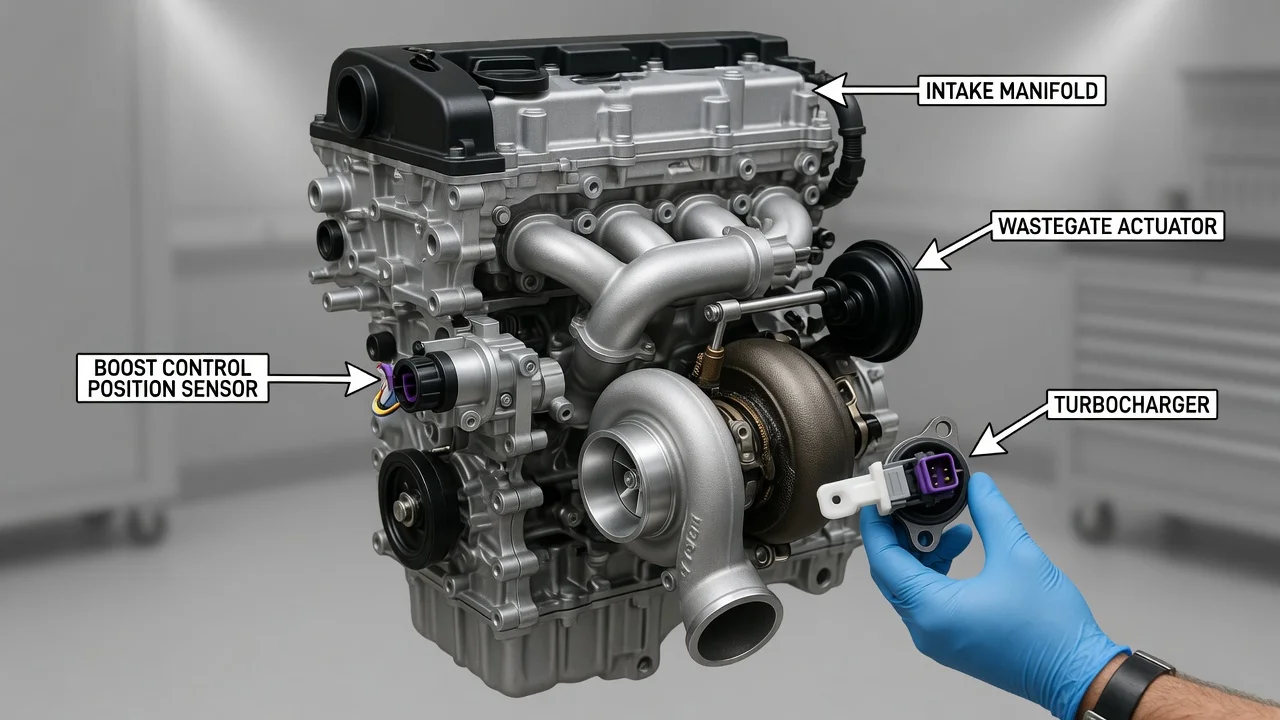
If a scan tool has reported a turbocharger boost control position sensor fault on your Hyundai, the first job is to work out what that sensor is on your particular engine. Hyundai has used more than one turbo control design across its turbocharged gasoline and diesel engines. The part that sends the position signal, and whether it can be replaced separately, depends on engine configuration and model year rather than on the nameplate alone.
The short answer
On many newer Hyundai T-GDI gasoline engines, the boost control position sensor is built into the electric wastegate actuator mounted on the turbocharger. It reports the actuator's position to the engine control module so the module can confirm that the wastegate has moved where it was commanded. On engines that use a pneumatic wastegate controlled by a solenoid valve, there may be no position sensor at all, and boost control faults point to the solenoid, its hoses or its wiring instead. On turbo diesels with a variable geometry turbocharger, the position signal comes from the vane actuator.
In practice, identification means confirming three things: which engine is fitted, which type of boost control that engine uses, and whether the sensor is serviced separately or only as part of the actuator assembly. On many designs it is integrated and not sold on its own, but the parts catalog for your VIN is the only reliable confirmation.
How the boost control position sensor works
A turbocharger needs a way to limit boost. The wastegate is a valve that lets some exhaust gas bypass the turbine wheel, which slows the turbo and caps intake pressure. With an electric wastegate actuator, a small motor moves the wastegate linkage, and a position sensor inside the actuator housing tells the engine control module exactly how far open the valve is. The module compares that reading with its target and with the boost pressure it measures in the intake.
When the reported position is missing, out of range or does not match what the module expects, it sets a diagnostic code and usually limits engine power to protect the engine. The sensor is only one part of that loop. A sticking wastegate linkage, a motor that cannot move freely, a damaged connector or a wiring fault can all produce a position error even when the sensing element itself is fine.
Why engine variant and model year change the answer
Hyundai's turbocharged gasoline engines in the US market include 1.6-liter units from the Gamma and later Smartstream families, the 2.0-liter Theta II turbo, and the Smartstream 2.5-liter turbo. Earlier designs generally relied on a vacuum- or pressure-operated wastegate controlled by a solenoid, while many later T-GDI engines moved to an electric wastegate actuator. Because the change happened at different times on different engines, two vehicles with the same model name but different model years or engine options can have completely different boost control hardware.
Diesel Hyundai engines sold in other markets typically use a variable geometry turbocharger, where the position signal describes the vane mechanism rather than a wastegate. Mid-cycle updates, regional calibrations and replacement turbocharger assemblies can also change the part number. That is why the engine code, not the trim or body style, should guide identification.
On many North American Hyundai VINs the eighth character identifies the engine, and the engine code is also cast or stamped on the block. Matching that code to manufacturer specifications tells you which boost control system you are dealing with before you buy anything.
Reading the codes and symptoms correctly
The generic diagnostic codes for this circuit are P2562 for a general circuit fault, P2563 for range or performance, P2564 for a low signal and P2565 for a high signal. Low and high codes usually point toward wiring, connector or sensor supply problems. A range or performance code means the signal exists but does not behave as expected, which can come from the sensor, a binding actuator or a mechanical wastegate problem. Codes such as P0045 relate to the boost control solenoid or actuator control circuit and suggest a different starting point.
Symptom reports should be kept separate from verified failures. Reduced power, a check engine light, hesitation under load or a limp mode condition are common descriptions, but they also match boost leaks, intake sensor faults and fuel delivery issues. Note the symptom conditions when the problem appears: cold or hot engine, light cruising or hard acceleration, after rain or a car wash. A fault confirmed by stored codes, freeze frame data and live actuator readings is a much stronger basis for a repair than a forum description from a different engine.
What you can do as an owner
Start by reading and recording all stored and pending codes rather than clearing them, since freeze frame data shows the speed, load and temperature when the fault set. Confirm your engine code from the VIN or the block, then look up the correct actuator or solenoid for that code. A visual inspection is worthwhile: check the actuator connector for corrosion, bent pins or a loose lock, look for wiring rubbed against hot exhaust parts, and on pneumatic systems check vacuum and pressure hoses for cracks or disconnection.
Review the service history for recent turbo, exhaust or intake work, because a disturbed connector or misrouted harness is a frequent cause of position faults after repairs. Also check whether a technical service bulletin, software update or warranty coverage applies to your vehicle, which a dealer can confirm by VIN. If the actuator is replaced, some systems need a learning or adaptation procedure with a capable scan tool before the new part reports positions correctly.
Limitations and when to get professional help
General descriptions cannot replace vehicle-specific service information. Connector pin assignments, expected voltage ranges, actuator travel values and calibration steps differ between engines and can change within a model year. Testing a position sensor properly usually requires a scan tool that displays commanded and actual wastegate position, plus a wiring diagram for your engine. Without those, it is easy to replace an expensive actuator when the real fault is a harness or a seized linkage.
If the vehicle enters reduced power repeatedly, the code returns immediately after clearing, or you notice overboost, unusual turbo noise or exhaust smells, have a qualified technician or dealer inspect it. Bring your recorded codes, freeze frame data, engine code and service history. That information shortens diagnosis and helps confirm whether the position sensor, the actuator or something else in the boost control system is actually at fault.