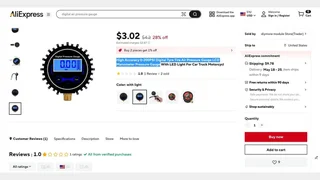
Hyundai Tucson Tire Pressure Gauge

A Hyundai Tucson tire pressure gauge is one of the simplest tools an owner can keep in the glovebox or console, because it turns a vague warning-light moment into a usable number. The right gauge also helps drivers match a reading to the pressure listed on the vehicle placard rather than guessing at a service station air pump. Shopping for this accessory usually comes down to measurement range, readability and accuracy, plus how well the gauge connects to the valve stem. Those practical details matter more than brand markings or appearance when a Tucson is parked at the curb with one tire that looks slightly low or a TPMS alert has just appeared.
The direct answer
The immediate answer is that a Hyundai Tucson does not require a special proprietary tire gauge; any quality automotive gauge that reads the expected passenger-tire range works, provided the driver compares the result with the pressure specification shown on the doorjamb placard. Tucson models may display different recommended pressures depending on load and tire size, so the gauge itself is only a reporting instrument. The useful condition is accuracy: a gauge that is off by several psi can encourage overinflation, which affects ride comfort and tread wear, or underinflation, which increases heat and rolling resistance.
This makes the purchase decision about selecting a tool that is easy to attach to the Schrader valve, produces a repeatable measurement in psi, and offers enough resolution for everyday checks. Digital gauges often remove the guesswork of reading a tiny sliding scale, while a dial gauge may feel more familiar in cold weather or low light. Because tire pressure changes with temperature, taking a measurement before the vehicle has been driven far gives a more useful cold-inflation comparison. A gauge with a short, snug chuck and a backlit or clearly marked display reduces the chance of air escaping during the connection.