Hyundai Santa Fe Check Engine Light: Causes and First Checks
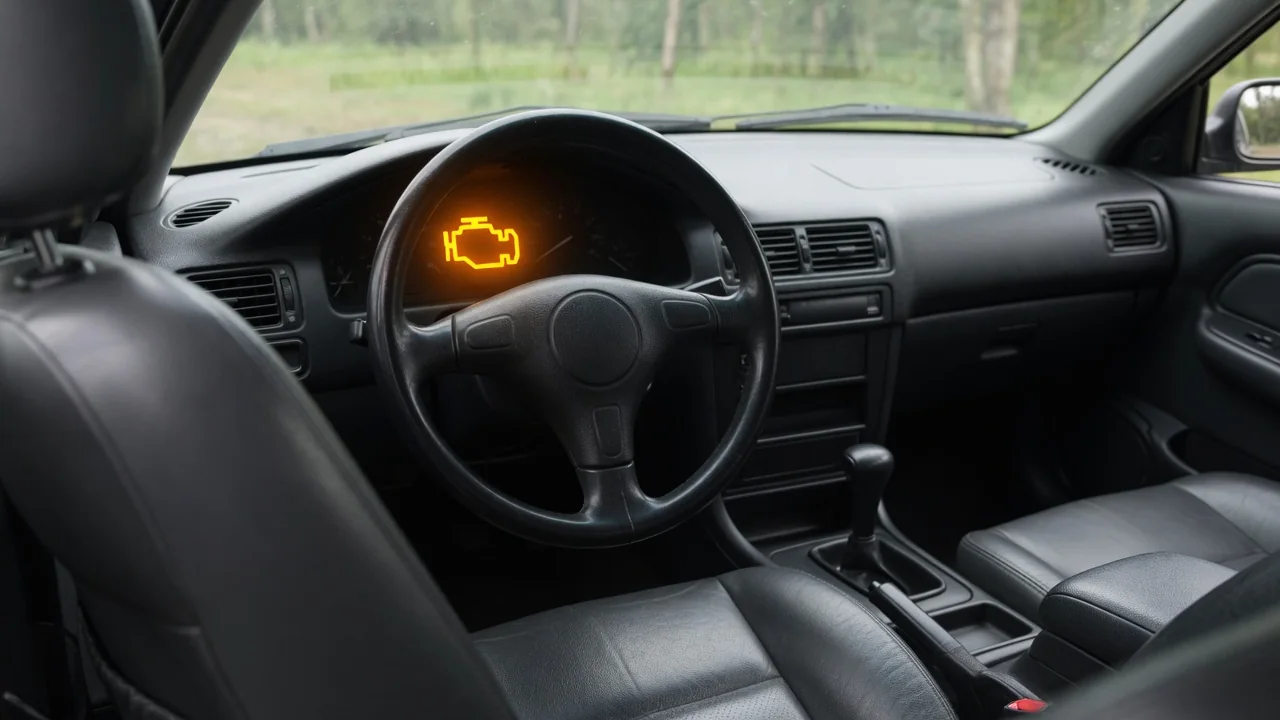
A check engine light on a Hyundai Santa Fe is the dashboard name for the malfunction indicator lamp. It means the engine control module has stored a condition that failed an emissions or powertrain monitor. The warning does not name a failed part. Confirm model year, engine, and drivetrain first, then use symptoms, OBD-II trouble codes, and freeze-frame data as starting points rather than a ranked list of Santa Fe failures.
What the Santa Fe Check Engine Light Can Tell You
The light reports that a monitored engine-management or emissions-related condition has been detected. On a Hyundai Santa Fe, that typically involves the powertrain control module watching combustion, mixture, catalyst efficiency, or the evaporative emissions system. The lamp itself is only a flag. It does not identify a failed sensor, converter, ignition coil, or fuel-cap seal, and a technician still has to match stored data to the actual vehicle before any part is condemned.
Santa Fe engines, transmissions, and hybrid or conventional layouts have changed across generations, so the same warning can implicate different monitors. Establish the exact model year, engine family, and whether the vehicle is gasoline, hybrid, or otherwise configured before discussing applicable systems. Fuel-trim behavior, misfire counters, and evaporative leak tests are not interchangeable across every Santa Fe. Any candidate cause is only a diagnostic starting point, not an unsupported ranking of what fails most often on this model.
When to Stop Driving and Arrange Assistance
A flashing check engine light can mean an active engine misfire that is dumping unburned fuel into the exhaust, which may overheat and damage the catalytic converter. If the Hyundai Santa Fe check engine light is flashing, pull over when it is safe, shut the engine down if conditions allow, and arrange assistance rather than continuing to drive while the misfire is still occurring. Roadside ignition or fuel-delivery tests are not appropriate while the lamp is pulsing.
Severe shaking, stalling, substantial reduced engine power, visible smoke, or a strong fuel smell are reasons to stop safely instead of continuing roadside troubleshooting. Those symptoms can accompany misfire, a fuel leak concern, or a drivability collapse that is unsafe in traffic. An overheating gauge or an oil-pressure warning needs immediate attention even when the check engine light is also on. A steady lamp with no noticeable change in how the Santa Fe runs still deserves prompt diagnosis and a look at the owner's manual; it does not come with a promised safe driving distance.
Safe First Checks Before a Service Visit
Before a service visit, write down whether the malfunction indicator lamp is steady or flashing and whether it appeared after refueling, a cold start, or recent maintenance. That timeline helps a technician compare freeze-frame data with what you observed. Note rough idle, hesitation, hard starting, or a change in fuel use only as they occur; do not try to recreate a misfire or stall on public roads. Park the vehicle and shut the engine off before inspecting anything under the hood or around the fuel filler.
If the Santa Fe has a removable fuel cap, confirm it is seated and tightened as the owner's manual describes, with the vehicle parked and the engine off. A loose or missing cap can disturb the evaporative emissions system enough to set a monitor, but securing the cap is only a first check, not a diagnosis. Tightening it may not turn the light off immediately, because the control module often needs completed drive cycles to retest the system. A dark lamp later still does not prove the cap was the original cause.
Possible Fault Areas Behind the Warning
When a Hyundai Santa Fe check engine light follows a fill-up, an evaporative emissions leak or a fuel-cap sealing issue is a reasonable starting point, yet timing alone proves nothing. The evaporative system is sealed and monitored for vapor leaks; a cap, hose, purge valve, or canister path can all disturb that monitor. The module may also store a code after a missed or incomplete test. Treat a post-refuel warning as a clue to inspect sealing and leak-test results, not as proof that the cap failed.
Ignition, fuel delivery, or air-metering problems can produce engine misfire, rough idle, or fuel-trim deviations that turn the lamp on. Spark, injector flow, unmetered air, and a restricted intake can all look similar from the driver's seat, so symptoms cannot isolate the part. Oxygen-sensor and catalyst-efficiency codes describe monitored conditions; they require testing of mixture, misfire history, and exhaust integrity before a sensor or converter is replaced. Wiring, connectors, and intake leaks remain possible, and which of those apply depends on the Santa Fe's engine and the stored codes.
Read Trouble Codes Without Jumping to a Parts Diagnosis
An OBD-II scan on a Hyundai Santa Fe can capture stored codes, pending codes, and freeze-frame data from the moment a monitor failed. Freeze-frame snapshots often include engine speed, load, coolant temperature, and short-term and long-term fuel trim, which show whether the fault happened at idle, cruise, or a cold start. Pending codes may appear before the malfunction indicator lamp stays on. Record everything before clearing any data, because that snapshot is often more useful than the code number alone.
Each OBD-II trouble code must be verified for the exact model year, engine, and manufacturer application before it is interpreted, especially for manufacturer-dependent codes that are not generic. A code identifies a monitored fault condition, such as a misfire on a cylinder bank or an evaporative leak threshold, and does not by itself prove the named component needs replacement. Disconnecting the battery or erasing codes can wipe freeze-frame evidence and reset readiness monitors, which delays confirmation that the repair actually worked.
What to Bring to a Professional Diagnosis
Give the shop the Santa Fe's model year, engine, and powertrain configuration, the exact codes and freeze-frame readings, whether the light was steady or flashing, and a timeline of symptoms, refueling, and recent service. That context lets a technician choose live-data review, circuit checks, or evaporative leak testing instead of guessing from the lamp. Reduced engine power, rough idle, or a change after a fill-up should be described in the order they happened. Mention a recent battery disconnect or scan-tool erase, because missing monitors change how the next test is planned.
Professional diagnosis may compare live fuel trim, misfire counters, oxygen-sensor response, and circuit integrity with the stored freeze-frame rather than replacing parts by code name. If the warning returns, stays illuminated, or arrives with new symptoms after an apparent simple fix, further testing is still needed. A dark check engine light is not proof of a successful repair; the original fault condition and the appropriate readiness monitors should be rechecked. Treat a cleared dashboard lamp as incomplete evidence until those monitors finish and the condition does not return.