Hyundai Kona Electric and Ioniq Range by Year and Battery
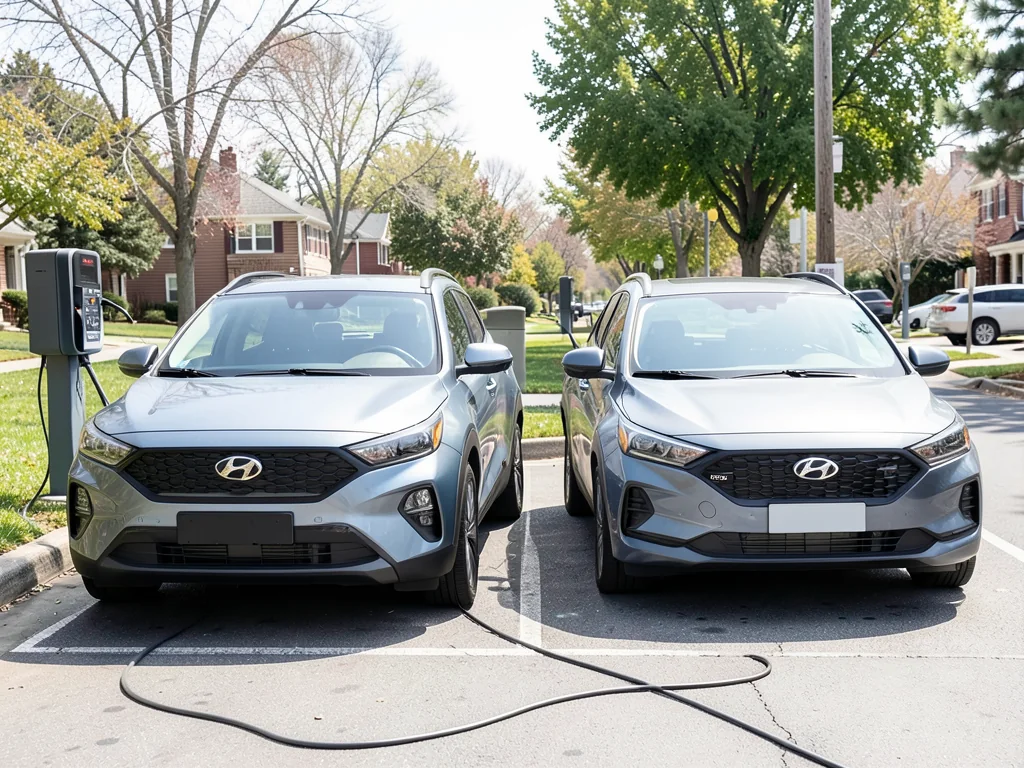
Hyundai’s Kona Electric and original Ioniq Electric both list EPA-rated range by model year and battery option, yet those miles are a lab comparison, not a guaranteed trip distance. Battery capacity, usable battery energy, state of charge, and energy consumption still decide how far a given charge will go in real driving.
Finding the Range Rating for Your Hyundai Electric Vehicle
Keep this discussion on the U.S. Kona Electric and the original Ioniq Electric hatchback, named by model year, battery option, and trim. An EPA-rated range is a standardized miles-per-charge comparison at a full charge, not a promise of the same distance every day. Highway speed, weather, cabin heat, payload, and tire condition change energy consumption, so the same Hyundai EV range rating can produce a shorter or longer trip.
A full-charge rating is also different from the dashboard estimate at the present state of charge. The cluster is forecasting remaining miles from recent use and remaining usable battery energy, not reprinting the window sticker. Confirm U.S.-market specification from the window label, owner’s manual, or build sheet. If a figure comes from a non-U.S. test cycle, name that cycle instead of treating it as an EPA number.
2020–2023 Kona Electric Range and the 64-kWh Battery
For 2020 through 2023, the U.S. Kona Electric used a 64 kWh pack commonly discussed as the 64 kWh range configuration. EPA-rated range for those years is 258 miles on a full charge when the vehicle matches that U.S. battery option. Treat 64 kWh as the pack’s nominal designation unless documentation states usable energy; do not convert sticker miles with an unverified usable figure. Other markets sometimes offered a smaller pack, so identify the car by year and battery before comparing hyundai kona ev range claims.
A used 2020, 2021, 2022, or 2023 hyundai kona ev range sticker does not prove present battery health. Age, charge habits, heat, and remaining capacity change achievable distance even when the original rating is unchanged. Match a shopper’s car to its year and 64 kWh option, then judge today’s driving distance from current estimates, recorded energy use, and professional testing rather than the original window label alone.
2024–2026 Kona Electric Range by Battery Option and Trim
The second-generation Kona Electric splits range by battery option and trim rather than one distance for every 2024, 2025, or 2026 kona ev range search. In U.S. EPA listings, 2024 and 2025 Standard Range configurations are rated 200 miles, while longer-range packs are listed at 261 miles, with some 2025 Long Range trims at 260 miles depending on wheels and equipment. Assign each figure only to that configuration. 2026 kona ev range is unavailable here as an independently verified EPA rating and should not inherit another year’s miles.
Identify the configuration from the window sticker, Monroney label, owner’s manual, or build documentation, including wheel size and equipment tied to the published rating. Hyundai EV range for these years is still an EPA comparison at a full charge, not a trip plan. Two 2025 hyundai kona ev range vehicles can post different miles if battery size and trim differ, so read the specific rating instead of a model-year average.
Original Ioniq Electric Range by Battery Version
The original Ioniq Electric hatchback is separate from Ioniq 5, Ioniq 6, hybrid, and plug-in hybrid models. U.S. versions used a smaller early pack, then a later pack of about 38 kWh. EPA-rated range is 124 miles for 2017–2019 cars and 170 miles for 2020–2022 cars on those U.S. batteries. Hyundai ioniq ev range and ioniq ev range questions should stay on this hatchback and its battery version, not later Ioniq nameplates.
Confirm the battery version from model year, window sticker, battery-capacity description, and EPA label rather than assuming every Ioniq Electric matches. Real-world distance still depends on that pack, driving conditions, and battery condition. A 170-mile rating does not restore a degraded pack, and a 124-mile car will not match later hyundai ev range figures simply because both are Ioniq-branded electrics.
Real-World Range and Planning a Usable Driving Distance
Documented kona ev real-world range varies with the test. Independent mixed-weather highway work on the 64 kWh Kona Electric has shown about 190 miles in cold conditions and well above 250 miles in milder mixed driving, while cabin heat and sustained highway speed cut miles. Original Ioniq Electric results likewise track pack size: the later U.S. battery can approach its 170-mile rating in gentle use and fall well short in cold highway work. Temperature, speed, route, and test notes belong with any cited figure; an undocumented band or a single percentage off EPA is not a universal result.
Highway speed, cabin heating, weather, elevation, payload, and tire condition all raise or lower energy consumption in kWh. Hypothetical example: if a driver has 50 kWh of usable battery energy and recent travel at 3.0 miles per kWh, projected distance is 150 miles; leaving a 20-mile arrival reserve plans a 130-mile usable trip. Several representative trips with recorded consumption support a personal estimate without running the pack empty. Kona range ev planning should use those notes plus current state of charge, not the sticker alone.
Kona Battery Capacity, Cooling, and Warning Signs
Hyundai kona ev battery size is stated in kWh. The 2020–2023 U.S. car’s 64 kWh designation is the pack name; usable battery energy is the portion the car will actually discharge, and state of charge is how much of that energy remains. Later Kona Electric options split Standard Range and Long Range packs, so hyundai kona ev battery questions should match the option already identified. Cooling and battery thermal management try to keep pack temperature in a working band so power, charging, and range stay consistent.
Hyundai kona ev battery cooling on the relevant U.S. years uses liquid thermal management for the high-voltage pack; exact plumbing differs by generation, so confirm the year rather than assuming one design. A changing range estimate alone cannot diagnose battery degradation or a cooling fault, because weather and driving style move the forecast. Persistent loss of distance, repeated thermal warnings, or charging limits need professional testing. For kona ev battery fire concerns, do not treat rumor as frequency: smoke, unusual heat, or hissing means move away and call emergency services. Limit checks to dashboard warnings and conditions during normal use; do not open battery housings, handle high-voltage parts, or inspect a smoking vehicle.
Battery Replacement Costs and When Testing Is Needed
Hyundai kona ev battery replacement and hyundai ev battery replacement cost questions must first name the part. The high-voltage traction battery is not the 12-volt battery that supports accessories and control electronics. Reduced displayed range does not by itself justify traction-battery replacement; testing should establish battery health and the actual fault, which may be a sensor, thermal system, 12-volt issue, or software limit rather than a failed pack.
A quote can include diagnosed repair scope, battery assembly, labor, fluids, programming, taxes, and a core charge. Precise current prices are not stated here because they vary by VIN, region, and parts source. High-voltage battery warranty coverage depends on the vehicle, ownership terms, mileage, time, and diagnosed condition; read the warranty booklet for that car. Ask for an itemized estimate tied to the vehicle identification number, with repair scope and replacement-part warranty written clearly, whether the concern is hyundai kona ev battery replacement cost or a 12-volt swap.