Hyundai Electronic Parking Brake Release Tools: Compatibility and Selection
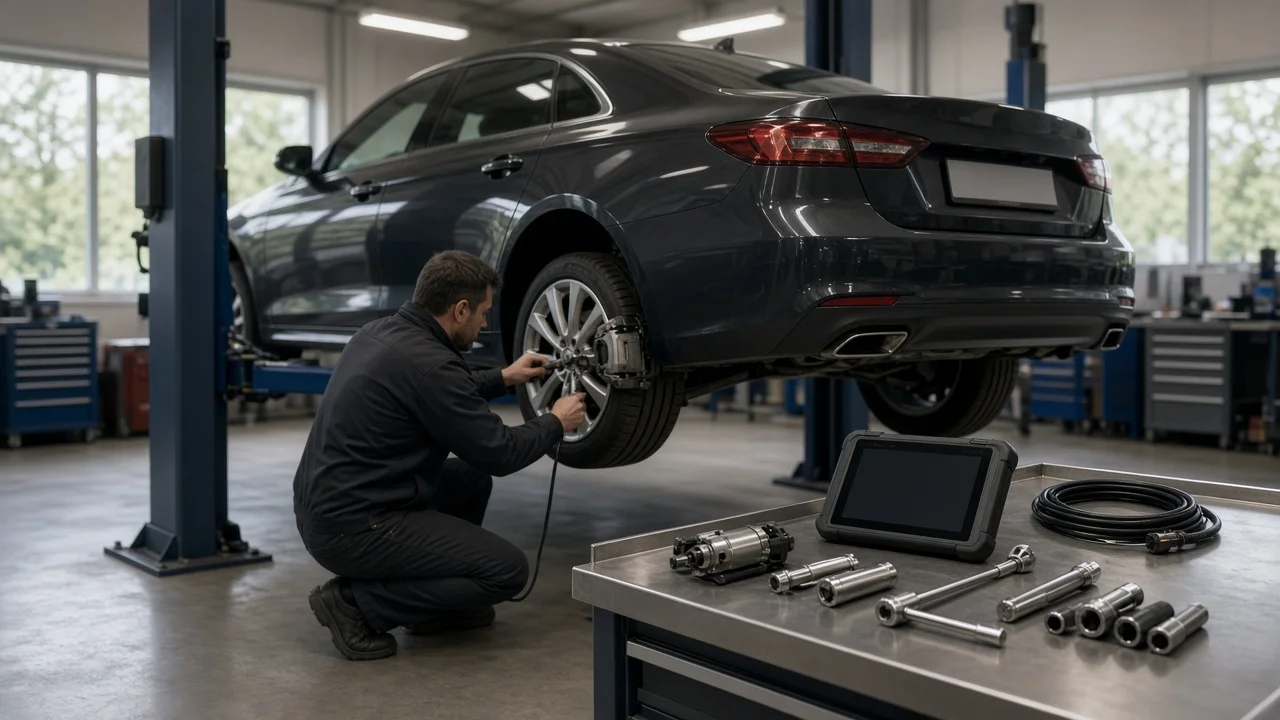
On many Hyundai models, the rear parking brake is applied by an electric actuator instead of a hand lever and cable. Before a rear brake job, that actuator usually has to be retracted with a compatible tool. The wrong tool can leave you with a locked caliper, warning lights or a damaged motor. This guide explains how to match a release tool to your vehicle and to the work you plan to do.
Define the job the product must do
Start with the task, not the tool. Most owners need an EPB release function for rear brake pads or brake rotors, because the caliper piston must move back to make room for new friction material. Other jobs include freeing a brake that stayed applied after a battery failure, running an adjustment after a caliper replacement, and putting the system into a service mode while brake fluid is changed. Each job calls for different functions, so write down what you intend to do before you compare products.
Then note the vehicle and your practical limits. Record the model, model year, engine and drivetrain. Decide whether the tool is for an occasional job at home or for a shop that handles several cars a week. A single pad change on one family car justifies a simpler purchase than a tool expected to cover several Hyundai and Kia vehicles. Some symptoms point to a safety fault: the parking brake will not release, the warning light stays on, or the car rolls when parked. In those cases, stop relying on the parking brake and have the system diagnosed rather than forcing a release.
Check compatibility
Vehicle fitment decides everything else. Depending on model and year, Hyundai has used more than one parking brake design. Some vehicles have motor units mounted on the rear calipers, and others have a central actuator that pulls cables. The service procedures differ, and a tool that supports one design does not necessarily support the other. Confirm the layout for your vehicle in the service information, or inspect the rear calipers, before you buy.
For scan-tool-based units, the coverage list matters more than a general claim of Hyundai support. Look for your model and model year listed with each EPB function you need, such as release or retract, apply, pad replacement mode and any calibration routine. Check three things: the tool connects through the standard OBD-II port, it reaches the brake or EPB module and not just the engine controller, and its menus use the system names your vehicle uses. Use the maker's published vehicle lookup or function list where one exists. A vague promise to work with most Asian vehicles is not enough evidence.
Direct-power tools plug into the caliper motor connector and bypass the module entirely. Their fitment depends on the connector shape, the motor voltage and polarity, and whether the vehicle tolerates the motor being moved without the module's involvement. Some vehicles may store fault codes or need a calibration afterward, so you may still need a capable scan tool.
Features that affect the choice
The main trade-off is between a diagnostic scan tool with EPB service functions and a simple direct-drive retractor. A scan tool works through the vehicle's own module, so the system keeps track of piston position. It can also read and clear brake-related trouble codes, and it usually guides you through the correct sequence. However, it costs more and depends on software coverage. A direct-drive retractor is inexpensive and needs no software. On the other hand, it gives no fault information, relies on you following the correct sequence, and can strain the actuator gear if you run it against its end stop.
Useful features include clear model-specific EPB menus, live data such as switch status or motor current, bidirectional control and built-in procedure instructions. If you also plan to flush brake fluid, ABS bleeding functions can be worth having. Treat labels like professional, all systems or OE-level as marketing until you can see the specific Hyundai functions listed. A defined software update period, a reachable support channel and a published function list are stronger evidence than the number of brands printed on the box.
Limitations and ownership costs
Setup is rarely just plug and go. Scan tools may require registration, an initial software download and periodic updates. Some brands charge a yearly fee once the included update period ends, and newer Hyundai models may not be added unless you renew. Include that cost in the price, and check whether the tool keeps working with its current software if you stop paying. Battery voltage also matters. A weak 12-volt battery can make the module abort an EPB procedure or log faults, so a healthy battery or a maintainer is part of the job.
No release tool replaces a mechanical inspection. It cannot measure pad or rotor thickness against wear limits, find a seized caliper slide pin or a leaking piston seal, or repair a failed motor or damaged wiring. Do not lever or wind back a motor-on-caliper piston while the actuator is still applied, because that can damage its internal spindle. After the work, use the tool to apply and release the brake as the service procedure directs. Then confirm the warning lights are off and test the parking brake on a slope. Do not return the car to normal use until the cycle completes correctly.
Build a practical shortlist
Compare every candidate against the same checklist rather than star ratings or feature counts. Narrow the list to two or three tools that clearly meet your fitment and function needs. Then choose based on cost of ownership and ease of use.
Ask the same questions of each option. Does the coverage list name your Hyundai model and model year? Does it include the exact EPB functions your job needs, including any calibration after pad or caliper replacement? Can it read and clear brake system codes, or does it only drive the motor? What are the update terms and renewal cost? Are the procedure instructions clear, and is support available if a session fails partway? Will it also cover the other vehicles you own? A tool that answers these with documented specifics is a safer buy than one with the longest feature list.
If no affordable option clearly covers your vehicle, consider paying a shop or dealer to handle the release and adjustment step. That can cost less than an unsuitable tool plus the repair it might cause.