Hyundai Elantra Check Engine Light: Causes and Next Steps
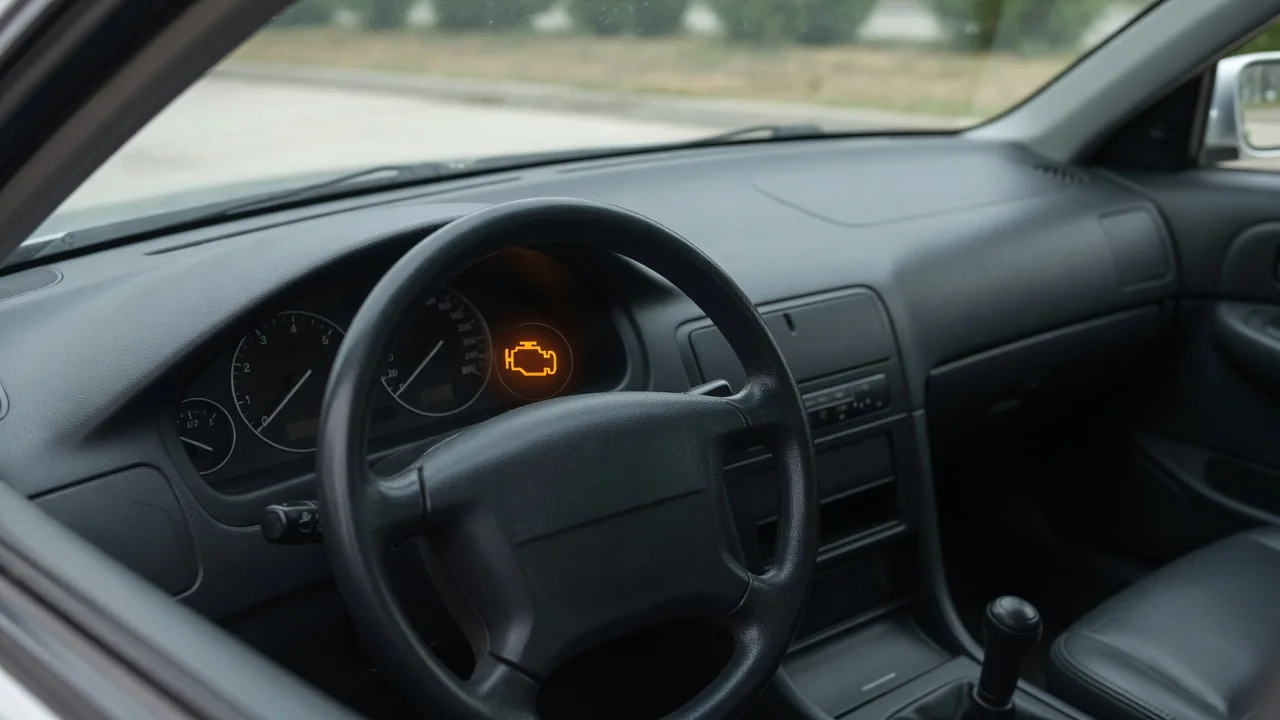
A check engine light on a Hyundai Elantra means the engine computer has logged an engine-management or emissions concern. The malfunction indicator lamp does not name the failed part. A 2017 Hyundai Elantra check engine light still needs stored codes, symptoms, and vehicle details before any useful next step. Whether the lamp is steady or flashing also shapes how urgently that warning should be treated.
What the Elantra Check Engine Light Signals
On a Hyundai Elantra, the engine-shaped check engine light is the malfunction indicator lamp. It reports that the powertrain control module has detected a monitored engine-management or emissions condition that is out of expected range. That signal does not identify a failed component. Ignition, fuel delivery, evaporative emissions, catalyst efficiency, or even a wiring fault can all illuminate the same lamp. Until stored OBD-II diagnostic codes and freeze-frame data are read, the warning remains a prompt to investigate rather than a diagnosis.
A brief glow at key-on is a bulb check and is not a stored fault. A check engine light on a Hyundai Elantra that stays illuminated after the engine starts is the actual warning. Narrowing the cause still requires the model year, engine family, body style, observed drivability, and the exact stored codes. Elantra generations differ in engines and emissions hardware, so no single fault should be assumed to dominate. The Hyundai Elantra check engine light is therefore a starting point for vehicle-specific interpretation, not a parts list.
Warning Signs That Require Stopping
A flashing check engine light can indicate an active engine misfire that may overheat a catalyst if driving continues. If the Hyundai Elantra warning begins to flash, reduce load, pull over when it is safe, and arrange assistance rather than continuing at speed. Severe shaking, a large drop in power, visible smoke, a strong fuel odor, or rising temperature are additional reasons to stop. Those symptoms can accompany misfire, fuel-delivery failure, or other conditions that risk further engine or exhaust damage.
Even a steady lamp with apparently normal operation still needs prompt diagnosis. Smooth running does not prove that continued driving is safe, because some emissions and fuel-trim faults remain hidden until they worsen. Treat the oil-pressure and coolant-temperature warnings as separate instruments. Those lamps report lubrication or thermal risk and demand their own immediate response, even if the malfunction indicator lamp is off. Do not wait for the engine symbol to flash before reacting to low oil pressure or overheating.
Fault Areas That Can Trigger the Light
Where a Hyundai Elantra is fitted with a removable fuel cap, a loose or poorly sealing fuel cap can allow vapor loss and set an evaporative emissions system fault. Other leaks in hoses, valves, or the charcoal canister path can produce the same type of emissions code. That light is evidence of a detected leak or purge concern, not proof that any one seal has failed. After a fill-up, confirming the cap is fully seated is a reasonable first observation, though the lamp may not reset immediately.
Ignition, fuel-delivery, and air-metering problems can produce misfires, a rough idle, hesitation, or abnormal fuel trim. Oxygen-sensor readings, exhaust leaks ahead of a sensor, and catalyst efficiency monitors can also store codes without proving that a sensor or converter must be replaced. Wiring damage, loose connectors, or corrosion can mimic a component fault by interrupting a circuit the module is watching. None of these candidates is confirmed by the lamp alone, and none should be treated as statistically typical across Elantra generations.
Details to Confirm on a 2017 Hyundai Elantra
When a check engine light appears on a 2017 Hyundai Elantra, confirm the engine, body style, market, and vehicle identification before applying any diagnostic chart or parts information. Engine, emissions hardware, and calibration can vary even within that year, so a procedure written for a different configuration can send testing the wrong way. Record the vehicle identification number and the engine designation from the under-hood label so later code lookup matches the vehicle that actually set the warning.
Note whether the check engine light on a 2017 Hyundai Elantra came on after refueling, recent maintenance, a cold start, or under acceleration. That timing is useful context, but it does not prove the cause, because several systems can set the same lamp under those conditions. The 2017 model year by itself cannot identify the fault. Exact OBD-II diagnostic codes and accompanying symptoms must guide the next step, and no single defect, recall, or repair should be assigned to every 2017 Elantra.
Safe Checks and Diagnostic Information to Save
With the Elantra safely parked and the engine off, check that the fuel cap is fully seated where a removable cap is fitted. A poor fuel cap seal can set an evaporative emissions fault, yet the check engine light may stay on through several drive cycles after the cap is tightened. Record whether the lamp is steady or flashing, how the engine idles and pulls, and any recent change in starting, fuel use, or exhaust smell. Those notes help a technician connect freeze-frame data to what you actually felt.
An OBD-II scan supplies stored and pending codes and, when available, freeze-frame data captured at the moment the fault matured. Preserve the exact alphanumeric codes rather than a generic description, because manufacturer-dependent codes require vehicle-specific confirmation before they are interpreted. A code is evidence of a monitored condition, not proof that a part has failed. Do not clear codes or disconnect the battery before diagnosis; that erases pending information and freeze-frame snapshots that explain why the Hyundai Elantra check engine light came on.
How Professional Testing Confirms the Repair
A stored code identifies a monitored condition or circuit, not the part to replace. A catalyst efficiency code, for example, can follow an exhaust leak, an ignition misfire, or a genuine converter problem, so swapping the converter on that code alone is not a diagnosis. A technician may review live data and fuel trim, inspect misfire counters, perform circuit checks, or run evaporative-system leak testing against the recorded fault. Those steps separate a failed component from a wiring issue, a seal problem, or a condition that has already come and gone.
Persistent or recurring warnings, drivability symptoms, or a cause that remains unclear after safe observations belong in professional diagnosis rather than repeated parts swapping. After a repair, verification should confirm that the engine runs normally and that the relevant OBD-II monitors have completed successfully, not merely that the malfunction indicator lamp has gone out. An extinguished light can return on the next drive cycle if the underlying condition remains. Matching the original freeze-frame conditions during a test drive is a more reliable check that the Hyundai Elantra warning has actually been resolved.