Hyundai Check Engine Light: Causes, Sonata and Tucson Diagnosis
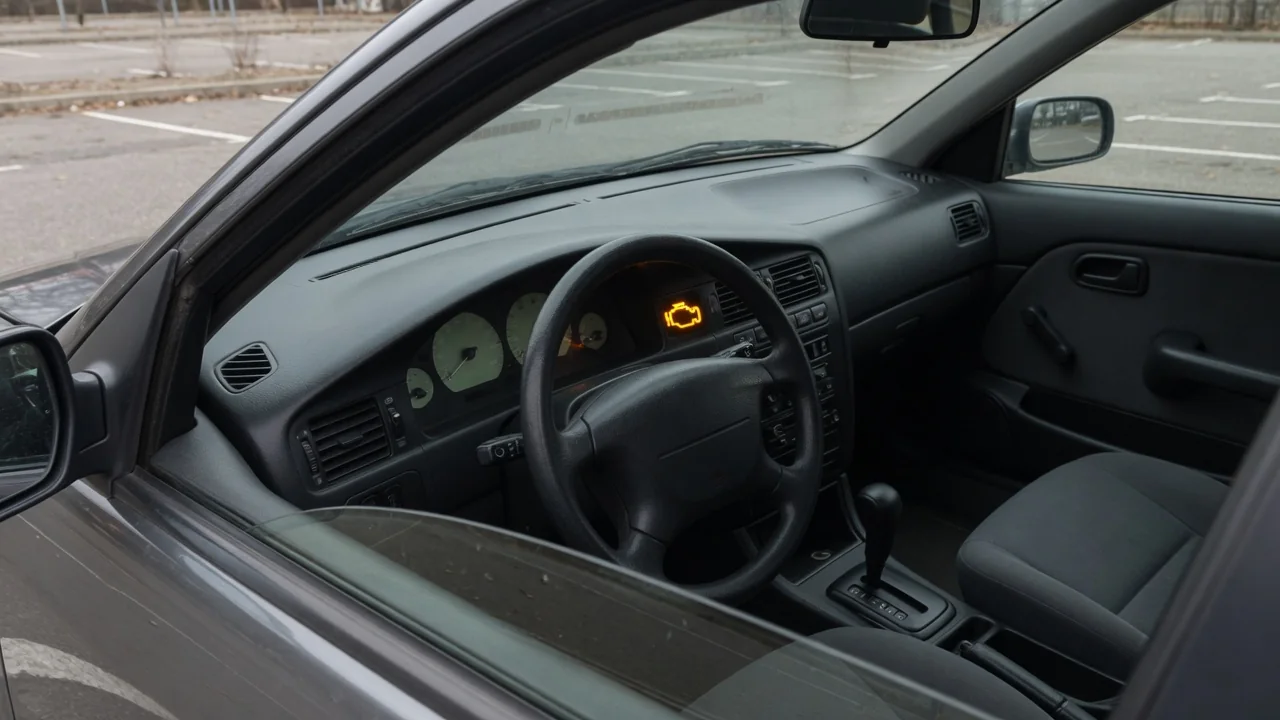
When a check engine light comes on a Hyundai, the malfunction indicator lamp is reporting a detected engine-management or emissions condition, not naming a failed part. The same warning can appear in a Hyundai Sonata or a Hyundai Tucson, and the next step depends on whether the lamp is steady or flashing, how the engine feels, and what OBD-II information is stored. Model year, powertrain, and symptoms matter before any part is replaced.
What Your Hyundai’s Check Engine Light Signals
A Hyundai check engine light, also called the malfunction indicator lamp, means the engine control module has stored a condition related to combustion, fuel delivery, air metering, or emissions control. It does not prove that a sensor, ignition coil, catalytic converter, or other part has failed. Drivers should not confuse this symbol with oil-pressure, coolant-temperature, or scheduled-maintenance reminders. Those lamps describe different systems and different urgency. The owner's manual for the exact vehicle shows how each icon looks and when it should be treated as an immediate stop.
A check engine light on Hyundai vehicles can share one lamp across many causes, so year, engine, and gasoline, hybrid, or plug-in hybrid configuration are needed to interpret it. A Hyundai Sonata check engine light and a check engine light on a Hyundai Tucson may look identical while pointing to different fuel-trim, misfire, or evaporative-emissions paths. Note whether the engine has a rough idle, reduced power, or no drivability change, then have stored OBD-II trouble codes and freeze-frame data read. Those details narrow the system; they still do not confirm a failed component.
When to Stop Driving and Arrange Assistance
A flashing Hyundai check engine light can indicate an active engine misfire, which may overheat a catalytic converter if driving continues. If the lamp keeps flashing or the engine runs roughly, pull over when it is safe and arrange assistance rather than finishing the trip. Severe shaking, substantial reduced power, visible smoke, a strong fuel odor, overheating, or an oil-pressure warning are reasons to stop and shut the engine down. Those signs describe risk to the vehicle and occupants, not a specific failed part.
A steady Hyundai check engine light without obvious symptoms still needs timely diagnosis. The absence of a rough idle or reduced power does not establish that continued driving is safe, because some evaporative-emissions or catalyst-monitoring conditions stay quiet while others can worsen. Use the owner's manual and the vehicle's actual behavior to decide next steps; no claimed mileage is a guaranteed safe driving distance. If the check engine light in a Hyundai Sonata or Tucson comes with new noises or odors, treat that combination as more urgent than the lamp alone.
Possible Causes and Safe Observations
Plausible reasons for a check engine light Hyundai warning include engine misfire, fuel or air metering problems, evaporative emissions system leaks, sensor-circuit faults, and catalyst monitoring. None of those categories can be ranked by how often they appear without vehicle-specific data. After a fill-up, note whether the warning followed refueling. If the vehicle has a fuel cap, inspect its seating with the engine off and follow the owner's manual for closure; a loose cap can disturb evaporative-system monitoring, but a lamp after fueling is still only a clue, not proof of a leak or a failed part.
Record whether the engine shows rough idle, difficult starting, hesitation, unusual odors, or reduced power, and whether those signs appear at startup or after the engine warms. Do not try to recreate unsafe conditions such as high-speed misfire, overheating, or fuel smell just to gather more information. Fuel-trim readings and related OBD-II trouble codes help a technician connect those notes to a system, yet observations cannot confirm a defective oxygen sensor, ignition component, or catalytic converter. A check engine light on Hyundai Sonata or Tucson models still requires testing that separates wiring, leaks, and mechanical faults from a failed part.
Hyundai Sonata: Details That Guide Diagnosis
A check engine light Hyundai Sonata diagnosis starts with the Sonata's model year, engine, and gasoline or hybrid configuration. Those facts change which sensors, evaporative emissions paths, and catalyst-monitoring strategies the control module uses. Record whether the check engine light on a Hyundai Sonata appeared after refueling, during a cold start, at idle, or under normal acceleration, and list any accompanying rough idle, hesitation, or reduced power. Timing and load context help a scan of freeze-frame data make sense. Without that configuration information, a generic explanation of the Hyundai Sonata check engine light can point to the wrong system.
For a Sonata Hybrid, note any separate hybrid-system warning and consult the matching owner's manual. A check engine light in a Hyundai Sonata does not, by itself, mean a high-voltage fault, and it should not be treated as permission to inspect hybrid components. Gasoline Sonatas likewise need stored and pending OBD-II trouble codes read before anyone attributes the lamp to a particular ignition coil, fuel injector, or catalytic converter. Manufacturer-dependent codes require confirmation for that exact year and powertrain. Until supporting codes and tests exist, the Hyundai check engine light remains a system flag, not a Sonata-specific known issue.
Hyundai Tucson: Identify the Powertrain and Warning Pattern
A check engine light Hyundai Tucson evaluation begins with the Tucson's model year and exact powertrain, including gasoline, hybrid, or plug-in hybrid where that applies. Those details determine which engine-management and emissions monitors can set the malfunction indicator lamp. Document whether the check engine light on a Hyundai Tucson is steady or flashing and whether it accompanies rough running, starting trouble, or reduced power. A flashing pattern with misfire-like shake is a different driving decision than a steady lamp with no drivability change. Powertrain identification still does not name the failed part.
For electrified Tucson versions, record any separate powertrain or hybrid messages and leave high-voltage inspection to qualified technicians. The Hyundai Tucson check engine light can share the dash with those messages without proving a battery or inverter fault. Tucson model identification alone cannot establish the cause; any model-specific discussion must rest on the verified configuration and on diagnostic findings such as OBD-II trouble codes, freeze-frame data, and fuel-trim behavior. A technician still has to distinguish evaporative emissions leaks, sensor circuits, and mechanical conditions from a component that actually needs replacement.
How Code Reading Leads to a Confirmed Repair
Stored and pending OBD-II trouble codes, plus freeze-frame data captured when the condition set, show which monitor ran and under what engine speed, load, and temperature. Preserve that information before clearing anything, because a check engine light on Hyundai vehicles often returns only after the same monitor completes again. Manufacturer-dependent codes need their meaning verified for the exact Hyundai model year and powertrain; a definition copied from another brand or year can mislead. A code identifies a detected condition or an affected system. It is evidence to interpret, not proof a part has failed.
Professional testing may be needed to separate wiring faults, evaporative leaks, mechanical problems, and true component failures, especially when fuel trim or misfire counters look abnormal. Bring symptom notes, recent repair history, and scan results to the shop, then have the repair verified with appropriate follow-up checks rather than assuming the lamp will stay off. Clearing codes or disconnecting the battery does not repair the cause. It can erase freeze-frame evidence and reset emissions readiness monitors, which may delay both diagnosis and an emissions inspection. Confirmed repair comes from matching the Hyundai check engine light to a tested root cause.