Hyundai and Kia Timing Chains: Engine Fitment, Life, and Replacement
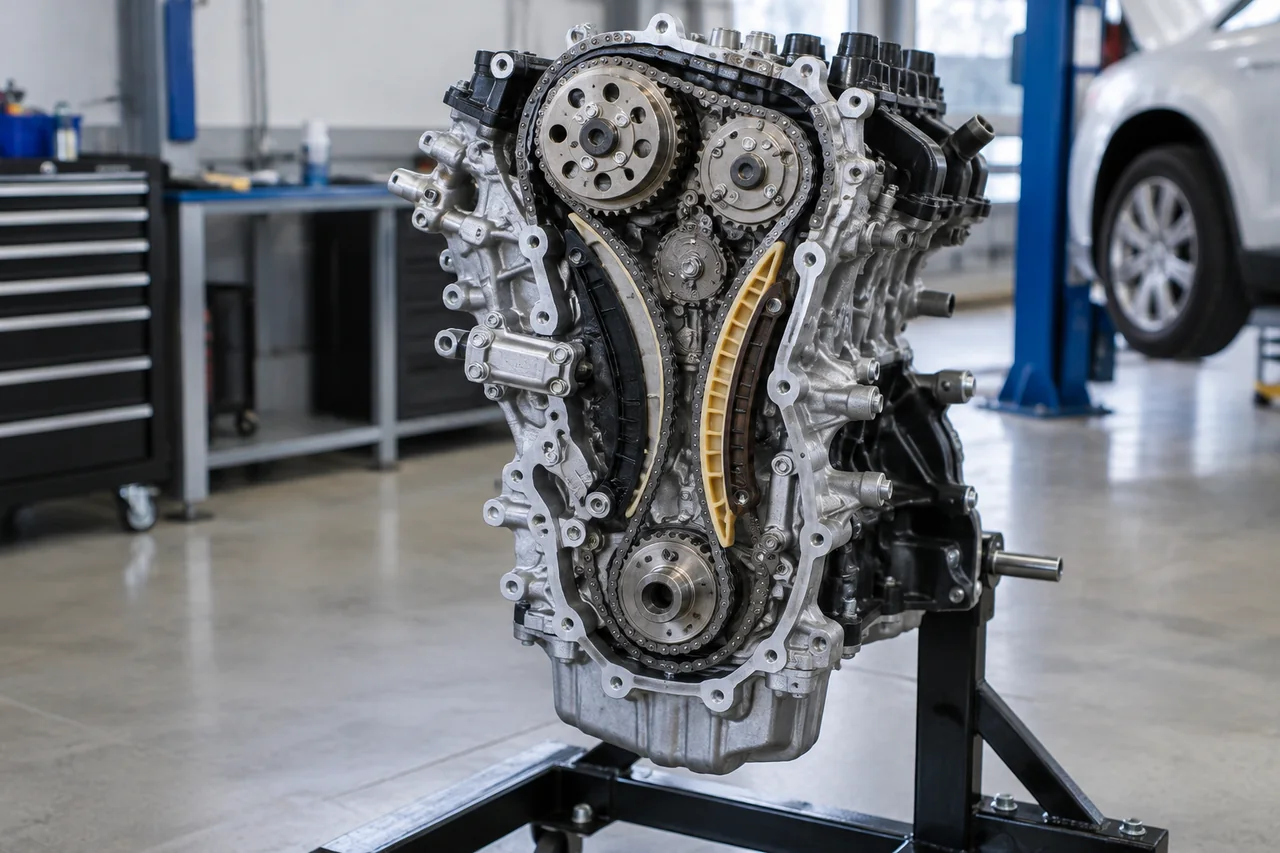
A Hyundai Elantra timing chain is not universal across every engine, and the same caution applies to a timing chain Hyundai owners share with the Kia Forte. Confirming the drive type, judging remaining chain life, and planning replacement all start with engine identification, oil history, and measured camshaft timing rather than a model year or a single rattle.
Identify the Timing Drive in Your Hyundai or Kia Engine
A Hyundai timing chain is specified at the engine level, not by the Elantra or Forte badge. Model year, engine designation, market, and VIN together identify the installed engine, which is the only reliable way to know whether that unit uses a chain or a belt. Engine families used across Hyundai and Kia can appear in both cars, yet the same family name can cover more than one displacement, valvetrain layout, and timing-drive design. Coverage here is limited to identification method; it does not certify every Elantra or Forte year as chain-driven.
Owners confirm timing-drive type in vehicle-specific manufacturer documentation, a dealer parts lookup by VIN, or a qualified shop that inspects the engine code and applicable service information. Shared family names do not establish identical timing components, repair procedures, or parts compatibility between an Elantra and a Forte, or even between two Elantras of the same year. An Elantra chain drive may use a different tensioner, chain guides, or cover layout than another engine that sounds similar on paper. Treat engine identification as the first step before any discussion of stretch, noise, or replacement.
What Determines Timing-Chain Life
Chain life cannot be reduced to a guaranteed mileage. A Hyundai Elantra timing chain and the equivalent drive on a related Kia engine last according to lubrication, load, tensioner health, and guide condition, not a calendar promise. Any scheduled inspection or replacement interval published for a specific engine must be verified in that vehicle's service information; borrowing a figure from another model year or family is not confirmation. Oil specification, oil level, and maintenance history matter because the tensioner and guides rely on oil pressure and a clean film to keep camshaft timing aligned with the crankshaft.
Chain wear, chain-guide damage, and timing chain tensioner problems are related but not interchangeable, and none is inevitable at a given odometer reading. A stretched chain can alter crankshaft correlation; a worn guide can allow slap; a weak tensioner can produce slack even if the chain itself is not fully elongated. Mileage alone is insufficient grounds for Hyundai Elantra timing chain replacement. Service records showing oil type, change intervals, and prior noise or oil-pressure notes help a technician judge whether inspection is warranted, not whether the assembly has already failed.
Warning Signs and Safe Observations Before Diagnosis
Possible symptoms include a cold-start rattle, persistent mechanical noise after warm-up, rough running, or a warning light. None of those findings proves a chain fault. Similar noises can come from other valvetrain parts, accessories, or oil-pressure issues that starve a hydraulic tensioner without the chain having stretched. Record when the noise occurs, how long it lasts, and whether lights or drivability changes accompany it. Do not touch moving components under the hood while the engine is running, and do not remove the timing cover as a home test.
Any diagnostic code needs vehicle-specific interpretation. A camshaft timing or crankshaft correlation code is evidence to interpret, not proof the chain, guides, or tensioner has failed, and manufacturer-dependent codes require confirmation for that engine. Camshaft timing faults can require oil-pressure testing, sensor verification, and mechanical timing checks beyond the chain assembly. Persistent loud noise, an oil-pressure warning, stalling, or severe running problems are reasons to stop driving safely and arrange professional assessment rather than continue a trip in hope the rattle fades.
2017 and 2018 Elantra Replacement Assessment
A 2017 Hyundai Elantra timing chain replacement discussion, like one for a 2018 Hyundai Elantra timing chain replacement, starts with confirmation of the exact engine and the applicable service information. Model year alone does not identify the timing drive or the parts that belong on that engine. A reported rattle, even a cold-start rattle, cannot establish that replacement is necessary. Two 2017 or 2018 Elantras can carry different engines, so repair scope and component selection must follow the identified unit rather than an assumption that every car of those years uses the same assembly.
A shop assessing whether Hyundai Elantra timing chain replacement is justified may gather maintenance history, stored faults, oil-pressure findings, and mechanical timing checks where service information calls for them. Correlation between the crankshaft and camshaft, tensioner travel, and guide condition are separate observations; one abnormal reading does not automatically condemn every related part. Diagnostic work should also consider sensors, oil condition, and other causes of camshaft timing variation. Only after those results are documented against the identified engine does replacement become a reasoned recommendation instead of a guess based on year and noise.
Planning Elantra and Forte Timing-Chain Replacement
Hyundai Elantra timing chain replacement and Kia Forte timing chain replacement are precision engine repairs, not accessory-belt jobs. They require vehicle-specific timing information, correct locking or alignment methods from the applicable procedure, and professional expertise to restore camshaft timing relative to the crankshaft. Related Hyundai and Kia engines still need separate verification of parts and procedures for the actual vehicle; a kit that fits one family member may not match another. Work behind the timing cover without that information can leave camshaft timing incorrect even if new parts are installed.
A useful estimate should identify the chain, chain guides, timing chain tensioner, seals, and any additional components justified by inspection and the engine's service requirements, rather than a generic timing job line. Completion evidence should include documented findings, required timing verification after assembly, leak checks around the timing cover, and confirmation that the original symptoms have been addressed. Owners should expect the shop to state which engine was serviced and which parts were fitted, so later oil-pressure or noise questions can be compared against that record rather than against a different Hyundai timing chain layout.
What Shapes an Elantra or Forte Replacement Estimate
Hyundai Elantra timing chain replacement cost and Kia Forte timing chain replacement cost are shaped by engine configuration, access to the timing cover, local labor rates, diagnostic time, and the documented parts scope. Access still varies in how much accessory, mount, or cover work is required, so labor hours are not interchangeable between two cars that look similar. Diagnosis, replacement labor, parts, fluids, seals, taxes, and any additional damage found after disassembly belong as separate estimate items. Bundling them hides whether the shop is quoting inspection, a complete chain set, or only a tensioner.
Ask for repair justification tied to findings, parts identification by engine code, warranty terms on the chain and tensioner, and a requirement that additional work be approved before it proceeds. Precise current prices are not meaningful here because rates, parts sources, and discovered internal engine damage change the total substantially. A vehicle-specific written estimate is the only figure that belongs to that Elantra or Forte. If inspection later shows guide fragments, bearing wear, or other damage beyond the timing drive, the scope can expand well past the original chain, guides, and tensioner line.