Hyundai and Kia Regenerative Braking: Levels, Paddles, Auto Regen and i-Pedal
Hyundai and Kia electrified vehicles recover kinetic energy when you lift off the accelerator or press the brake pedal, feeding electricity back into the battery. The Ioniq 5 and Ioniq 6 rely on paddle-operated regen levels, while hybrids like the Tucson, Sportage, Niro, and Kona blend recovery automatically. Understanding the available settings—from coasting-friendly low levels to one-pedal i-Pedal—helps you drive smoothly and extend range.
How Regenerative Braking Works in Hyundai and Kia Electrified Vehicles
In a Hyundai or Kia EV or hybrid, the electric motor reverses its role during deceleration. Instead of consuming power to turn the wheels, it becomes a generator: the wheels spin the motor, which creates resistance and converts that motion into electricity stored in the battery. This occurs as soon as you reduce pressure on the accelerator, before the friction brakes ever engage, giving a gentle slowing effect that varies with the selected regen level.
The conventional brake pedal still controls full stopping power through hydraulic friction brakes. Regenerative braking blends with those discs and pads, so the system recovers energy first and then adds mechanical braking when needed. Because the battery cannot accept energy when nearly full or very cold, the car may reduce regen strength to protect the pack. Full EVs typically expose manual regen levels, while hybrids manage the process mostly automatically. Check the owner’s manual for your specific model.
How to Use Regenerative Braking Paddles Behind the Steering Wheel
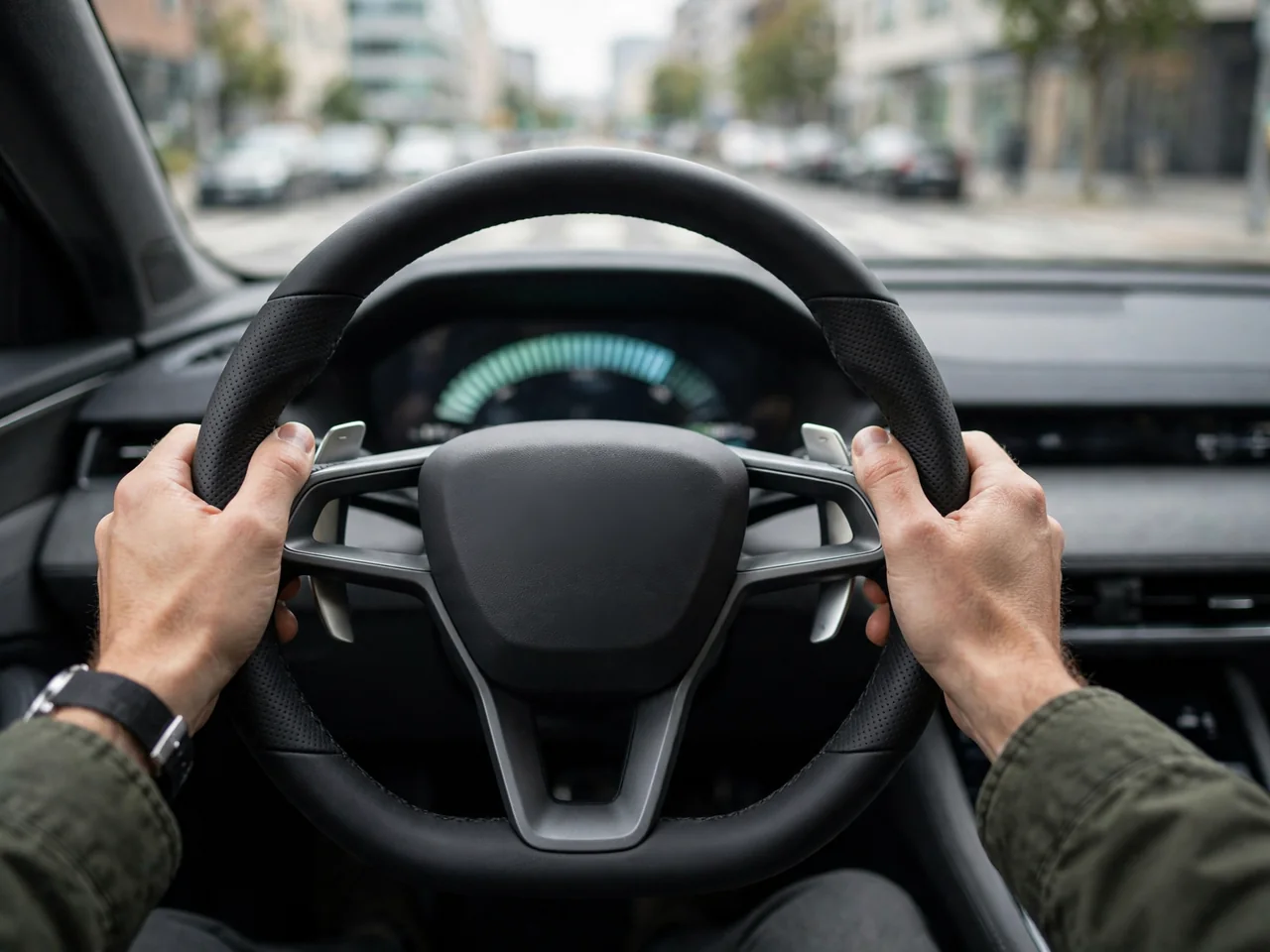
On equipped Hyundai and Kia models, the steering wheel paddles do not shift gears; instead, they adjust how strongly the vehicle slows when you lift off the accelerator. In general, one paddle increases the regen level and the other decreases it, with the current selection shown in the instrument cluster. However, the left and right functions can vary by model, so drivers should test the paddles at low speed and note which direction raises or lowers the setting.
Using stronger regen makes sense on long downhill stretches where you want controlled deceleration without overheating the brakes, and in stop-and-go traffic where frequent slowdowns recover energy. Choosing a lower level reduces the drag on the highway, allowing smoother coasting that can preserve momentum. On some Hyundai and Kia EVs, holding a paddle can bring the car to a controlled stop. Nevertheless, the paddles supplement the brake pedal; always be ready to brake manually and rely on it for emergency or low-traction situations.
Ioniq 5 Regenerative Braking Levels, Default Setting and Lowest Regen
Drivers of the Ioniq 5 adjust regenerative braking strength by pulling the steering wheel paddles and watching the level indicator on the digital cluster. The available range depends on the model year and software, but the cluster clearly shows the active level. A lower number means less deceleration and more coasting when you release the accelerator, while a higher number increases motor resistance and energy recovery.
The Ioniq 5’s startup regen behavior is set in the vehicle settings menu, often under EV or Eco options, but the exact location varies with the infotainment version. Turning regen “off” really means selecting the lowest available level, which still provides some recovery when you press the brake pedal. The car may reset to a default level after restarting or when switching drive modes. Always verify your specific Ioniq 5’s behavior in the owner’s manual or with a dealer before relying on remembered settings.
Ioniq 6, Ioniq 9, Kona Electric and Inster Regen Settings
Hyundai’s Ioniq 6, Ioniq 9, Kona Electric, and Inster generally follow a familiar approach: paddles behind the steering wheel adjust regen strength and the instrument cluster displays the chosen level. The menus for default behavior and additional options are usually found in the vehicle settings under EV or drive assistance, but names and locations differ by model year and regional software. Confirm the active level after pressing the paddles to see how the selected amount of energy recovery changes deceleration.
No two Hyundai EVs are identical. The Ioniq 9, with its larger mass, may benefit from higher regen levels on descents to control speed, while a small city-focused Inster might feel more responsive to lower levels in tight traffic. One-pedal driving and auto regen availability must be checked for each model and trim, not assumed from another. Note that the Inster may not be offered in every market, so feature details depend on your regional specification and latest software update.
Kia EV6, EV9, EV3 and Niro EV Regenerative Braking Modes
Kia EVs such as the EV6, EV9, EV3, and Niro EV present regenerative braking modes through the steering wheel paddles and a prominent indicator on the driver display. The settings screen contains options for default regen behavior and may include automatic modes on some trims. Rather than memorizing a universal number of levels, drivers should look at the cluster and test how each level affects the car’s tendency to slow when lifting off the accelerator.
A fixed driver-selected level holds a constant amount of deceleration, while an automatic mode can adjust regen strength based on road conditions and traffic ahead using sensors. For the older e-Niro and the newer Niro EV, the control layout and menu names can differ by market and model year. After confirming the active mode, check whether your selection persists after turning the car off, as some Kia models reset to a default level. Consult the owner’s manual or request a dealer demonstration for your specific model year.
Regenerative Braking in Hyundai and Kia Hybrids: Niro, Sportage, Tucson and More
Hybrids like the Niro, Sportage Hybrid, Tucson Hybrid, Santa Fe Hybrid, Kona Hybrid, Ioniq Hybrid, and Carnival Hybrid capture energy primarily through automatic regenerative braking. When you ease off the gas or press the brake pedal gently, the motor-generator creates a slight drag and sends electricity to the hybrid battery. The energy flow display on the cluster shows when charging is occurring, helping drivers understand the system’s operation. Regenerative paddles may or may not be fitted depending on the trim.
To maximize energy recovery in a hybrid, anticipate stops early and brake smoothly instead of abruptly, allowing the motor to capture more kinetic energy before the friction pads take over. A mild slowdown when lifting off is normal, and a slight change in brake pedal feel indicates blending between regen and mechanical braking. Warning lights, unusual noises, or sudden changes in brake response warrant a professional inspection. Do not attempt DIY work on the high-voltage or brake systems.
Auto Regen, Smart Regen and i-Pedal One-Pedal Driving Explained
Auto or smart regenerative braking on equipped Hyundai and Kia models uses forward sensors to adjust deceleration automatically based on traffic ahead or road gradient. This feature can increase regen when approaching a slower vehicle and reduce it on an open road. Because the sensors have limits—dirt, snow, or heavy rain can obstruct them—auto regen may not respond perfectly in every situation, and the driver must remain attentive.
i-Pedal is a one-pedal driving mode that allows strong deceleration when you lift off the accelerator, often bringing the car to a complete stop without touching the brake pedal. It is typically activated by pulling the right paddle to the highest regen level or via a drive mode selector, depending on the model. Practice in an empty parking lot to learn the stopping distance and creep behavior. If i-Pedal or auto regen behaves inconsistently or warning messages appear, have the dealer diagnose the system rather than attempting a DIY fix.