Hyundai and Kia IVT: How Their CVT Works and How It Holds Up
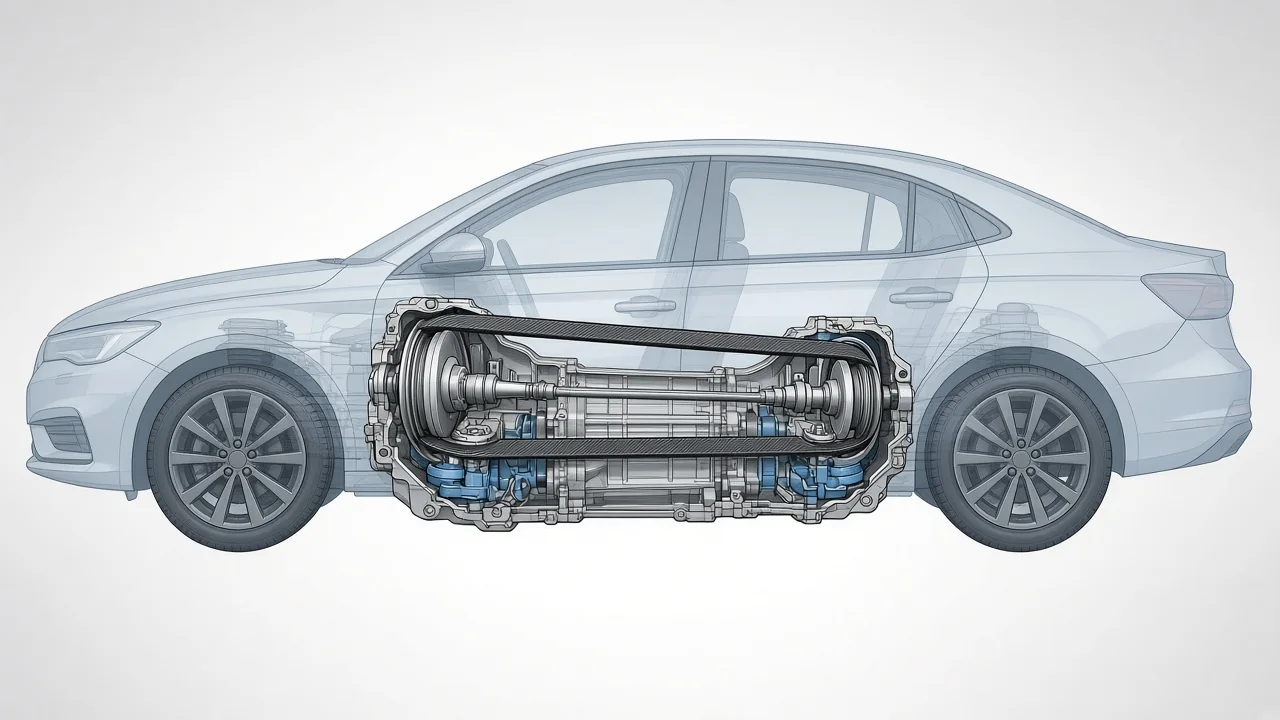
Hyundai and Kia have moved many of their smaller vehicles to a continuously variable transmission design that they call the Intelligent Variable Transmission (IVT). For drivers searching for “CVT transmission Hyundai,” this naming can cause confusion, because “Hyundai CVT” and “Kia CVT” refer to the same IVT family. Understanding how the IVT operates and how to confirm whether a particular car has one helps owners recognize normal behavior, maintain the unit properly, and identify symptoms that deserve attention.
What the Intelligent Variable Transmission Is and Why Hyundai and Kia Use It
The Intelligent Variable Transmission is the specific name Hyundai and Kia use for their continuously variable transmission. When owners ask, “Does Hyundai have CVT transmission?” the answer is yes, but it is branded as the IVT. A conventional automatic shifts through fixed gear ratios, but the IVT changes ratio continuously, letting the engine spend more time near its efficient operating range. That saves fuel compared with an engine that must repeatedly rev up and down through discrete gears.
Automakers use continuously variable transmissions mainly for smooth acceleration and efficiency. Without fixed steps, the car can accelerate without the pause of a gear change, and the engine can remain at a lower, steadier rpm when cruising. The IVT is not the only transmission in the Hyundai and Kia lineups, however. Some models still use torque-converter automatics or dual-clutch transmissions, and electric vehicles have a single-speed reduction gear, so the badge alone does not tell you what a car has.
How the IVT Works: Pulleys, Belt and Simulated Shift Points
The IVT uses two pulleys with variable diameters connected by a chain-type belt. One pulley is driven by the engine, the other sends power to the wheels. When one pulley widens and the other narrows, the effective ratio changes without fixed gears. The pulleys are controlled by hydraulic pressure from the transmission fluid, which must stay clean to operate correctly. This mechanical layout lets the ratio adjust continuously, so the engine rpm may stay nearly constant while the car accelerates.
Most drivers are not used to a constant engine note, so Hyundai and Kia program simulated shift points into the IVT. Under moderate acceleration, the control unit briefly changes the pulley ratio to create small rpm steps that feel like a conventional automatic shifting. At low speed, a torque converter or similar launch device smooths engagement from a stop. Normal IVT behavior can include a steady hum from the engine bay and a slight delay between pressing the throttle and feeling strong acceleration. These are not symptoms of a fault unless they are accompanied by shudder, slipping, or warning lights.
Does Hyundai Use a CVT? How to Tell Which Models Have One
Yes, Hyundai uses a CVT in some models, but many other Hyundais do not have one. The same model can be offered with different transmissions depending on the market, engine, trim, and model year. Therefore, “does Hyundai use CVT transmission” cannot be answered for the whole brand; it depends on the exact car. A vehicle equipped with an IVT will perform like a conventional automatic from the driver's seat but with smoother acceleration and a different sound under hard throttle.
The most reliable ways to check a specific Hyundai are the window sticker, the owner's manual, or the official specification sheet for that year and trim. Dealerships can decode the VIN and confirm the transmission originally installed. The VIN alone does not always contain a transmission code, so using a dealer or the manufacturer's data is safer than guessing from an online VIN decoder. If the car is a used Hyundai, ask the seller for the original window sticker or run the VIN through the brand's official recall and service campaign site to see the vehicle configuration.
Does Kia Use a CVT? Checking Your Specific Kia
Kia also uses the same IVT family in some models, so “does Kia use CVT transmission” is true for certain engines and trims. As with Hyundai, Kia's lineup includes conventional automatic transmissions and dual-clutch transmissions, so the model name is not enough to identify the gearbox. A small Kia crossover with a base engine may have an IVT, while the turbocharged version of the same car may have a dual-clutch transmission.
To confirm a Kia, check the owner's manual or window sticker, or have a dealer decode the VIN. Buyers of used Kias should not rely on general IVT information; they need to confirm the exact transmission for that car's year, engine, and trim. If a used car listing says “CVT” but the spec sheet says “automatic,” clarify before purchase, because the transmission type affects maintenance and expected driving behavior.
The IVT in the Hyundai Elantra: What Owners Should Know
The Hyundai Elantra has been offered with an IVT in certain years and engine combinations, so a search for “Hyundai Elantra CVT transmission” usually returns information about the IVT. Drivers of an Elantra with an IVT may notice smooth, gapless acceleration and a steady engine rpm during gentle acceleration. Under hard throttle, the simulated shift points make the transmission feel more familiar. A small amount of engine braking on deceleration is also normal for a CVT.
Not every Elantra has the IVT. Performance-oriented versions and some hybrid models may use a different transmission, such as a dual-clutch or a multi-mode automatic. Owners should check the owner's manual for the correct transmission fluid specification and service interval for their specific Elantra, because CVT fluid requirements differ from those of a conventional automatic. Using the wrong fluid can damage the pulleys and belt.
How the IVT Has Held Up So Far and Symptoms Worth Checking
The IVT has been in production for several years, but reliability data depends heavily on the exact model and year. No failure rates can be given, and the IVT should not be judged as universally good or bad. Owners who maintain the transmission properly and avoid excessive loads may have many years of trouble-free service. The most common reports involve transmission shudder, slipping, delayed engagement, or unusual whining or grinding noises.
If any of those symptoms appear, write down when they happen: cold start, hot weather, highway speed, or after hard acceleration. Note any warning lights or limp mode activation. These details help a technician diagnose the problem. A trouble code is evidence to interpret, not proof that a part has failed, and the meaning of codes can vary by vehicle. Check for open recalls or service campaigns by VIN through official channels; do not assume any apply to your car.
Caring for an IVT: Maintenance and Driving Habits
Follow the maintenance schedule in the owner's manual for transmission fluid service. General figures found online may not match the specific requirements for a Hyundai or Kia IVT, and fluid change intervals vary by model and driving conditions. Use only the transmission fluid specified by the manufacturer. CVT fluid has friction modifiers and additives that are different from conventional automatic transmission fluid; the wrong fluid can cause slipping, overheating, and premature pulley or belt wear.
Reduce strain on the IVT by staying within towing and load limits and avoiding repeated full-throttle launches from a stop. Gentle acceleration and letting the car warm up before hard driving can help, but no driving habit can guarantee a transmission will never fail. Keep all service records, including fluid changes and any diagnosis for transmission symptoms. These records support warranty claims and help a future buyer understand how the car was maintained.