Hybrid or Electric Car Won't Start: Auxiliary Batteries, Jump Starts and READY Mode
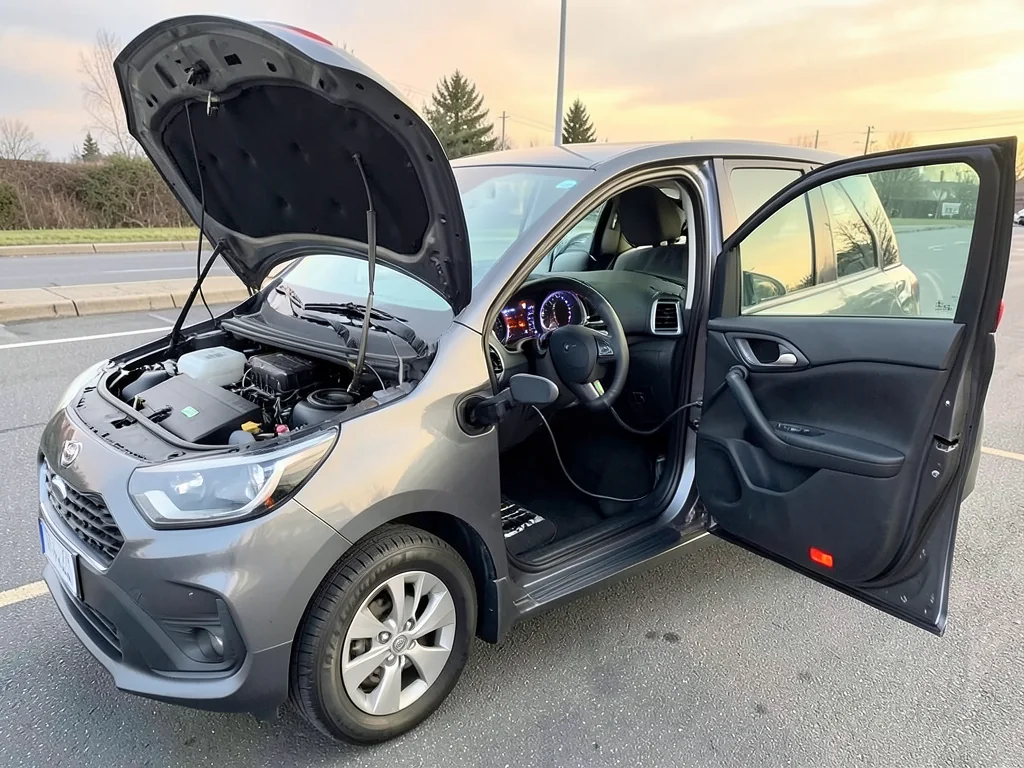
When a hybrid or electric car will not start, the cause is often the 12V auxiliary battery, key detection, cold weather, or a high-voltage lockout that blocks READY mode. Whether you can jump a hybrid battery depends on which battery you mean: the low-voltage electrical system may accept a jump at designated terminals, while the traction battery must never be jump-started.
Identify What Happens When You Try to Power On
READY, or the vehicle's equivalent drive-ready indication, means the propulsion system is online and the car can be driven. A hybrid's gasoline engine can remain silent after successful startup, so quiet does not explain why a hybrid car is not starting. Separate an unresponsive vehicle, illuminated displays without READY, and a powered car that will not select a drive gear. Note exact dashboard messages, indicator behavior, and whether the problem followed parking, charging, or a cold night.
Those observations narrow the next check but cannot identify a failed component by themselves. Why a hybrid car is not starting, or why an electric car is not starting, can look similar from the driver's seat. Record whether accessories worked, whether the start button produced any click or chime, and whether the issue followed a short stop or a long sit. That record helps a technician interpret later tests without treating any single light as proof a part has failed.
Check Whether the Auxiliary Battery Can Support Startup
The 12V auxiliary battery feeds the low-voltage electrical system that powers controls needed to bring the propulsion system online. Traction-battery charge alone does not establish readiness. A hybrid car not starting can still sit dead if the auxiliary battery cannot support those controllers. Weak locks, flickering displays, or repeated electronic resets are possible clues of a depleted 12V auxiliary battery, but they are not proof of battery failure.
Distinguish a depleted auxiliary battery from a discharged traction battery because each requires its own recovery approach. How to start a hybrid car with a dead battery usually means restoring 12V support so READY can appear, not charging the high-voltage pack from jumper cables. After repeated no-start events, auxiliary-battery testing and a check of the low-voltage charging system are warranted, because a battery that rebounds after a rest may still fail the next start.
Confirm Whether an Auxiliary Jump Start Is Permitted
Can you jump a hybrid battery? Many hybrids permit external assistance to the 12V auxiliary system under manufacturer instructions, so you can jump a hybrid car battery only in that limited sense. The high-voltage traction battery must never be jump-started. Check the exact vehicle's owner's manual for permission, supply specifications, the designated positive terminal, and the approved ground point. Designated jump terminals may sit apart from the auxiliary battery and must come from documentation, not appearance.
If the procedure or terminals are uncertain, call roadside assistance rather than improvising. Do not attempt a jump on a frozen, leaking, swollen, or visibly damaged battery. How to start a hybrid car with a dead battery through an auxiliary jump is appropriate only when the manual allows it and the battery is intact. An electric car not starting may use a different low-voltage architecture, so the same booster is not automatically correct.
Check Key Detection and Startup Conditions
Before assuming a dead battery, confirm the normal startup procedure: a detected key, Park selected, and the required brake-pedal input. Brake pedal recognition and key detection are common reasons a hybrid car is not starting even with a healthy 12V auxiliary battery. If the fob battery is weak, consult the owner's manual for the approved backup key-detection location. Do not bypass switches or interlocks to force a start. An unrecognized key or missed Park status will keep READY from appearing.
On applicable vehicles, an active charging connection or a displayed startup condition can prevent drive readiness even after the key is recognized. A driver who wonders why a hybrid car is not starting may then be facing a hold rather than a dead 12V pack. If a required condition remains unrecognized, seek diagnosis instead of repeating power-button presses, which can drain the auxiliary battery further. A technician can confirm whether the control system saw Park, the brake switch, and a valid key.
Understand Cold-Weather Startup Problems
Cold-weather startup often traces to reduced auxiliary-battery output and a battery that no longer reliably supports the low-voltage electrical system. That is a common reason a hybrid car is not starting in cold conditions and an electric car is not starting in cold weather. A pack that seemed adequate in mild weather may sag enough that controllers reset before READY appears. The pattern calls for testing, because a poor connection or failing charging circuit can look the same.
Traction-battery temperature and charge level can affect operation, with behavior governed by the specific vehicle. Record outdoor temperature, displayed charge, warnings, and whether charging was available. Use plugged-in preconditioning only where the owner's manual supports it. Request roadside assistance when the car will not enter READY after a cold night, and do not improvise heating or jump a potentially frozen battery. Can you jump a hybrid car battery then? Only if the manual permits an auxiliary jump and the 12V battery is not frozen or damaged.
Use the Correct Tesla or Toyota Hybrid Instructions
A Tesla car not starting is not the same problem as a Toyota hybrid car not starting. For a Tesla that will not power on, identify the model and year and consult its low-voltage recovery instructions; do not assume every vehicle uses a conventional 12V battery. Battery locations, jump points, recovery procedures, and low-voltage battery specifications require vehicle-specific confirmation. Applying a conventional jump to the wrong points can miss the approved procedure.
For a Toyota hybrid that will not start, organize observations around READY status, key recognition, auxiliary power, and the exact displayed warning. On a Toyota, the question of why a hybrid car is not starting often comes down to whether READY appeared, not whether the gasoline engine cranked. Do not assign a brand-wide cause or present one model's recovery sequence as applicable to every vehicle. Follow that vehicle's manual, then have a shop interpret stored messages with the correct model data.
Recognize Lockouts That Need Professional Testing
A high-voltage safety fault or high-voltage interlock condition can prevent READY even when displays and accessories work normally. An electric car not starting, or a hybrid that powers the cabin but never becomes drive-ready, may be a lockout rather than a dead 12V auxiliary battery. Leave orange cables, traction-battery enclosures, service disconnects, and high-voltage connectors untouched. A fault code is evidence to interpret, not proof a part has failed, and manufacturer-dependent codes require vehicle-specific confirmation.
Stop startup attempts after collision or flood exposure, visible electrical damage, smoke, or unusual heat, and obtain emergency or roadside help. When approved auxiliary recovery does not restore readiness, professional fault-code and electrical testing is the next step. Ask for approved towing instructions for that vehicle. Why a hybrid car is not starting after a jump that restored 12V power often points to a safety hold the driver cannot clear.