Hybrid Car Maintenance: Service Schedule and Owner Tips
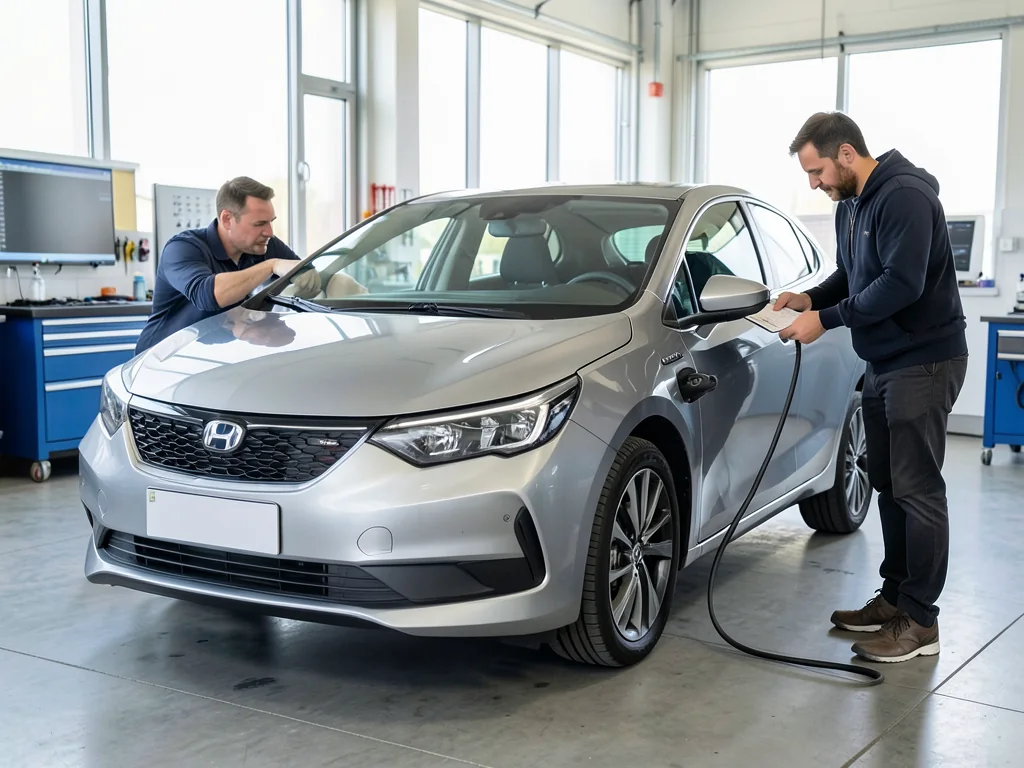
Hybrid car maintenance covers the same core ownership work as a conventional car: engine oil and filter, tires, friction brakes, cabin and engine-air filters, fluids, and scheduled inspections. Electric operation does not erase the gasoline engine's service needs or time-based limits. Start with the owner's manual and maintenance booklet for the exact model year and powertrain. Battery discussion stays limited to manufacturer-specified external checks rather than pack-level service.
Routine Maintenance a Hybrid Still Needs
Routine maintenance on a hybrid car still groups into familiar categories. Engine oil and filter service remains due because the gasoline engine still runs for starting, acceleration, climate control, and charging. Tires need pressure checks and rotation because weight and torque delivery can still produce uneven wear. Friction brakes require inspection even when they work less often. Cabin and engine-air filters, washer fluid, and other published fluids remain part of routine service, along with scheduled underhood and underbody inspections.
Electric driving does not cancel those requirements or any time limit the manufacturer publishes for oil, coolant, or other fluids. Short, quiet trips still age oil and other fluids by calendar time even when the engine rarely sounds busy. The owner's manual and maintenance booklet for that model year and powertrain remain the starting point for planning the maintenance of a hybrid car. Traction-battery attention stays limited to manufacturer-specified external checks and service requirements, not pack-level owner work.
Hybrid Systems That Affect Routine Service
Regenerative braking converts some slowing energy into electrical energy, so the friction brakes may work less often than on a conventional car. That reduced use does not retire the brake inspection. Pads, rotors, and hardware still need confirmation that they move freely, contact evenly, and remain free of heavy corrosion. Light pad wear can coexist with seized sliders, rusted rotors, or a pedal that feels long after a stretch of electric-only slowing. Moisture, salt, and long idle periods make that inspection more useful, not less.
Some hybrids use more than one cooling circuit, and some have accessible ventilation openings that the manufacturer lists for cleaning or inspection. Those items are vehicle-specific; the owner's manual, not a generic hybrid label, says whether a coolant inspection or vent check is owner work. High-voltage components, orange cables, and sealed inverter or battery housings are not owner-accessible. Do not handle orange cables or open high-voltage covers. Leave that testing to qualified personnel with the correct isolation procedures.
Build a Service Schedule Around Mileage and Time
A useful hybrid car maintenance schedule is built from three layers: frequent owner checks, recurring mileage services, and longer-interval items the booklet lists in years or miles. What maintenance a hybrid car needs is defined by those published mileage and time thresholds, not a universal interval. Many manufacturers apply a whichever-comes-first rule, so oil, coolant, or brake fluid can come due by time even if the odometer is low. Calendar aging still matters when the car is driven gently or parked for weeks.
Track engine oil and filter changes, tire rotation, brake inspections, filter checks, and fluid requirements against that booklet instead of assigning universal replacement intervals. Short trips, extreme temperatures, dusty roads, towing where permitted, or heavy stop-and-go use can qualify the vehicle for the severe service schedule. A dashboard maintenance reminder is a prompt, not a complete catalog of due work. It may skip cabin filters, coolant inspection, or other booklet items, so the printed schedule still governs.
Safe Checks Between Service Visits
Between visits, check cold tire pressure against the door-jamb placard, not the sidewall maximum. Look for uneven tread wear, cuts, or objects in the rubber, then plan a tire rotation when the schedule calls for it. Check engine oil the way the owner's manual describes, with the vehicle on level ground and the engine in the stated condition. Observe coolant and other fluid reservoirs only where owner access is permitted and the vehicle is cool, without opening pressurized caps.
New spots beneath a parked hybrid deserve a look, but appearance alone does not identify the fluid or the leak path. Changes in braking feel, a longer pedal, or a pull should go on the next inspection list rather than be treated as a confirmed failed part. Dashboard messages, including a hybrid system warning, are prompts for professional reading of the displayed text. Keep accessible ventilation openings unobstructed. Inspect lights, wipers, and washer fluid using the manual's instructions.
Maintenance Symptoms That Need Professional Testing
Persistent brake noise, vibration, pulling, or an altered pedal feel are reasons for a professional inspection. Those symptoms can come from hardware corrosion, uneven rotor condition, tire issues, or hydraulic problems, so they do not prove a single part has failed. Warning messages, overheating indications, repeated low fluid levels, or starting difficulties also need diagnosis rather than speculative parts replacement. A stored fault code is evidence to interpret in context, and manufacturer-dependent codes need vehicle-specific confirmation.
Changes in fuel economy have several causes, including tire pressure, driving pattern, climate-control load, and incomplete engine warm-up. They do not by themselves establish a maintenance fault or a traction-battery problem. If braking is impaired, smoke appears, or the warning display instructs you to stop, pull over when it is safe and seek assistance rather than continuing to drive. Leave high-voltage investigation to qualified personnel. Maintenance-related hybrid car problems are identified by testing, not by assuming the loudest symptom is the failed part.
Owner Habits That Keep Maintenance on Track
Hybrid car maintenance tips start with written maintenance records. Log service dates, odometer readings, completed work, and upcoming requirements in one place so oil, tire rotation, brake inspection, and fluid due dates stay visible. Fluids, filters, and replacement parts must meet the exact vehicle specifications in the owner's manual rather than a generic hybrid label. Viscosity, coolant chemistry, and filter design can differ by powertrain even among hybrids from the same brand.
Attend to due service even during low-mileage months or frequent electric operation, because time-based oil, coolant, and brake-fluid limits still apply. When a shop visit is needed, give the service provider the exact warning text, when the symptom appears, and the recent service history. Choose qualified hybrid service when specialized testing is required, especially after a hybrid system warning. That combination of records, correct parts, and timely visits is what the maintenance on a hybrid car actually depends on.