Hybrid Battery Reconditioning, Refurbishing and Remanufacturing Explained
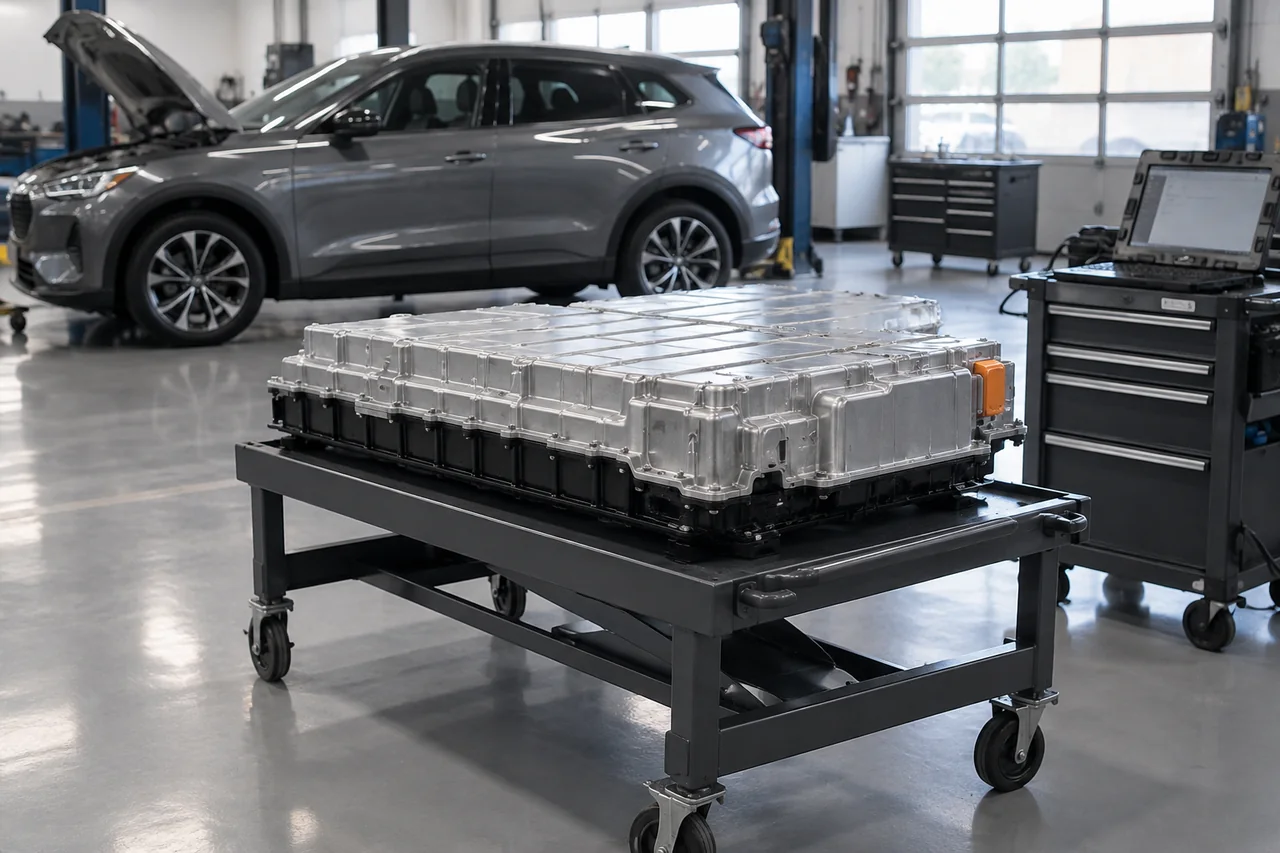
When a hybrid battery repair is discussed, reconditioned, refurbished, rebuilt, and remanufactured are often treated as synonyms. They are not. Those labels cover different approaches to the high-voltage traction battery, from reconditioning the installed pack to supplying a remanufactured hybrid battery as an exchange. Knowing how module repair compares with a new pack helps you weigh documentation and replacement warranty coverage before authorizing work.
What a Hybrid Battery Repair Diagnosis Should Establish
A hybrid battery repair diagnosis should start with the high-voltage traction battery, not with a dashboard lamp. A battery-related warning, a drop in electric assistance, or unusual charge-indicator behavior can point toward the pack, the cooling system, sensors, connections, or the battery management system. Those owner-observable concerns are reasons to investigate, not proof that the pack has failed or that replacement is required. Scan data and warning messages are evidence to interpret against operating conditions, not a standalone verdict that usable capacity is gone.
Professional diagnosis may include pack testing, inspection of cooling paths, connector and cable condition, sensor readings, and how the battery controls manage charge and discharge. Until those checks are complete, recommending a full pack replacement is premature. Bring a clear account of symptoms, when they appear, warning wording, and any previous battery work, including an earlier attempt to recondition hybrid battery modules or install an exchange unit. That history helps a shop separate a control or cooling issue from a genuine state of health problem in the traction battery.
What Battery Reconditioning Can Address
Hybrid battery reconditioning is a service label, not a single defined process. A hybrid battery reconditioner may mean controlled testing, charge-discharge conditioning, and balancing of battery modules, or something narrower. Ask what reconditioning hybrid battery work actually includes for your chemistry and pack design, because suitability depends on construction and present condition. Controlled pack testing can reveal imbalance and remaining usable capacity, but the same term used by another shop may describe a brief charge cycle that never evaluates state of health in a meaningful way.
Conditioning cannot reverse every form of aging, restore physically damaged cells, or repair a pack with failed isolation or cooling hardware. An initial improvement after someone tries to recondition hybrid battery modules does not establish remaining service life. Clarify whether the provider will service the pack already in the vehicle or supply a reconditioned hybrid battery as an exchange, and request documented acceptance criteria for capacity, balance, and state of health. Without those written thresholds, a reconditioned hybrid battery is a marketing description rather than a verified result.
What a Refurbished Battery Label Actually Promises
Hybrid battery refurbishment can include inspection, cleaning, replacement of selected parts, and pack testing, yet the refurbished hybrid battery label does not say which of those steps occurred. Ask for a written account of what was inspected, what was replaced, and what was retained when a shop claims to refurbish hybrid battery hardware. Replacement components may be new, used, or mixed, and that distinction belongs in the paperwork. Without it, you cannot tell whether the work was a thorough hybrid battery refurbishment or a cosmetic refresh with limited electrical verification.
The age and condition of retained battery modules, contactors, cooling parts, and harnesses remain relevant after the pack is labeled refurbished. Those leftover parts still set limits on usable capacity and how the battery management system will see the pack. Useful documentation identifies the pack, lists completed work, records final test results, and states replacement warranty coverage in writing. That record is what you compare later if a warning returns, not the word refurbished printed on an invoice.
Rebuilt and Remanufactured Packs: Scope and Module Repair Limits
A hybrid battery rebuild and hybrid battery remanufacturing are provider-dependent descriptions. Neither a rebuilt hybrid battery nor a remanufactured hybrid battery label by itself establishes a uniform restoration standard. Some shops rebuild hybrid battery packs by replacing individual battery modules; others describe remanufacturing as a broader teardown with selected new parts. Feasibility of module-level hybrid battery repairs depends on pack construction and the approved service approach for that vehicle. Ask what the provider actually disassembles, measures, and replaces before treating the label as a complete restoration.
Module matching is about electrical behavior and condition, not just physical fit. Replacing one weak module does not establish the health of the remaining pack, because neighboring modules may already be aging in a similar way. A remanufactured hybrid battery should come with an explanation of inspection, component selection, pack-level validation, and traceability; remanufacturing does not make every component new. Request how the provider documents module matching, final pack testing, and which parts were reused so you can judge whether the rebuilt hybrid battery meets the intended scope.
Why Reconditioning Equipment Requires Professional Expertise
Diagnostic scanners, battery analyzers, and specialized conditioning equipment each play a different role when shops repair hybrid battery concerns. A scanner reads control data; an analyzer can compare modules; conditioning equipment is used to apply controlled charge and discharge under professional supervision. A generic hybrid battery reconditioning tool listing does not establish compatibility with a particular chemistry, pack design, or vehicle. Equipment that is appropriate for one traction battery architecture may be unsuitable for another, so the tool name alone is not a substitute for vehicle-specific confirmation.
Hazardous voltage can remain present in a traction battery with the vehicle switched off, which is why pack opening, probing, bypassing protections, and any charging instructions belong with trained technicians, not owners. Professional testing is warranted when warnings persist, electric assistance changes, or prior hybrid battery repairs did not resolve the concern. A scan result or a brief voltage reading cannot establish usable capacity or expected lifespan by itself. Those figures come from structured pack testing that evaluates state of health under load and balance, not from a single static number.
What to Confirm Before Authorizing Battery Work
The decision to repair hybrid battery hardware should rest on the diagnosis, documented battery condition, how long you plan to keep the vehicle, and how much downtime you can accept. None of those factors promises a remaining service life. Where a new replacement pack is offered, confirm vehicle fitment, which components are supplied, the installation scope, and the replacement warranty. Compare that option with a reconditioned, refurbished, rebuilt, or remanufactured unit using the same questions so the choice is about documented condition and coverage, not the most appealing label.
Ask the quote to separate diagnostic charges, installation, transport, core return requirements, and any required setup or verification after the pack is installed. A core return may apply when an exchange unit is supplied, and the terms should state what happens if the original pack is incomplete or damaged. Warranty questions should cover parts, labor, exclusions, claim handling, transferability, and who pays if repeat removal and installation are needed. Those details matter as much as whether the unit is described as remanufactured, refurbished, or reconditioned.