Hybrid Battery Disposal and Recycling: What Happens to Old Packs
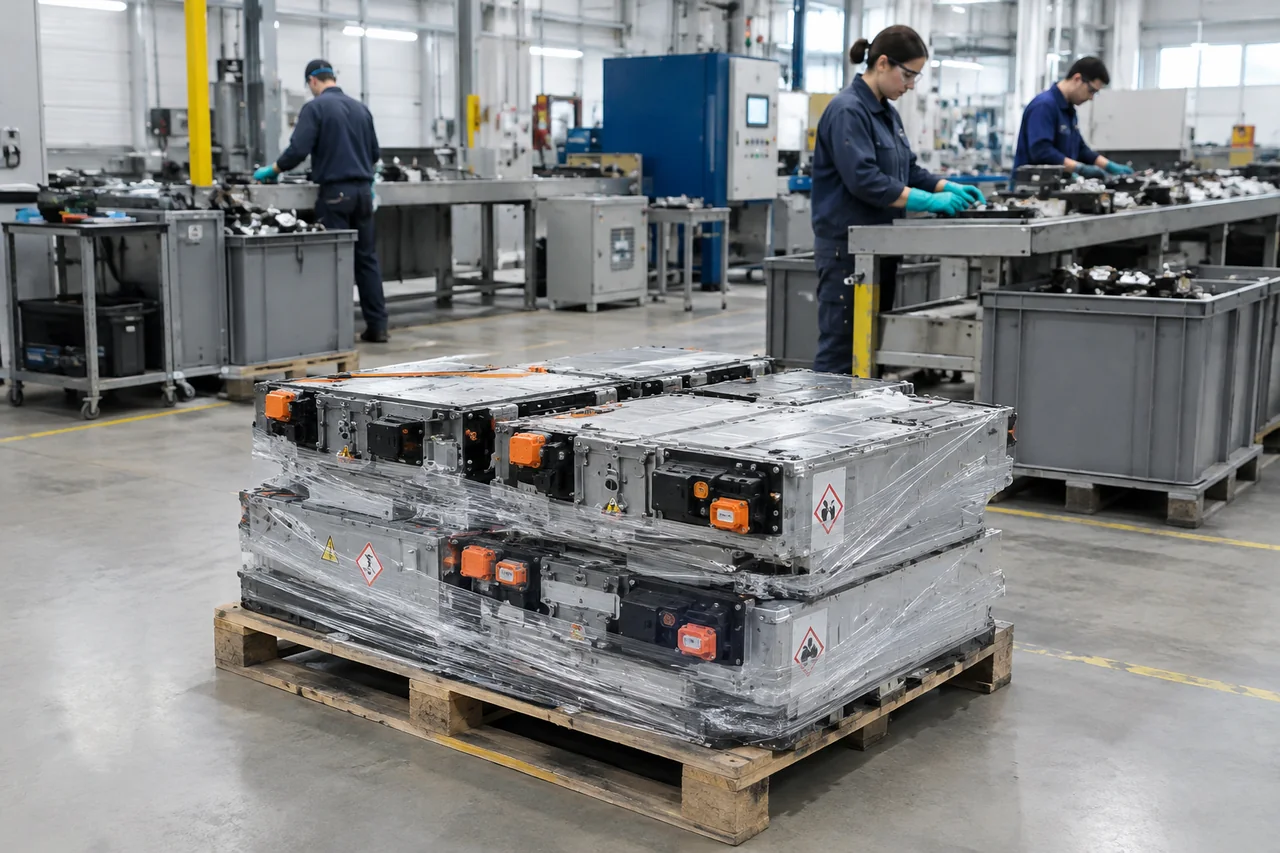
When a hybrid battery pack reaches the end of its service life, owners face a disposal question that differs sharply from routine automotive waste. The high-voltage traction battery that powers the vehicle at low speeds and assists the engine is not the same as the familiar 12-volt auxiliary battery under the hood. Hybrid battery disposal and hybrid battery recycling require controlled handling because these packs contain reactive materials and may retain a dangerous charge even after the car is switched off. Understanding where old packs go helps owners make choices that protect both people and the environment.
Why a Hybrid Battery Pack Can't Simply Go in the Trash
A hybrid vehicle actually carries two distinct batteries: a conventional 12-volt battery for lights, computers and accessories, and a high-voltage traction battery that provides propulsion assist. This article concerns the traction battery, which stores several hundred volts and often contains nickel-metal hydride or lithium-ion chemistry. Because of its size, voltage, and chemical contents, it cannot be tossed into household trash or left with ordinary scrap. Even a pack that no longer starts the engine may hold enough stored energy to injure someone or start a fire if mishandled.
The materials inside a hybrid pack vary by chemistry. Nickel-metal hydride packs contain nickel, rare-earth metals and an alkaline electrolyte, while lithium-ion packs contain lithium, cobalt, nickel, and a flammable organic solvent. These materials are valuable when recovered but hazardous when landfilled. Disposal rules vary by state and locality, so owners should check local requirements rather than assuming one national rule. Above all, never open, puncture, or disassemble a hybrid battery pack. The internal cells can short and release heat, toxic gases, or high current, even after the car has been off for days.
How Hybrid Battery Recycling Works From Collection to Recovered Materials
Legitimate hybrid battery recycling follows a controlled sequence: collection from a dealership or recycler, sorting by battery chemistry, and a controlled discharge performed at a trained facility. Once the pack is verified to be at a safe voltage, it is opened and separated into modules, wiring, and structural components. This step is done under high-voltage safety protocols because residual energy can remain in individual cell modules. Only after discharge and disassembly can the materials be processed further.
Three main recovery approaches are used today. Mechanical separation shreds and sorts materials by size, density, and magnetic properties. Hydrometallurgical recycling uses chemical solutions to leach out and recover metals like nickel, cobalt, and lithium. Pyrometallurgical recycling melts the material at high temperature to recover certain metals while burning off plastics and other organics. Chemistry matters because nickel-metal hydride and lithium-ion packs often go through different recycling streams; for example, nickel-metal hydride packs are well suited to pyrometallurgical recovery of nickel, while lithium-ion packs are increasingly processed by hydrometallurgy to capture lithium and cobalt. Recovered materials can include nickel, cobalt, lithium, copper, steel, and aluminum.
Core Return Programs and What They Mean When You Replace a Pack
A core charge is a refundable deposit added to the price of a new, remanufactured, or reconditioned hybrid battery pack. Sellers ask for the old pack back because it has real material value and because responsible recycling is part of the replacement business. The core charge encourages owners to return the spent pack instead of abandoning it. The amount and conditions are set by the seller, not by a universal standard, so the refund depends on returning the correct part in acceptable condition within the agreed time.
Core return programs usually work through dealers and independent hybrid battery shops. The shop collects the core deposit, removes the old pack, and returns it to the seller or processor. Terms, refunds, and deadlines vary by seller, so owners should get core terms in writing before the replacement. The written terms should state what counts as an acceptable core—often meaning the old pack is complete, not burned, not leaked, and not opened. A damaged or incomplete core may be treated differently, and the seller may reduce or deny the refund. Asking about these conditions in advance avoids disputes later.
Handling a Removed or Failing Pack Safely: What Owners Should and Shouldn't Do
A removed or failing hybrid battery pack is not a DIY project. Pack removal, transport, and storage should be left to qualified high-voltage technicians who have insulated tools, protective equipment, and specific training. A hybrid pack can deliver a fatal shock even when the vehicle is off, because it remains connected to its internal cells. Home mechanics should never unbolt, lift, or carry a traction battery. Even a single disconnected module can carry enough voltage to be dangerous.
From a safe distance, owners can watch for warning signs that a pack is failing: swelling of the case, leaking fluid, unusual odors, smoke, hissing sounds, or noticeable heat. If any of these appear, keep people away from the vehicle and call a qualified shop or emergency services. A pack that is smoking or on fire is an immediate emergency; move away and call 911, and do not try to put it out or move it. Water and ordinary fire extinguishers are often ineffective against a high-voltage battery fire and may worsen the hazard. Shipping and transporting high-voltage packs may fall under hazardous materials rules, which is one reason professional logistics are used for core returns and recycling.
Where Old Packs Go: Reconditioning, Second-Life Use and Final Recycling
Some old packs can be given a second life through reconditioning and module replacement. A reconditioned hybrid battery typically involves testing each module, replacing the weakest ones, and rebalancing the pack. Results depend on the condition of the remaining modules and the quality of the work; a pack with widespread degradation is not a good candidate. Reconditioned and remanufactured hybrid batteries are sold through specialized shops, and the core return program often supports this process.
Second-life use represents another path for suitable modules. Modules that no longer meet traction battery performance standards may still hold enough capacity for stationary energy storage, such as backup power or solar load shifting. Not every pack qualifies; many are too degraded or damaged. When a pack cannot be reconditioned or repurposed, recycling for materials is the final step. Owners should ask the shop what will happen to their old pack and whether it can provide documentation of proper handling, including the receiving recycler and the chemistry processed.
Finding a Legitimate Disposal or Recycling Option Near You
Several legitimate channels accept hybrid battery packs for disposal or recycling. Franchised dealers often take back packs during a replacement and forward them through a manufacturer or contracted recycler. Independent hybrid battery specialists frequently handle core returns and may recondition or recycle in-house. Licensed auto recyclers that accept whole vehicles can process the traction battery as part of end-of-life vehicle recycling. Some municipal hazardous waste programs accept high-voltage batteries at designated collection events, though not all do.
Before dropping off a pack, confirm ahead of time that the location accepts high-voltage traction packs. Many general recycling drop-offs and auto parts stores do not. Ask the facility which chemistries it accepts, whether there are any fees or credits, whether it offers pickup for a pack still installed, and where the pack goes next. A legitimate recycler should be able to explain its downstream process. Be wary of buyers or dumping options that cannot explain how they handle the pack; unlicensed operators may strip valuable modules and abandon the rest, creating a hazard. Point owners back to licensed channels for peace of mind.