Hybrid Battery Cooling Fan and Filter: Low Cooling Performance Warnings
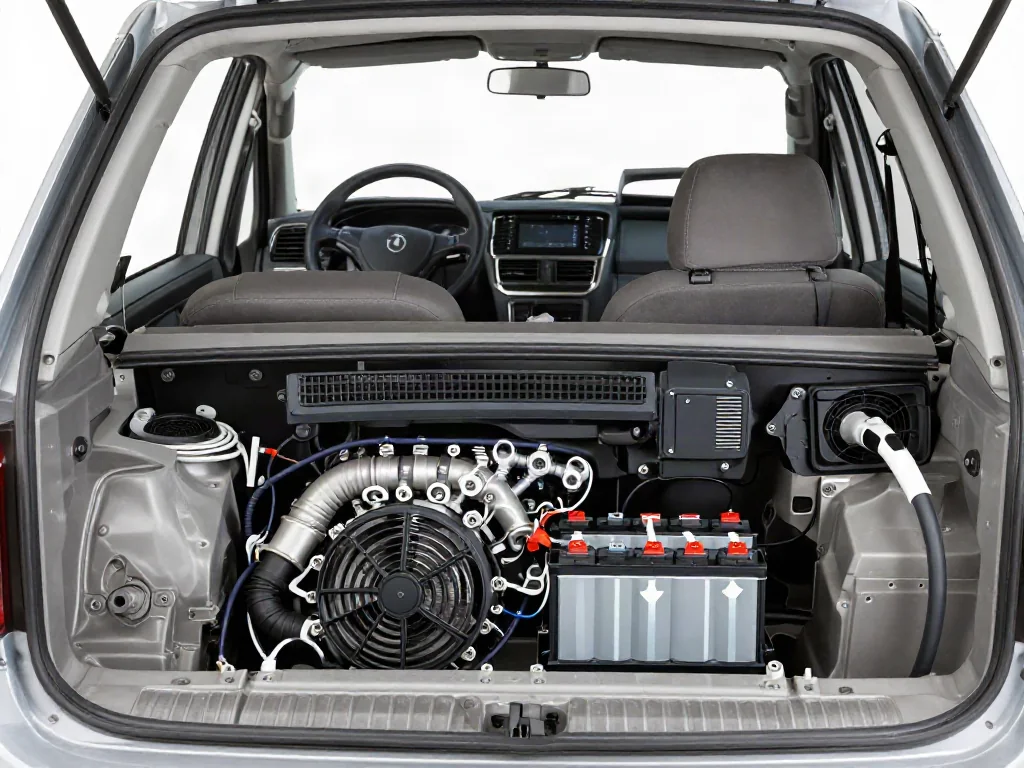
A report that cooling performance of hybrid battery is low points to thermal management, not an automatic battery replacement. On many air-cooled Toyota hybrids, cabin air moves through a battery cooling intake, a hybrid battery filter, and a cooling fan that carries heat away from the pack. Dust, pet hair, luggage, and fan issues can reduce airflow. Confirm the exact wording in the owner's manual before acting, and treat any reduced-power instruction as a driving-safety matter first.
What a Low Hybrid Battery Cooling Performance Warning Means
The phrase cooling performance of hybrid battery is low, and the close variant cooling performance of the hybrid battery is low, flags that the pack is not being cooled as expected. It does not name a failed part, prove the hybrid battery air filter is clogged, or establish that the battery needs replacement. Battery temperature can rise from airflow restriction, weak fan operation, a blocked cooling duct, or hard use in heat. Match the exact display text to that model-year owner's manual before deciding what the alert asks you to do.
If a related hybrid-system warning or reduced-power message appears with the cooling alert, follow the instructions on the display. That may mean easing demand, parking when it is safe, or stopping if the vehicle tells the driver to stop. Do not keep driving aggressively to test the battery. The same wording can appear on different Toyota hybrids for different reasons, so a Prius, Camry Hybrid, or RAV4 Hybrid still needs its own manual confirmation. Treat stored fault codes, if a scan is later performed, as clues to interpret rather than proof a component has failed.
How the Battery Cooling Intake, Filter, and Fan Work
On an air-cooled hybrid battery, cabin air typically enters a battery cooling intake, passes a hybrid battery filter when one is fitted, then travels a cooling duct toward the pack. A hybrid battery cooling fan pulls or pushes that air across the modules so heat leaves the enclosure instead of building in the cells. This thermal management depends on a clear path and a fan that actually moves air when commanded. Not every hybrid uses this layout; some packs are liquid-cooled or use a different intake, so the presence of a filter and the fan control strategy are vehicle-specific.
The intake filter's job is to catch dust, lint, and pet hair before they coat the pack and fan. Once that debris mats the media or the grille, airflow restriction raises battery temperature even if the fan is spinning. Hearing a Prius hybrid battery fan, a Toyota Prius hybrid battery cooling fan, or another hybrid battery cooling fan does not prove the system is healthy, and silence does not prove failure. The fan may run only under certain loads, and a noisy fan can still move little air if the duct is blocked.
Finding the Correct Toyota Hybrid Battery Filter
A Toyota hybrid battery filter or Toyota hybrid battery air filter search is only a starting point. Identify the model, year, and trim, then use the owner's manual or a VIN-matched parts lookup to see whether a serviceable filter exists and where the intake sits. A Prius hybrid battery filter, Camry hybrid battery filter, RAV4 hybrid battery filter, or Toyota Prius hybrid battery air filter listing can look interchangeable, yet layout and media shape differ by generation. Do not assume a shared part number fits several Toyota models without verified application data.
Once you know the documented intake area, look there for luggage, cargo nets, aftermarket seat covers, floor mats stuffed behind a rear seat, or pet beds that can smother the battery cooling intake. Those obstructions can starve the fan as effectively as a dirty hybrid battery filter. Toyota Prius, Camry Hybrid, and Toyota RAV4 Hybrid packages place the intake in different cabin zones depending on year, so a location borrowed from a different model year is not a substitute for this vehicle's own diagram. Confirm the opening before moving cargo or buying parts.
When Filter Cleaning or Replacement Is Appropriate
Owner work should stop at an accessible filter or intake the owner's manual explicitly allows you to service. If the book shows a removable hybrid battery filter, follow that cleaning method only; do not assume the media can be washed, blasted with compressed air, or reused if the instructions say to replace it. Damage, collapse, heavy soiling, or the manufacturer's stated procedure decides whether hybrid battery filter replacement is appropriate. A calendar or mileage guess is not a substitute for the procedure in the vehicle's documentation.
Toyota hybrid battery filter replacement and Toyota RAV4 hybrid battery filter replacement questions still require the correct application and the installation steps for that vehicle. A Toyota RAV4 hybrid battery filter that looks similar to a Prius piece may not seal the same housing. After service, a cleared path does not prove the cooling-performance warning is resolved; the fan, duct, temperature sensors, and control logic can still be involved. If the message returns, or if you never found a permitted owner filter, further evaluation belongs with a technician who can inspect the system without opening the high-voltage enclosure.
Prius Cooling Fan Concerns and Dealer Maintenance Messages
A maintenance required for hybrid battery cooling parts at your dealer message is a service reminder, not a diagnosis of a dead pack. On a Prius, fan access and any Toyota Prius hybrid battery cooling fan work change with generation, so a universal fan-removal procedure is not appropriate and can expose high-voltage components. Record the exact maintenance wording, any unusual fan noise, visible intake debris, and whether the alert appears after heat, after highway speeds, or with the air conditioning on. Those notes help a dealer or independent hybrid shop decide what to inspect first.
Wiping the grille or pulling surface dust does not guarantee the cooling duct and fan are clean; lint can sit on the blower wheel or deeper in the duct where owner access ends. Professional checks can include airflow at the intake, commanded fan operation, battery temperature data, and stored faults, each interpreted for that model year rather than as a generic code definition. Do not open the battery enclosure, bypass the fan, or clear a message without addressing the cause. High-voltage work and internal fan service belong with qualified procedures, not a roadside workaround.
Why Sustained Heat Matters for Hybrid Battery Life
Sustained excessive battery temperature can speed chemical aging inside the pack and contribute to capacity loss over time. That is a thermal-management concern, not a prediction of how many years or miles remain. Vehicles may limit charge and discharge, reduce assist, or change how the engine and electric machines share load to keep the pack in a safer range, and that behavior varies by model. A single cooling-performance warning does not prove permanent battery damage has already occurred, even if battery aging is a real long-term risk.
Practical prevention is unobstructed intake airflow and maintenance that matches the vehicle's documented requirements: keep cargo off the intake, service a permitted filter as instructed, and have recurring dealer cooling-parts messages evaluated rather than ignored. Persistent heat, repeated low-cooling warnings, or reduced power after a clean filter still need professional assessment of the fan, ducts, and temperature control. The goal is to keep the pack from sitting in elevated heat for long trips and hot-weather use, which is when restricted cooling does the most cumulative harm.