Hummer H2 Air Suspension Compressor: Choosing the Correct Part
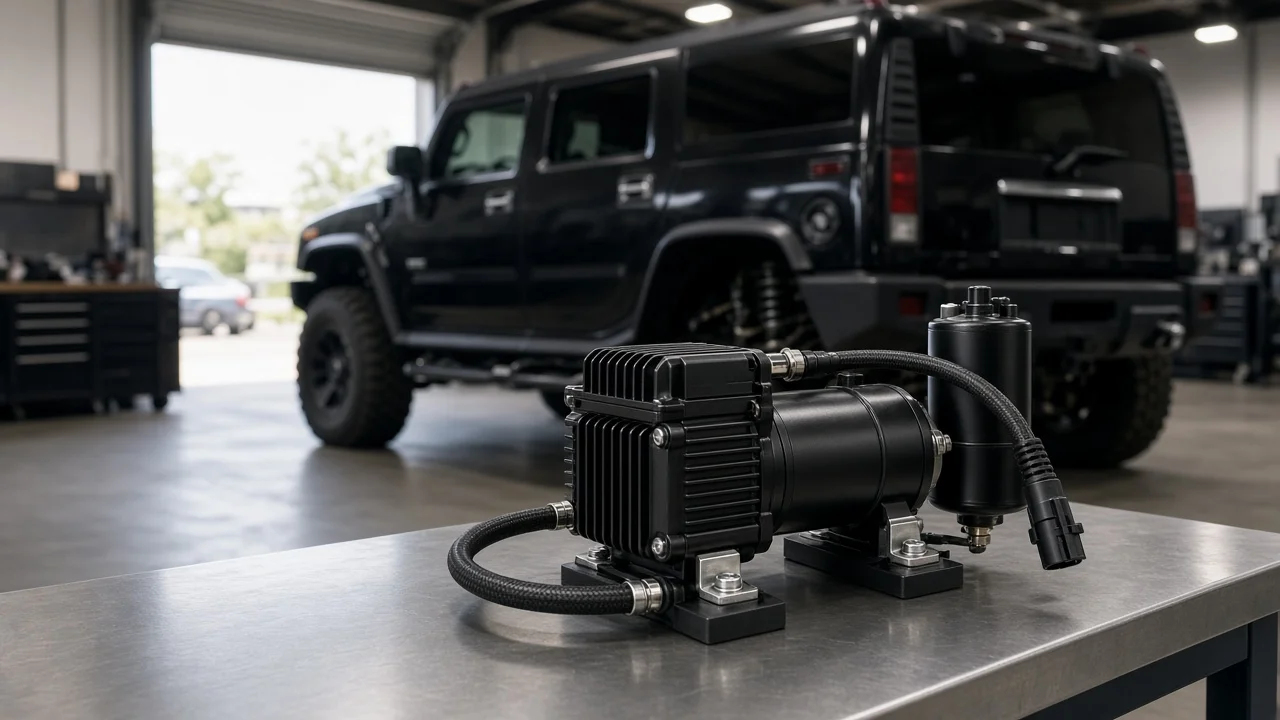
When the rear of a Hummer H2 sits low after parking, or the compressor runs longer than it should, the air suspension compressor is often the first part owners shop for. The right replacement depends on how your truck is equipped, what actually failed and how you use the vehicle. This guide covers fitment checks, the features that matter and the ownership costs, so you can buy the correct part once and install it with confidence.
Define the job the product must do
The H2's rear air suspension holds the back of the truck at a set ride height as the load changes. A height sensor reports when the body drops. The compressor then supplies air to the rear air springs until the target height is restored, and shuts off. How you use the truck determines how hard the compressor works. If you regularly tow, carry heavy gear or run loaded off-road, it cycles far more often than on a truck used mostly for unloaded commuting. That difference should shape how much weight you give to durability, warranty and serviceability when you compare parts.
Before you buy, confirm that the compressor is the actual fault. A leaking air spring, a cracked line or fitting, a faulty height sensor, a blown fuse, a failed relay or a damaged wire can all cause the same symptoms, and a new compressor will not fix any of them. A compressor that runs often or for long stretches usually points to a leak somewhere else in the system. If you replace it without repairing that leak, the new unit can wear out early. If the compressor does not run at all, check power and ground at its connector before condemning it. Once the diagnosis is settled, the remaining constraints are practical: budget, parts availability and whether you will do the work yourself.
Check compatibility
Start with the vehicle itself. The H2 was sold across several model years and in both wagon and SUT form, and rear air suspension was not fitted to every truck. On GM vehicles, the Service Parts Identification label is normally in the glovebox and lists the factory option codes. Use it to confirm your truck has the system, and match the part by VIN whenever the seller supports that. If you are shopping for a 2003 Hummer H2 air suspension compressor, the listing should name the exact model years and body styles it covers, not a broad range of GM trucks.
Next, compare the physical interfaces with the original unit. Check the electrical connector's shape and pin count, the air outlet fitting and line size, the mounting points and bracket layout, and whether the dryer, intake filter and rubber isolators are included. Some replacements are sold as a bare compressor that reuses your existing bracket. Others come as a complete assembly. Photograph the original before removal and compare those photos against the listing. If anything looks different, ask the seller before ordering. Improvised adapters on pressurized air lines are a common source of slow leaks.
Features that affect the choice
Most options fall into three groups: genuine GM parts, remanufactured units and new aftermarket compressors. A genuine part gives the most predictable fit, but availability and price vary for an older truck. Remanufactured quality depends entirely on the rebuilder. Ask which internal parts are replaced, whether the dryer is new and whether each unit is tested before shipping. New aftermarket compressors can be good value. Judge them by specific fitment information and clear photos of the connector and fittings, not by a generic application list.
Treat labels such as heavy duty, upgraded or lifetime with caution unless the seller explains what they mean. More useful evidence includes written warranty terms, a stated duty cycle, a clear list of included components, installation instructions and a return policy that covers fitment problems. An included dryer matters because moisture in the system can cause corrosion inside the components and problems in freezing weather. Intact isolators reduce noise and vibration carried into the body, so check whether new ones are supplied.
Limitations and ownership costs
Installation needs proper vehicle support. Park on level ground, chock the wheels and set the truck on rated jack stands at solid frame locations, never on suspension parts or air springs. Disconnect the battery. Release system pressure using the factory procedure before you open any air line. Tighten every bolt to the fastener specification in the factory service information rather than guessing. Route the wiring away from exhaust heat and moving parts. After installation, let the system cycle, verify ride height using the model-specific procedure and check every fitting for leaks with soapy water.
A compressor cannot repair leaking springs, a failed sensor or worn suspension parts. While the truck is supported, inspect the rear suspension for joint play and look at the shocks and bushings, because a sagging rear can hide other wear. Replacing the compressor alone does not change wheel alignment. However, if the truck ran low for a long time or you replaced other suspension parts, an alignment check is sensible. Ongoing costs include dryer and filter service, aging air springs and occasional electrical parts such as a relay. Some owners consider converting the rear to conventional springs instead. That changes how the truck levels under load and is a separate decision from choosing a compressor.
Build a practical shortlist
Before comparing prices, run each candidate through the same checks. Is the compressor confirmed as the failed component? Does the truck have factory rear air suspension, verified by the option label or VIN? Do the connector, air fitting, bracket and mounting points match the original? Does the price include the dryer, filter and isolators? What are the written warranty, the return conditions for fitment problems and any core charge on a remanufactured unit? If one candidate leaves any of these questions unanswered, ask the seller or move on to the next option.
Once you are down to two or three options, compare the total cost rather than the sticker price. Include shipping, core deposits, any extra parts such as a relay or new seals, and your own installation time or shop labor. A cheap unit that needs adapters, or that arrives without a dryer, can cost more over time than a complete, correctly matched assembly. Choose the part that fits your specific H2, carries clear terms and solves the fault you actually diagnosed.