How Trailer Brake Controllers Work: Use, Setup, Testing and Troubleshooting
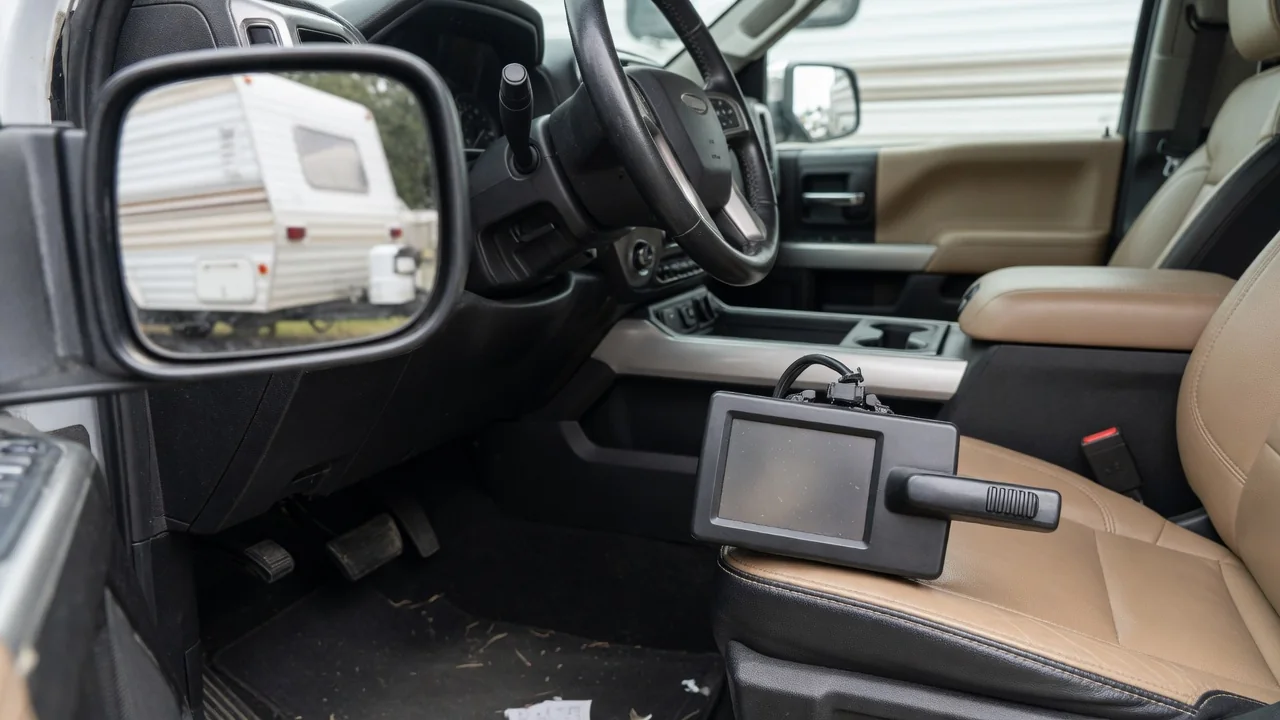
A trailer brake controller is the link between your brake pedal and the electric brakes on your trailer. This guide explains what the device does, how it works, the main types, how to use a trailer brake controller day to day, and how to connect, test, and troubleshoot one without guessing at what your specific equipment needs.
What a Trailer Brake Controller Is and What It Does
What is a trailer brake controller? It is an in-cab device that sends an adjustable electrical signal to a trailer's electric brakes whenever the tow vehicle brakes. Without that signal, a heavy trailer keeps pushing against the hitch while the truck tries to slow down, lengthening stops and unsettling the rig. With it, the trailer slows itself in step with the tow vehicle, which keeps the combination straighter and takes work off the tow vehicle's own brakes.
The controller is only one piece of the system. The brake assemblies on the trailer axles do the actual stopping, the wiring harness carries power and signals through the vehicle, and the 7-way trailer connector passes the brake output to the trailer. Some tow vehicles come with a factory integrated trailer brake controller built into the dash, while others rely on an aftermarket unit mounted under it. The owner's manual confirms which arrangement your vehicle has.
How a Trailer Brake Controller Works and the Main Types
How does a trailer brake controller work? Pressing the brake pedal tells the controller to act, the controller sends voltage down the brake output circuit to the connector, and that current energizes the trailer brake magnets inside each electric drum. The magnets grip the spinning drum face and lever the shoes outward. Trailer brake controller types differ in how they decide the output. A proportional brake controller, also called an inertia-sensing controller, varies output according to how quickly the vehicle is slowing.
A time-delayed brake controller instead ramps output up to a preset level over a short period after the pedal is applied, regardless of how hard the stop is. Both designs share similar controls. Gain sets the maximum output, a boost setting or sensitivity adjustment where fitted changes how aggressively braking begins, and the manual override applies the trailer brakes alone. Electric-over-hydraulic brakes need a controller designed to support them, so confirm that in the controller's documentation.
Do You Need a Trailer Brake Controller?
Do you need a trailer brake controller? If the trailer has electric brakes, yes in practical terms. Do trailer brakes work without a brake controller? Electric ones do not apply when you press the pedal unless a controller sends a signal. The only exception is the breakaway switch, a separate emergency system that applies the brakes from an onboard battery if the trailer separates. Surge brakes are different: they work hydraulically through the coupler and normally use no in-cab electric controller.
Legal requirements are another matter. Rules on when a trailer must have brakes vary by state and by trailer weight, so no single figure applies everywhere. Check the current regulations where you live and anywhere you plan to travel. Beyond the law, the tow vehicle's owner's manual and the trailer's specifications give towing and braking guidance for your particular combination, and those documents should shape your towing setup more than general rules of thumb.
How to Connect or Hook Up a Trailer Brake Controller: The Overview
Understanding how to connect a trailer brake controller starts with four circuits. The unit needs a protected power feed, a solid ground, a signal from the brake switch so it knows when the pedal is pressed, and a brake output wire that runs back to the trailer connector. Many trucks have a factory pre-wire or a port for a plug-in wiring harness, which makes it far simpler to hook up. The correct adapter depends on the vehicle, so follow the controller maker's fitment guidance.
Wire colors and connector pin layouts can vary, so confirm them against the vehicle and trailer documentation rather than assuming. If the vehicle has no pre-wire, if circuit protection is uncertain, or if you have any doubt about the wiring, use a qualified installer, because a poor connection can mean weak or absent trailer braking. Mount the controller within easy reach, clear of the driver's knees and airbag zones, and at the angle the manufacturer specifies for proportional units.
How to Use a Trailer Brake Controller and Set the Gain
Using the controller well comes down to gain. The gain setting is the maximum braking output sent to the trailer, and it should be reset whenever the load changes noticeably. The common method is to drive at low speed on a dry, empty, level surface and apply the brakes, raising gain until the trailer brakes feel firm without locking the wheels, then backing off slightly. Your controller's manual gives the exact procedure and speeds for that unit.
The manual override lever or button applies the trailer brakes without the tow vehicle's brakes. Drivers use it for gain checks and, applied gently, to help settle trailer sway; your manual explains its recommended use. Wet pavement, gravel, and light or empty trailers lock up more easily, so they call for a lower setting and extra caution. Recheck the gain after the trailer brakes are adjusted or serviced and before any long trip.
How to Test a Trailer Brake Controller, With or Without a Trailer
Learning how to test a trailer brake controller begins with its display. Most units indicate when a trailer is connected and show output rising when the pedal is pressed or the override is used, though the exact readout differs by model. With the trailer hooked up, a safe check is to roll forward slowly in an open area and apply the override alone. The trailer brakes should drag the whole setup to a stop.
Testing a trailer brake controller without a trailer is more limited. A suitable plug-in tester or a test light at the connector can show whether a signal reaches the brake pin, but that is not the same as confirming the brakes work. A good signal proves nothing about the trailer's magnets, wiring, or brake adjustment. Seek professional testing when there is no output, output that comes and goes, or braking that feels uneven from side to side.
Troubleshooting Electric Trailer Brake Controllers, Error Codes and Common Models
Trailer brake controller troubleshooting is easier when symptoms are sorted first: no trailer connection shown, weak or no braking, grabbing or locking, intermittent operation, or a controller that shuts off or loses power. Connection and intermittent faults often point toward the plug, so look for corrosion, bent pins, and poor seating. Power loss directs attention to circuit protection and ground condition, while grabbing may mean gain is too high for the load. Inspect visible harness damage, then leave deeper electrical or brake work to a professional.
Display codes are evidence to interpret, not a verdict on any part. Prodigy trailer brake controller codes from Tekonsha, for example, are specific to the manufacturer and model, so look up the exact meaning in that unit's manual. The same applies to a Hopkins Insight trailer brake controller or an older Kelsey Hayes trailer brake controller: its own manual covers controls, display, and setup. Do not tow if the trailer brakes do nothing, the trailer pulls hard to one side, or the breakaway system seems faulty.