How to Wash Your Car in Winter
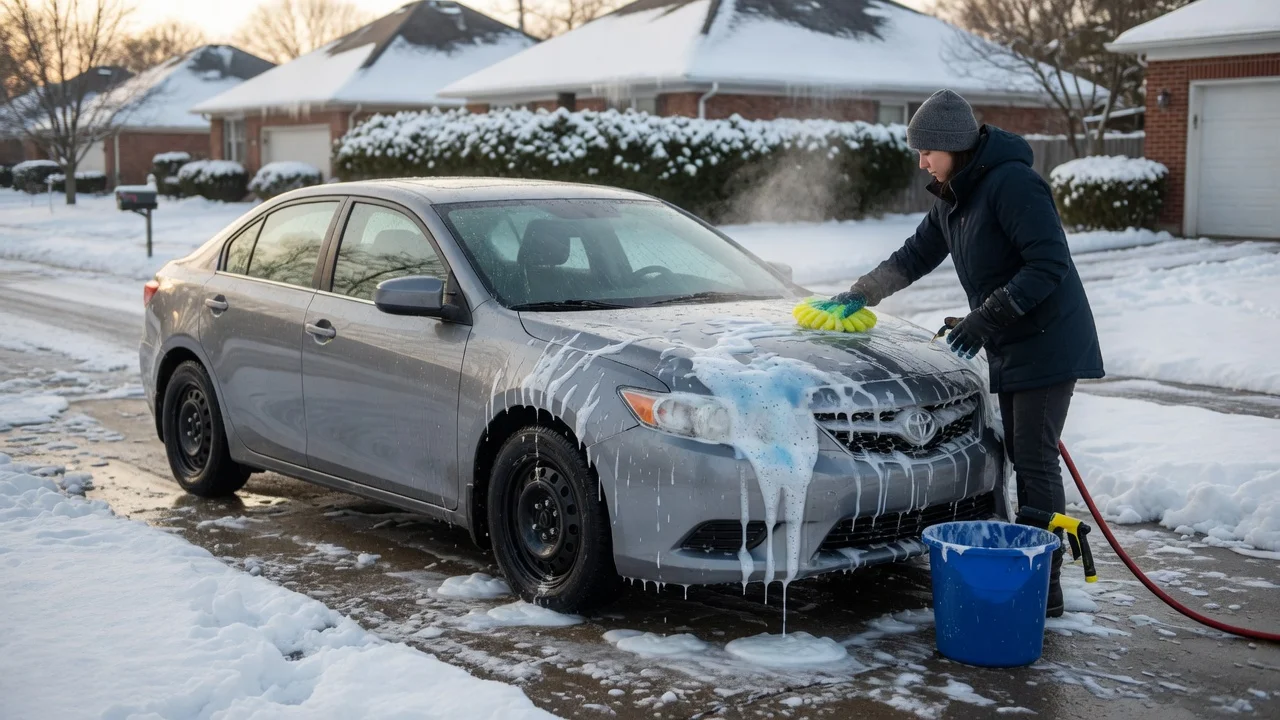
Before you start
A winter car wash is most useful when the body is covered in salt, dried road spray or grit. Plan for a location where you can wash safely: a heated self-serve bay, a touchless automatic wash, or a driveway session on a day above freezing. Avoid washing when the temperature is low enough for rinse water to freeze quickly on glass, mirrors, door seals or camera lenses. The process uses water, mild car shampoo and clean drying towels; it does not require a connected app or service account unless you use a paid wash facility.
Step-by-step instructions
1) Clear snow and loose ice
Brush snow off the roof, hood, trunk, lights, mirrors and around the doors. Do not pull ice off painted panels or camera housings. Let stubborn ice soften from cabin heat or a gentle rinse instead of chipping it away.
2) Use a gentle first rinse
Start with low pressure to remove loose salt and grit. Work from the roof down so dirt moves toward the ground rather than across already cleaned panels. Keep the spray brief around mirror folds, door handles, charging port covers and any camera or sensor area.
3) Wash with a soft mitt and clean water
Use a clean mitt or sponge with car shampoo and a separate rinse bucket. Clean small sections and rinse them before the soap dries. Pay extra attention to lower panels, wheel arches and rocker areas where salted slush collects. Do not scrub camera lenses with the same mitt used on gritty body panels.
4) Dry the surfaces that can freeze
Towel-dry the body with a clean drying towel, then dry door jambs, window edges, mirror housings and fuel or charge door edges. Wipe camera lenses with a separate soft cloth. Before parking, open and close each door once so wet seals do not freeze the door shut.
5) Protect vulnerable areas
Silicone spray or a dedicated rubber protectant can reduce ice adhesion on door seals, but apply it sparingly and avoid overspray on glass or camera lenses. Read the product label and confirm it is suitable for automotive rubber before use.
Check the output
Walk around the vehicle in good light. Check that windows, mirrors and exterior camera lenses are clear of dried soap film and water spots. Look for water trapped in door jambs, fuel or charge door edges, and around handle recesses. Open and close all doors, the trunk or hatch, and the fuel or charge cover if it was washed. If the temperature is below freezing, inspect the areas you touched last because any remaining film can turn into a thin layer of ice.
Common problems and next steps
Doors, locks or handles are frozen
If a door is frozen shut, first try the other doors rather than pulling hard on the handle. Gently press around the door edge with a gloved hand to break thin ice. Warm the door area with cabin heat or a short spell in a warmer space. Avoid hot water, which can stress glass and create more ice after cooling.
Wheel speed sensors or driver-assist alerts behave oddly
A blast of slush and ice around the wheels can temporarily cover a wheel speed sensor, and a salted or iced camera lens can reduce image clarity. Check that sensors and camera lenses are clean and free of packed snow. If a warning remains after the surfaces are clean and dry, have the vehicle inspected rather than assuming the wash caused a permanent fault.
Water marks or gray film return quickly
This is often dried road salt and mineral residue, not a failed wash. Rinse the lower body and wheel arches when possible after driving on treated roads. For the next wash, dry the vehicle more thoroughly and avoid washing in direct cold wind that can freeze rinse water before you finish.