How to Wash a Car Without Water Spots in Summer
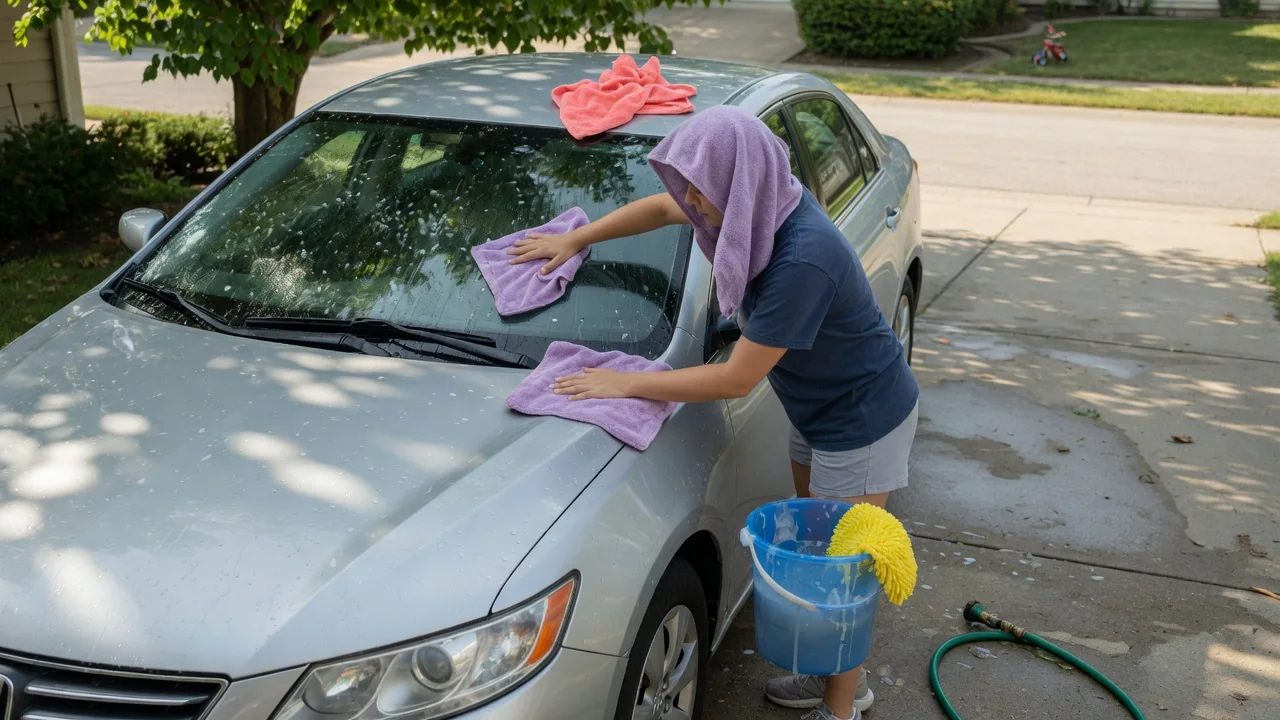
Learning how to wash a car without water spots in summer comes down to two things: keeping the panels cool and getting the water off before it evaporates. Spots are mineral residue left behind when droplets dry on hot paint and glass. Control the temperature and the drying time, and the finish stays clear even on bright, warm days.
Work in shade
Direct sun can heat sheet metal well above the air temperature, and dark colors absorb the most. On a panel that warm, rinse water and soap flash off in moments, leaving behind the dissolved minerals and surfactant film that show up as spots and streaks. Parking under a carport, on the shaded side of a building, or beneath a canopy slows evaporation dramatically and gives you working time. Early morning or evening washing achieves a similar result, because the bodywork has had hours to shed stored heat.
A simple check is to rest the back of your hand on the hood and roof. If the surface feels uncomfortably warm, let it cool before wetting it. Remember that a recently driven vehicle carries engine heat through the hood and radiant heat from the brakes into the wheels, so those areas stay hot longer than the doors. Horizontal panels and black trim also warm faster than vertical ones. Tree shade works, though sap and bird droppings may make a spot under open cover the better choice.
Rinse sections
Washing the whole vehicle before rinsing is what catches most people out in warm weather. By the time you reach the last door, the suds on the first fender have dried into a film. Instead, divide the car into manageable areas such as the roof, the glass, the hood, and each side, then soap and rinse one area completely before moving on. Start at the top so dirty runoff travels downward over panels you have not yet cleaned, and leave the lower sills and bumpers for last.
Keeping the rest of the car wet helps too. A light misting over finished sections every few minutes prevents beads from drying while you work elsewhere. For the final rinse, many people remove the spray nozzle and let a gentle, open stream flow across the paint. The water tends to sheet off in a continuous film, pulling droplets with it and leaving far less to dry. How well this works depends on the surface: fresh wax or a coating beads strongly, while older, unprotected paint holds water flat.
Dry promptly
Once the final rinse is done, the clock is running. Every droplet left to evaporate deposits whatever minerals it carried, so drying should begin immediately rather than after you put the buckets away. A large, clean, plush microfiber drying towel absorbs a great deal of water in a single pass. Lay it flat and draw it gently across the panel, or blot, rather than scrubbing. Begin with glass and the horizontal surfaces, since the roof, hood, and trunk lid receive the most heat and dry first.
Forced air is a useful companion to towels. A dedicated car dryer or a clean leaf blower pushes water out of mirror housings, door handles, badges, grilles, fuel filler recesses, and trim gaps, all of which drip later and leave runs down otherwise dry paint. A drying aid or quick detailer misted onto the wet panel adds lubrication and helps the towel glide. Open the doors, hood, and trunk afterward to wipe the jambs and seals, where trapped water often escapes on the first drive.
Everyday Use and Observations
Water quality shapes the results as much as technique. Hard water, common with well supplies and in many municipal systems, carries more calcium and magnesium and leaves chalky white rings even after careful work. If spots appear despite prompt drying, the supply is a likely factor. An inline deionizing or softening filter for the final rinse reduces the mineral load, and rinseless wash products mixed with distilled water offer another route for lightly soiled cars, particularly where summer watering restrictions apply or shade is hard to find.
Pay attention to how the vehicle behaves between washes. Lawn sprinklers are a frequent source of spotting, because they wet a hot car repeatedly with untreated water that then bakes dry. Dark and solid colors reveal marks far more readily than silver or white, and glass shows them clearly when the sun is low. Protection matters as well: wax, sealant, or a ceramic coating makes water release more easily and gives minerals less to grip, though tight beads on a coated surface can still dry into spots if left alone.
Limits and Next Steps
Good habits prevent fresh spots, but they will not remove ones that have already bonded. Light, recent deposits often wipe away with a quick detailer and a soft microfiber. Older marks may need a dedicated water spot remover, which is typically mildly acidic and should be used according to its label and tested on a small, hidden area first. Follow the vehicle owner's manual and the product directions, since matte paint, vinyl wraps, paint protection film, and some coatings call for specific care and can be damaged by the wrong chemistry.
Minerals left on hot paint for long periods can etch into the clear coat, leaving a faint crater that remains visible after cleaning. That kind of damage sits below the surface and generally requires polishing, which removes a small amount of clear coat and is best judged by a professional detailer if you are unsure. As a next step, restore protection after any spot removal, keep a drying towel and detail spray handy for unexpected soakings, and consider a filtered rinse if hard water keeps undoing careful work.