How to Wash a Car With Minimal Water
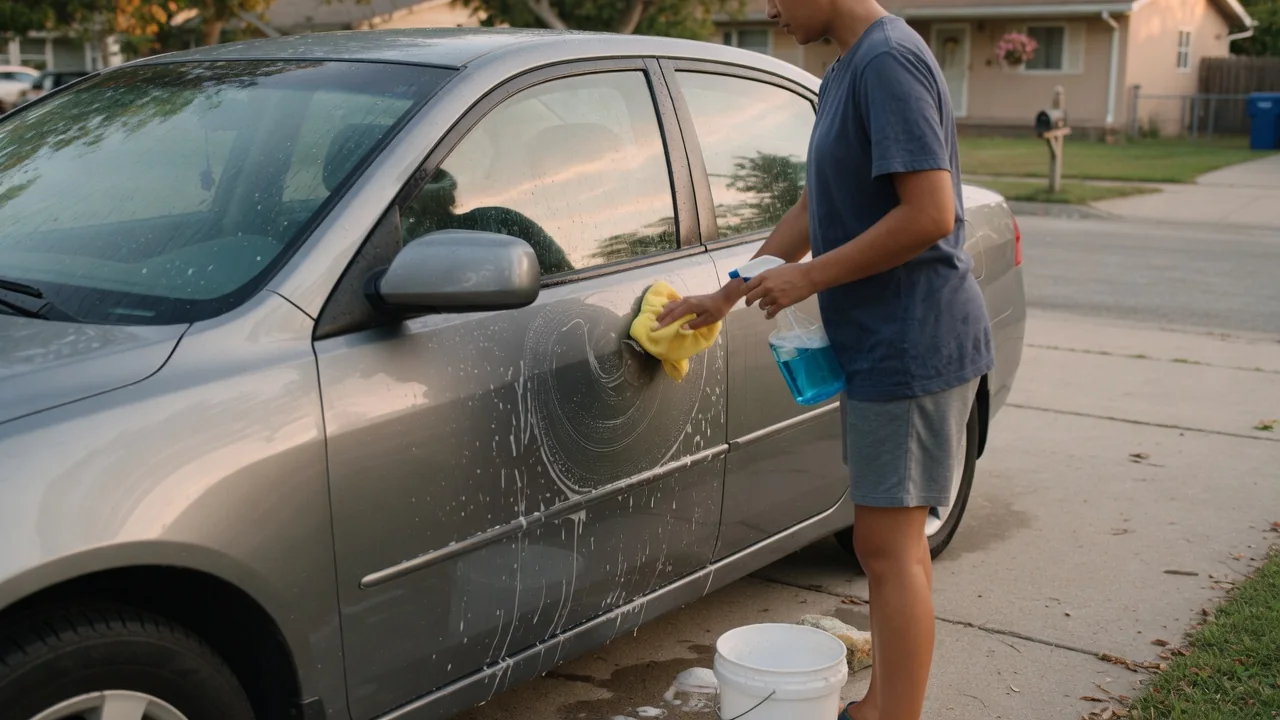
Learning how to wash a car with minimal water comes down to matching the method to the dirt. Light dust and fresh road film can be lifted safely with a rinseless or waterless approach, a handful of clean microfiber towels, and some patience. Heavier grime calls for a different plan. This guide explains how to judge the surface, protect the paint, and recognize when a low-water wash is the wrong tool.
Assess contamination
Before any towel touches the paint, look at what is actually sitting on it. A thin, even film of dust, light pollen, or dried rain spots is a reasonable candidate for a low-water wash. Caked mud along the rocker panels, gritty winter road salt, or sand packed behind the wheel arches is not, because those particles are large and hard enough to scratch clear coat when dragged across it. Viewing the panels at a low angle in daylight makes the difference much easier to see.
Contamination is rarely uniform across a vehicle. The roof, hood, and upper doors usually carry the lightest dust, while the lower doors, rear bumper, and the area behind each wheel collect heavier spray. Trucks and SUVs with wide tires or no mud flaps tend to throw more grit onto their own bodywork than a low sedan does. Dark colors and softer paint finishes also show fine marring more readily, so the same amount of dirt deserves a more cautious judgment on a black hood than on a silver one.
Lubricate surface
Lubrication is what separates a careful low-water wash from simply rubbing dirt into the paint. A rinseless wash solution mixed in a single bucket, or a waterless wash product sprayed directly on the panel, surrounds dust particles with a slick film so they glide into the towel instead of grinding against the clear coat. The surface should look visibly wet before wiping begins. If the liquid flashes off quickly on a warm panel or in direct sun, moving into shade and letting the paint cool gives it time to work.
Technique matters as much as the product. A plush microfiber towel folded into quarters offers several clean faces; wiping in straight, light passes and turning to a fresh side once it shows soil keeps collected grit away from the paint. Working one panel at a time from the roof downward saves the dirtiest areas for last. Dilution ratios and dwell times differ between brands, so the label directions are the reference to follow, and no formula makes heavy grit safe to wipe, whatever the packaging implies.
Dry safely
Drying removes the remaining solution before it can leave residue or mineral spots, and it is another moment when fabric contacts paint. A separate clean, dry microfiber reserved only for drying avoids reintroducing dirt picked up during the wash stage. Light pressure is enough; laying the towel flat and drawing it gently across the panel, or patting stubborn damp areas, lets the fibers absorb moisture without scrubbing. If the towel begins to drag or feel grabby, the surface likely needs a little more lubricant instead of more force.
Water hides in places that are easy to overlook. Mirror housings, door handles, trim gaps, badges, and the fuel filler area often release drips after the panels look finished, leaving streaks down otherwise clean doors. Glass benefits from its own towel to avoid haze, and matte paint, vinyl wraps, or textured plastic trim may respond differently than gloss clear coat, so guidance for those finishes is worth checking. Towels laundered without fabric softener and stored away from dust stay absorbent and gentle for the next wash.
Everyday Use and Observations
In regular use, a minimal-water wash suits vehicles that are cleaned often and never allowed to get very dirty. A commuter car kept in a garage and dusted by a few dry highway trips is the ideal case, as is a vehicle parked at an apartment complex where hoses are unavailable or where drought rules restrict outdoor water use. The method relies on a small bucket of solution or a spray bottle in place of a running hose, so the savings are real, though the amount needed still scales with vehicle size.
The towels themselves offer useful feedback. If the first one turns dark gray after a single panel, the car was dirtier than it looked, and switching to a rinse-first approach is the safer call. Paint protected with wax, sealant, or a ceramic coating usually releases dust more easily and feels slicker under the towel, while neglected paint tends to grip. Bird droppings and dried bug residue should be soaked and softened before lifting, never scrubbed, and inspecting the finish under good light afterward reveals whether the routine is leaving marks.
Limits and Next Steps
This approach has clear boundaries. Mud, road salt, sand, and anything picked up on gravel or off-road trails should be rinsed away with flowing water first, whether from a hose or a self-serve wash bay, before any contact washing. Wheels coated in brake dust generally need their own tools and cleaner so that metallic particles never reach the body panels. A low-water wash also does nothing for the undercarriage, which matters in regions where winter salt collects on suspension components, brake lines, and seams beneath the car.
Some contamination will not wipe away at all. Tar spots, tree sap, and bonded fallout that leaves the paint feeling rough call for dedicated removers or professional detailing, and pressing harder with a towel only risks damage. Existing swirls and scratches are a paint correction matter, not a cleaning one. The most realistic way to treat a minimal-water wash is as a maintenance step between more thorough washes, used when the dirt is light, the paint is cool, and enough clean towels are on hand to finish the job.