How to Wash a Car in Hot Weather
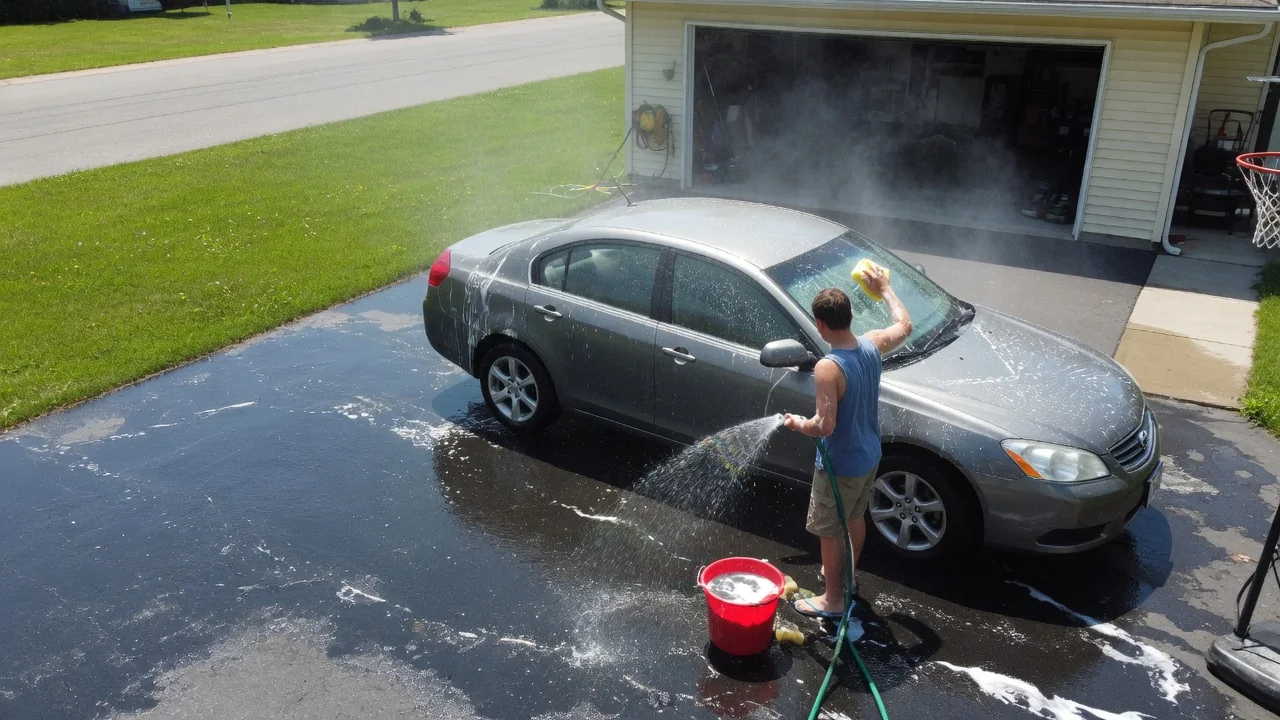
Learning how to wash a car in hot weather is mostly about managing evaporation. Heat warms the panels, water flashes off quickly, and the minerals and soap it carried stay behind as spots and streaks. With some planning around shade, timing, panel size, and drying, a summer wash can leave the finish as clean as one done on a mild day.
Work in shade
Direct sun does more than warm the air around a vehicle; it heats the sheet metal, glass, and trim themselves. A dark hood parked in full sun can become uncomfortable to touch, and water landing on that surface evaporates in moments. When it does, dissolved minerals from tap water and any soap residue remain on the clear coat as chalky rings. Shade slows that process by keeping panel temperature closer to air temperature, which gives wash solution time to loosen dirt before it dries.
A garage, carport, the shadow side of a building, or a large tree can all work, though trees may drop sap or pollen onto wet paint. If no shade exists, early morning or evening offers cooler panels and a lower sun angle. A simple check is to rest the back of a hand on the hood; if it feels hot, let the car sit and cool first. Dark colors and horizontal surfaces such as the roof and trunk lid usually hold heat longest, while light paint and vertical doors cool sooner.
Small sections
On a mild day, many people soap the whole vehicle and then rinse it in one pass. In heat, that habit lets suds dry on the first panels long before the hose returns. Dried soap leaves a hazy film that needs rewashing and can make the wash mitt drag. Dividing the car into smaller areas, such as half a hood, one door, or a single fender, means each zone is wetted, washed, and rinsed while still fully wet.
Working from the top down still makes sense, since the roof and glass carry lighter soil than rocker panels and bumpers. How small each section should be depends on conditions: a breezy, dry afternoon shortens working time more than a humid, still morning. Watch the edges of the suds; when they begin to thin and turn patchy, the area is too large. Bigger vehicles such as trucks and SUVs have long roofs and tall sides, so they typically need more, smaller zones than a compact sedan.
Rinse and dry
Rinsing in hot weather does two jobs: it carries away loosened dirt and it keeps surrounding panels wet so nothing dries in place. A gentle, steady flow of water across a just-washed section, followed by a quick mist over neighboring areas, keeps the whole car damp until drying begins. Pay attention to mirror housings, door handles, badges, and trim gaps, where soapy water hides and later runs out, leaving drip trails down otherwise clean paint.
Drying is where spotting is finally prevented, because any droplet left to evaporate deposits whatever it contained. A clean, plush microfiber drying towel, blotted or drawn lightly across the surface, removes water before the heat does. Start with glass and horizontal panels, since they spot fastest, then move to the sides. Hard water with high mineral content leaves more visible marks than soft water, so results vary by region and by water source. Some owners use a drying aid or blower, though product suitability depends on the paint protection already on the vehicle.
Everyday Use and Observations
After a few summer washes, patterns become easy to read. Water spots tend to appear first on the hood, roof, and windshield, and they show most clearly on black, dark blue, or deep red paint. Circular marks with pale edges generally point to mineral deposits from evaporated droplets, while streaky, dull patches more often suggest soap that dried before rinsing. Glass may show the same deposits as a faint haze that becomes noticeable when driving toward a low sun.
Surface protection changes how the car behaves. Paint with fresh wax, sealant, or a ceramic coating usually beads water into tight droplets that are easy to towel away, whereas unprotected or weathered clear coat lets water lie flat and dry in wide sheets. Wheels and brakes deserve separate attention: they can stay very hot after a drive, and cold water or cleaner on hot components dries almost instantly, so letting the car rest before washing is sensible. Matte finishes, vinyl wraps, and paint protection film may have their own care requirements.
Limits and Next Steps
Careful technique reduces spotting but cannot always eliminate it. In extreme heat, low humidity, or strong wind, water may evaporate faster than anyone can rinse and dry, and postponing the wash is often the better choice. Fresh spots frequently wipe away with a rewash of the affected panel, yet deposits left to bake for days can bond more firmly and, in some cases, etch the clear coat. Bird droppings and bug residue behave similarly, becoming harder to remove the longer they sit in the sun.
If marks remain after a gentle rewash, a dedicated water spot remover or light polishing may be the next step, and the product label and the vehicle owner's manual should guide what is safe for a given finish. Stubborn etching, or damage on wrapped, matte, or coated surfaces, is worth showing to a professional detailer rather than attacking with harsh chemicals or abrasives. Going forward, maintaining a layer of protection and choosing cooler hours makes each hot-weather wash quicker and more forgiving.