How to Wash a Car in Cold Weather
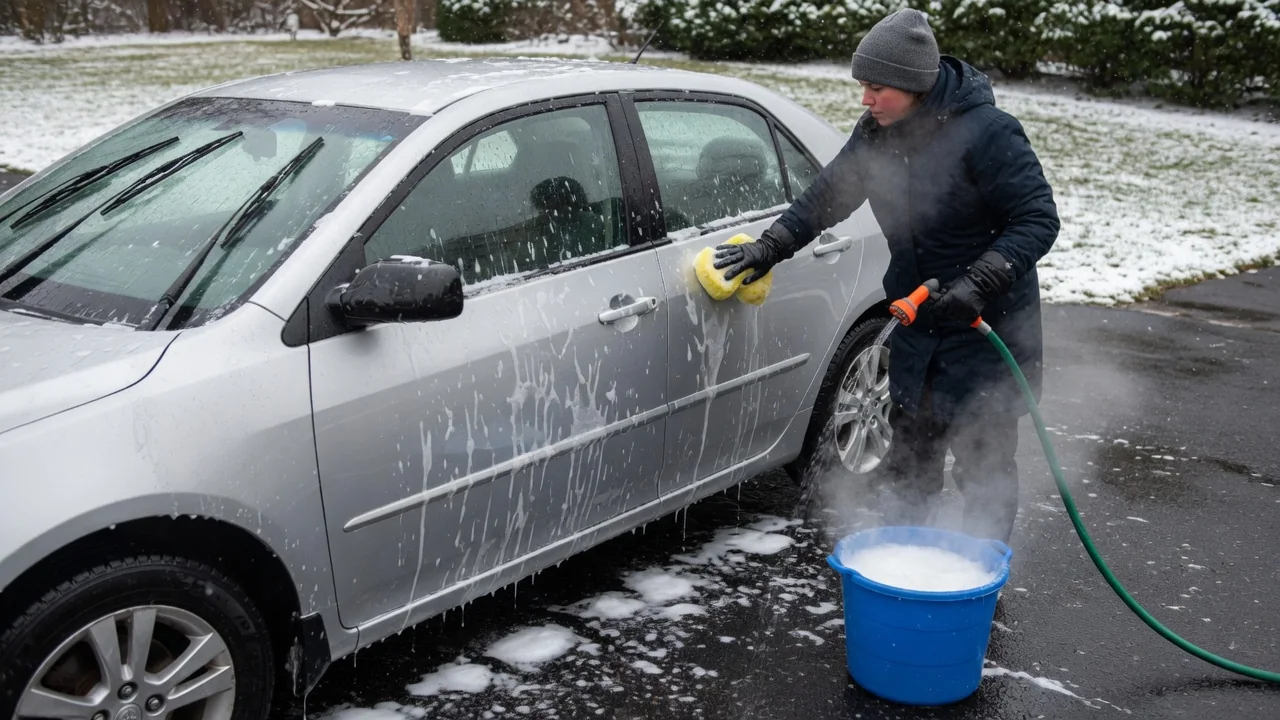
Road salt, slush and grit make winter the season when paint and underbody metal most need cleaning, yet freezing air turns rinse water into a hazard of its own. Knowing how to wash a car in cold weather means choosing the right moment, limiting how long water sits on the vehicle, and drying door seals, locks and other openings before ice can form.
Check conditions
Start with the thermometer and the forecast rather than the bucket. Water that lands on a panel colder than freezing can glaze over before it is wiped away, so the surface temperature of the body matters as much as the air reading. A car that has sat outside overnight will be colder than one just driven, and shaded sides stay colder than sunlit ones. Midday, when the sun is highest and the wind is calm, usually offers the widest margin before evening temperatures drop again.
Look at where the runoff will go as well. Water that drains across a driveway or sidewalk can refreeze into a slick patch that is more dangerous than a dirty car. Wind is another factor, because moving air chills wet panels quickly and can freeze water in door gaps before a towel reaches them. If conditions look marginal, a heated garage, a self-serve bay or an enclosed automatic wash with blowers may be a better choice than washing at home with a hose.
Wash safely
Use lukewarm water rather than hot. Pouring very hot water onto cold glass or paint creates a sudden temperature difference that can stress a windshield, especially one with an existing chip, and it cools so quickly that it offers little benefit anyway. Work in small areas, washing and rinsing one panel or one side at a time so soapy water never sits long enough to freeze. A thorough pre-rinse matters in winter because salt crystals and sand dragged across paint by a mitt leave scratches.
Give the lower body the most attention, since wheel arches, rocker panels and the area behind the wheels collect the heaviest salt deposits. Rinsing the underbody helps remove brine from seams and suspension components, though the reach available depends on ground clearance and the equipment used. Keep strong spray away from door locks, the edges of window seals and the charging or fuel filler door where possible, because forcing water into those openings only adds to the drying work. Wear waterproof gloves, since numb hands rush the job.
Dry seals and locks
Drying is the step that separates a successful winter wash from a frozen-shut door. After wiping the painted surfaces with a clean microfiber towel, open each door, the trunk or liftgate and the fuel filler door and wipe the jambs, sills and rubber weatherstripping. Water hides in the channel along the bottom of the door and around the hinges, and it will drip back onto the seals after the car is closed. Dry rubber is far less likely to bond to the metal when temperatures fall.
Locks, handles and mirrors need the same care. Water that settles in a key cylinder or behind a handle can freeze the mechanism, which matters most on vehicles where a mechanical key is the backup if the remote fails. Blot around handles, folding mirror joints, window edges and wiper blades, and lift the wipers briefly to dry the glass beneath them. Many owners apply a rubber-safe conditioner to seals and a lock lubricant designed for the purpose; the owner's manual is the best guide to which products suit a particular vehicle.
Everyday Use and Observations
The minutes after the wash offer useful clues. A short drive helps shed water from the mirrors, trim gaps and wheels, and gentle brake applications warm the brakes enough to dry them, which reduces the chance of pads sticking to the rotors or a parking brake freezing in place overnight. Running the heater and defroster helps clear moisture from the cabin and glass. If a window is slow to lower or a door resists opening the next morning, water was probably left along that seal.
Details differ from one vehicle to another. Frameless door windows that drop slightly when the handle is pulled can struggle if ice grips the glass, and flush or retractable door handles may stick when water freezes behind them. Power liftgates, sunroof drains, charging port doors and parking sensors are other places where trapped moisture shows up as slow or unusual operation. Noting which openings give trouble after one wash tells the owner where to spend extra time with the towel on the next one.
Limits and Next Steps
There are days when washing outdoors is simply not practical. In a hard freeze, water turns to ice on contact, towels stiffen, and the risk of sealing doors shut outweighs the benefit of removing salt. Waiting for a milder spell or using an indoor facility is the sensible choice in those conditions. A rinseless wash product used inside a garage is another option for light dirt, though heavy salt and grit should be rinsed away first to avoid grinding it into the clear coat.
If something does freeze, patience protects the car better than force. Pulling hard on a stuck door can tear weatherstripping, and running frozen wipers or forcing a power window can strain the motor or linkage. Moving the vehicle into a warmer space, or letting the cabin heat work, is gentler than prying or chipping. Between washes, a coat of wax or sealant applied before winter helps salt and grime release more easily, which shortens each cold-weather wash and reduces the amount of water needed.