How to Use Paddle Shifters Without Surprises
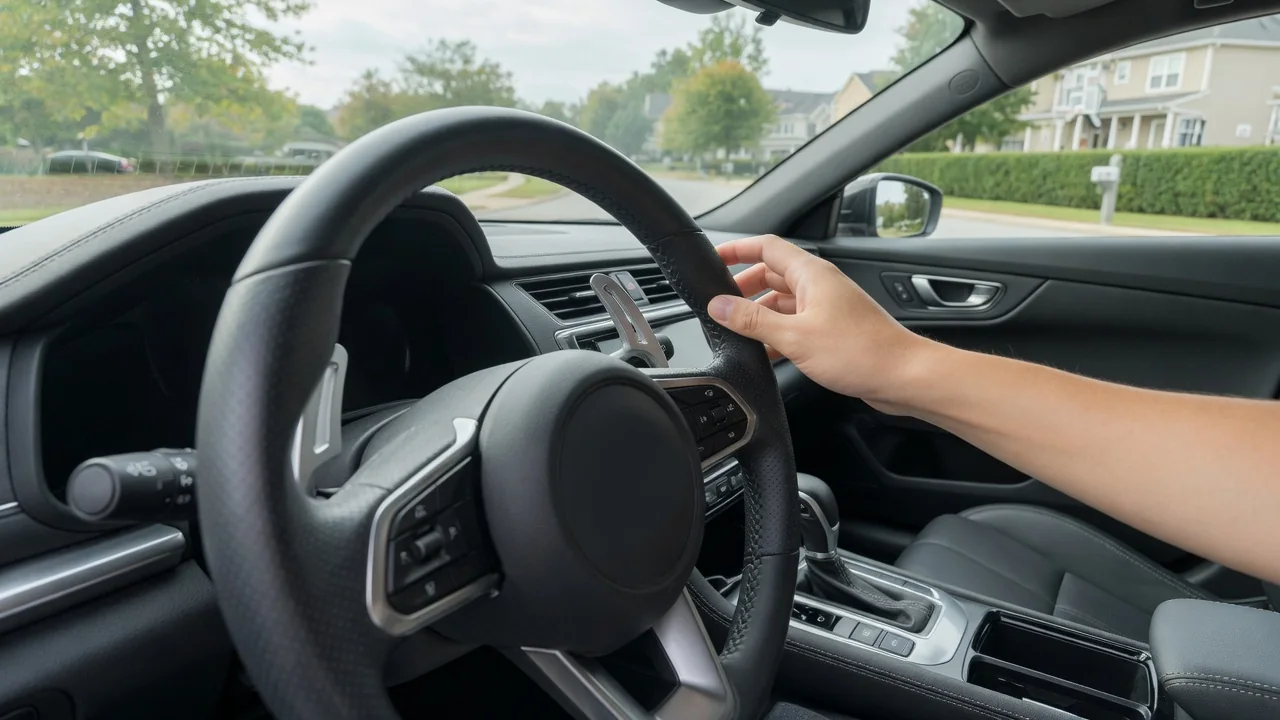
Learning how to use paddle shifters without surprises starts with one idea: each pull is a request, not a command. The transmission control module weighs that request against engine speed, road speed and its own protection logic before acting. Understanding when the car will agree, when it will refuse and when it will quietly take control back makes manual mode predictable rather than puzzling.
Up and down requests
On most vehicles the right paddle, usually marked with a plus sign, asks for the next higher gear, and the left paddle, marked with a minus, asks for a lower one. Pulling either sends an electrical signal to the transmission computer rather than moving anything mechanical. The computer then checks whether the resulting engine speed would be acceptable. If it is, the shift happens and the gear number in the instrument cluster changes; if not, the display simply stays where it was.
A practical example is approaching a highway off-ramp. A single downshift pull at moderate speed usually goes through, bringing engine braking with it. Pulling three times in quick succession at high speed may deliver only one or two of those shifts, because the last would spin the engine too fast. Some cars flash the gear indicator or sound a chime on a denied request, while others give no feedback at all. A few layouts mount the paddles on the column instead of the wheel, so check your owner's manual.
RPM limits
Engine speed is the main reason a request gets refused. A downshift raises rpm because the lower gear multiplies engine speed for the same road speed, and if the predicted figure lands beyond the redline, the control logic blocks it to protect the valvetrain and bottom-end components. The opposite limit also exists: an upshift requested at very low speed may be declined because the engine would lug in the taller gear, laboring against a load it cannot comfortably carry.
What happens at the top of the rev range varies by manufacturer and even by drive mode. Many transmissions upshift automatically as the tachometer nears redline, even in manual mode, so a driver holding a gear through a long on-ramp feels an unrequested shift. Others, particularly in sport or track settings, hold the gear and let the rev limiter cut power, producing a stuttering sensation. Likewise, most cars drop to a low gear on their own as you slow to a stop. Watching the tachometer during these moments shows which behavior your car follows.
Return to auto
A common surprise is manual mode that ends by itself. In many vehicles, tapping a paddle while the selector is in Drive starts a temporary manual session. After a period of steady cruising with no further pulls, or after sustained throttle, the transmission resumes automatic shifting and the gear number disappears from the display. Drivers who expected the car to stay in fourth for a long descent may notice it upshifting and losing engine braking partway down the hill.
Holding manual mode for longer usually requires moving the selector to a dedicated manual or sport gate, or pressing a mode button, though the arrangement depends on the vehicle. Returning to automatic deliberately is often done by holding the upshift paddle for a moment or moving the selector back to Drive; the owner's manual confirms which method applies. Knowing the exit matters as much as the entry, because forgetting a held low gear leads to high revs and wasted fuel on the highway.
Everyday Use and Observations
In daily driving, paddles earn their keep in a few situations. Downshifting before a steep descent lets engine braking share the work and keeps brake temperatures in check. Selecting a lower gear before passing on a two-lane road removes the pause while the automatic decides to kick down. On slippery surfaces, some drivers start in a higher gear to soften torque at the wheels, where the vehicle allows it. Towing on rolling terrain is another case, since holding one gear stops repeated hunting.
How the shift feels depends on the hardware. A dual-clutch transmission tends to respond almost instantly because the next gear is preselected, whereas a conventional torque-converter automatic may show a brief delay and a smoother transition. Continuously variable transmissions with paddles step between programmed ratios that imitate gears rather than fixed gearsets. Hybrids and electric vehicles sometimes use paddles to adjust regenerative braking strength instead of gears. Noting response time, rev-matching blips and display behavior over a few drives builds an accurate picture of your own car.
Limits and Next Steps
Protection logic extends beyond rpm. When transmission fluid is cold, or when it runs hot after hard use, the computer may limit which gears are available or ignore paddle input until temperatures normalize. Full-throttle kickdown past the pedal detent can also override a held gear on many vehicles, a safeguard for emergency acceleration. None of this indicates a fault; it is the software prioritizing durability and drivability over the driver's preference at that moment.
Behavior worth investigating looks different: paddles that never respond, shifts that slam or flare, a warning light, or a transmission stuck in one gear. A stored fault code can point a technician toward a circuit or system, but it is evidence to interpret alongside testing, not proof that a particular part has failed, and many transmission codes are manufacturer-specific. Start with the owner's manual to rule out normal features, then have a qualified shop confirm the diagnosis with vehicle-specific information before any parts are replaced.