How to Use a Fuel Filter Cross Reference Chart
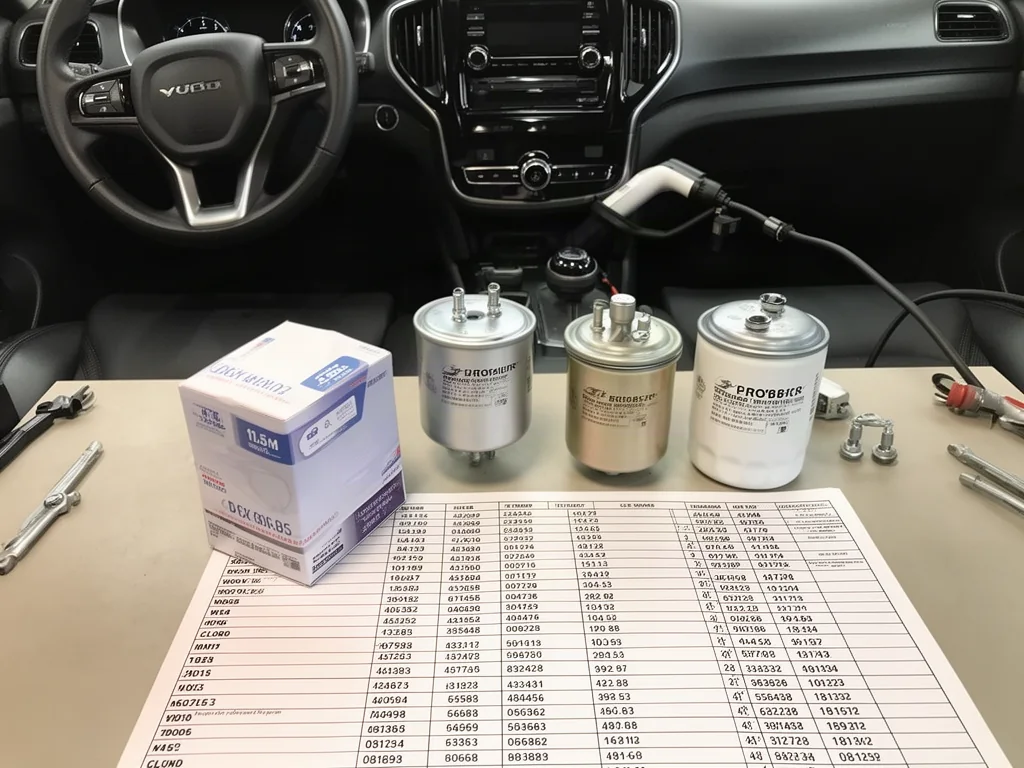
A fuel filter cross reference helps you find an equivalent replacement when the original brand, OEM part number, or a known replacement part number is no longer on the shelf. Crossover charts and interchange listings connect that number to candidates from other makers, but they do not by themselves prove fuel system compatibility. Recording the full number, checking the application catalog, and confirming dimensions, thread specification, and any water separator function keeps a lookup from becoming a guess.
What a Fuel Filter Cross Reference Can Tell You
A cross reference fuel filter lookup starts with a known number and returns one or more listed replacements from another brand. That mapping is the practical core of fuel filter interchange: the source number, often an OEM part number or a previous aftermarket listing, is treated as the key, and the chart or catalog returns a candidate replacement part number. The result is useful because it shortens the search when a preferred brand is unavailable, but it still describes a listed equivalent rather than a proven fit for a specific vehicle.
Interchange, crossover, and a superseded part number answer related but different questions. Interchange means another maker lists a filter as an equivalent to the number you already have. A fuel filter crossover chart is the table or lookup that presents those equivalents, usually by brand column. A superseded part number is a later listing that replaces an older number within the same brand family, so the old code may no longer be stocked even though the filter form remains. In every case the listed match is a candidate whose application and specifications still need verification.
Gather the Part Number and Vehicle Details First
Record the complete filter part number and brand from the label, the box, or a service record before opening any chart. Preserve suffixes, dashes, and leading zeros, because those characters often distinguish housings, media, or connection styles that otherwise look similar. Then gather year, make, model, engine, and fuel type so the application catalog can be checked against the same vehicle, not a nearby sibling. When the catalog asks for it, VIN-derived information can separate production-date or engine-code splits that a model name alone will not resolve.
Confirm which filter position is being researched when the fuel system uses more than one filter, such as an in-tank strainer, an in-line filter, or a filter-water separator on the chassis. The same vehicle can list different numbers by location, and mixing those positions produces a false interchange. An installed filter is only a starting clue if its suitability has never been established; a previous owner may have fitted a convenient number rather than the correct one. Treat that number as a lead to verify, not as proof of the original specification.
Read the Crossover Chart and Its Application Notes
On a fuel filter crossover chart, identify the source-brand column, the original part number, the replacement-brand column, and any notes tied to that row. Follow the chart's stated lookup direction: some tables convert from OEM to aftermarket, others from one aftermarket brand to another, and reversing that path without confirmation can land on the wrong listing. Read the exact row for the number you recorded. Nearby rows often differ by a suffix or a single digit, and treating them as matches is a common source of fuel system compatibility errors.
Check footnotes and application notes for engine restrictions, production-date distinctions, filter positions, and superseded numbers that change which candidate actually applies. Multiple results are not interchangeable by default; each one still needs application verification against the vehicle and the intended location in the fuel system. A missing entry also does not prove that no suitable replacement exists. It may mean the publisher has not mapped that source number, the filter is listed under a later superseded part number, or the application catalog is the better path than the crossover table.
Check a NAPA Fuel Filter Cross Reference Result
A NAPA fuel filter cross reference works the same way as other brand lookups: enter the complete source-brand part number, including suffixes, or give that full number to a parts specialist. The returned NAPA number is a listed equivalent, not an automatic approval for the vehicle in front of you. Check that NAPA result against the intended year, make, model, engine, and fuel type in the application catalog. If the vehicle listing and the cross-reference listing disagree, treat the conflict as unresolved until the application side is confirmed.
Review the product details and application notes attached to that NAPA number, including any replacement-number history that shows a superseded part number or a later listing. Notes may flag water separator housings, sensor ports, or heater provisions that a plain in-line filter will not provide. If the lookup is inconclusive, bring the original number, the vehicle details, and the filter-position information to a parts specialist. Those three facts let the specialist search both the crossover path and the application catalog instead of guessing from a partial number.
Verify the Specifications That Determine Suitability
Confirm the filter's intended fuel type, system application, and location before treating any replacement part number as suitable. Gasoline, diesel, and other fuel systems are not interchangeable on appearance, and an in-tank unit, an in-line filter, and a primary water separator serve different jobs. Check cataloged filter dimensions, mounting arrangement, thread specification or connection type, and sealing requirements against the housing or lines the filter must join. Similar canisters can hide different ports, seal heights, or bracket geometry, so visual resemblance is not proof of fitment.
Filtration ratings need their stated efficiency and test context; a micron number alone cannot establish suitability because ratings can describe different particle sizes, efficiencies, or test methods. Verify any required water-separation function, drain arrangement, sensor provision, or heater provision when the vehicle's fuel system uses those features. If performance, pressure, or flow specifications are missing from the listing, treat that gap as a reason to seek supplier confirmation rather than infer fuel system compatibility from the cross reference. Missing data is not permission to assume the candidate matches the original.
Resolve Conflicting Listings Before Ordering
Pause the selection when the fuel filter cross reference and the vehicle application listing disagree. Ask the manufacturer or a qualified parts specialist to resolve the discrepancy rather than choosing the more convenient number. Save the confirmed part number, application details, and relevant catalog notes once the conflict is settled, including any superseded part number that should be used on the next purchase. A written note of engine, fuel type, and filter position is as useful as the number itself, and those records prevent repeating the same lookup from a faded label.
Before installation, check the delivered package and any accessible identifying marks against the confirmed order so a picking error does not reach the vehicle. Keep identification checks noninvasive: do not open fuel lines solely to read a filter number, and do not disassemble a pressurized fuel system to confirm a label. When access or identification requires fuel-system disassembly, seek professional help. A crossover result is a purchasing aid; the last confirmation is that the box, the number, and the application notes still match the vehicle you intend to service.