How to Transport Houseplants in a Car
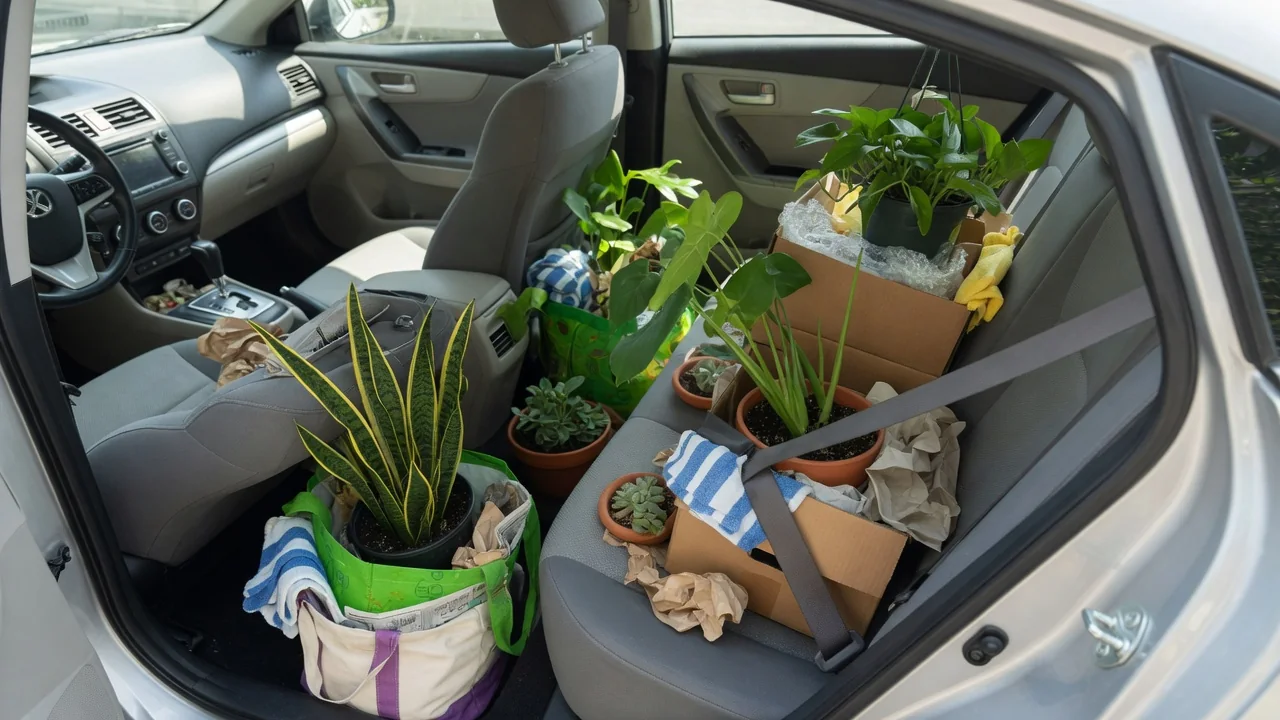
Learning how to transport houseplants in a car comes down to two problems: pots that tip when the vehicle brakes or corners, and cabin temperatures that swing far beyond what foliage tolerates. A little planning around where each plant sits, how its container is braced, and how the climate control is used keeps roots, stems, and upholstery in good shape during the trip.
Support pots
A pot tips because its center of gravity sits high and the car's forces act sideways. Braking pushes loads forward, cornering pushes them to the outside, and a tall plant in a narrow container reacts to both. The rear footwell is usually the most stable spot, because the front seatback and the rear seat cushion form a pocket that limits movement. Sliding the front seat back until it lightly touches the pot can hold it without crushing the rim.
In a cargo area or trunk, the floor is wide and flat, so pots need something to lean against. A sturdy box, laundry basket, or crate with rolled towels wedged between containers stops them from sliding into each other. Some vehicles have tie-down hooks, cargo nets, or underfloor bins that help; others have a sloped load floor or a high liftover lip, so check what your layout offers. A plant belted onto a seat should ride upright, with the lap portion across the pot rather than the stems.
Shield soil
Loose potting mix is the part most likely to end up in the carpet. Vibration over rough pavement settles and shifts soil, and a sudden stop can throw it out of a tilted pot. Covering the surface with a layer of paper, cardboard cut to fit around the stem, or a bag tied loosely around the pot's rim keeps the mix in place. Leave the foliage uncovered or loosely wrapped so air can still move around the leaves.
Moisture matters as much as spillage. A freshly watered pot is heavier, drains through the bottom holes, and can leave damp spots that soak into seat foam or carpet padding, where they dry slowly and may cause odors. Watering a day or two ahead generally leaves soil moist but not dripping. A plastic tray, rubber floor mat, or cargo liner under the pots catches whatever does escape. Carpet materials and drainage paths vary by vehicle, so look under the mats afterward for hidden dampness.
Avoid extreme cabin heat
A parked car works like a greenhouse: sunlight through glass warms the dashboard, seats, and trim, and those surfaces then heat the trapped air. Interior temperature can climb well above the outside reading in a short time, even on a mild day, and leaves pressed near glass are hit hardest. Plan the trip so the plants go in last and come out first, and avoid leaving them in a closed vehicle during errands. Cold is equally damaging; an unheated cabin in winter can chill tropical foliage quickly.
While driving, climate control keeps things moderate, but vent placement matters. Air blasting directly from a dash or floor outlet, whether hot or cold, dries leaf edges, so aim vents away from plants or lower the fan speed. Direct sun through side glass can scorch leaves on a long drive; tinted glass, built-in shades, or a light sheet draped over the plant reduce that exposure. Trunks in sedans are usually outside the conditioned airflow, so they tend to follow outdoor temperatures more closely than the cabin does.
Everyday Use and Observations
Short trips home from a garden center are the common case, and small habits make them uneventful. Smooth acceleration, earlier braking, and gentler cornering reduce the forces acting on the pots more than any amount of padding. Listen for the sound of sliding or tapping from the back; that usually means a container has worked loose, and it is worth pulling over somewhere safe to reset it. Tall plants can be laid at an angle on a reclined seat if the pot is bagged and the stems are cushioned.
Keep the driver's needs first. Foliage should not block the view through the rear window or mirrors, lean into the shifter area, or sit where it could roll under the pedals. An unsecured heavy ceramic pot becomes a projectile in a hard stop, so weight belongs low and braced. After unloading, inspect the plants and the car: limp leaves suggest heat or cold stress, snapped stems point to poor support, and soil or water on the trim shows where the setup needs improving next time.
Limits and Next Steps
Some plants do not fit the car. Tall trees or wide specimens that require an open hatch, a folded seat with a blocked view, or a load beyond what seats and cargo floors are meant to carry are better moved in a van, a pickup with wind protection, or by a delivery service. Open windows or an open bed expose leaves to wind that strips moisture and tears foliage, so wrapping becomes necessary. The owner's manual lists load limits, tie-down locations, and seat-folding arrangements for a specific vehicle.
Long-distance moves add considerations beyond a short drive. Overnight stops mean carrying plants indoors rather than leaving them in a parked vehicle, and several days of travel call for checking soil moisture along the way. Some states and regions restrict bringing certain plants or soil across borders, so confirm the rules for the route before leaving. Once home, clean up spilled soil promptly, dry any wet carpet, and give the plants a few days in stable light and temperature before repotting or heavy watering.