How to Transport Gardening Supplies in a Car
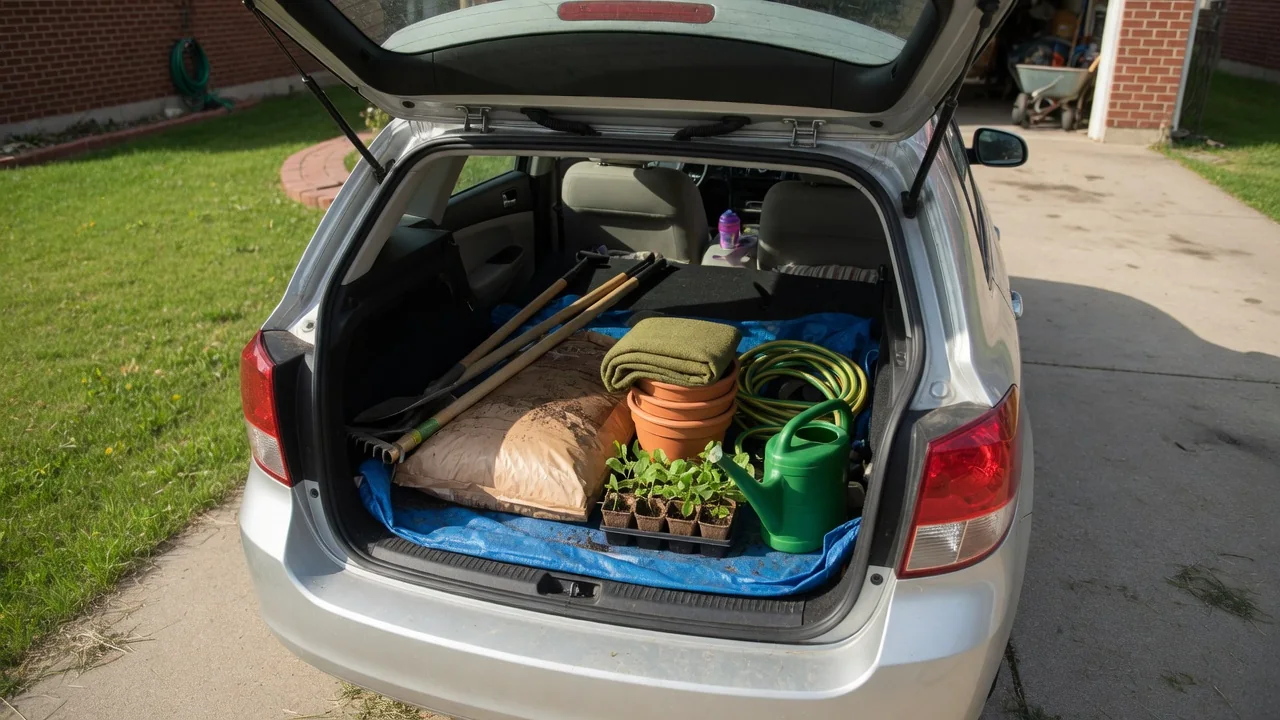
A trip to the garden center can leave a trunk full of loose soil, dripping pots and tools with exposed edges. Knowing how to transport gardening supplies in a car comes down to three habits: containing anything that spills, shielding the cargo area from moisture and abrasion, and cleaning up before dirt and dampness settle into the carpet.
Use bins
Rigid plastic bins turn a loose load into a few manageable blocks. A bag of potting mix that splits at a seam empties into the bin rather than into the carpet pile, and a freshly watered plant drains into the tub instead of the spare tire well. Bins with straight sides and a low height work best, because they sit below the window line and keep the weight close to the floor, where it has less leverage during a turn or a hard stop.
Sharp tools deserve their own container. Pruners, trowels, hand forks and saws should travel with blades closed or sheathed, laid flat in a lidded tote so points cannot work through upholstery or reach a passenger. Long-handled tools such as rakes and spades are safer with the metal end toward the rear of the vehicle and wrapped in an old towel. Cargo shapes differ, so measure the opening and the space between wheel housings before buying bins that may not fit.
Protect cargo floor
The cargo floor in most cars is carpet over a fiberboard panel, and neither tolerates wet soil well. A molded rubber or plastic liner with a raised lip keeps runoff from reaching the edges, where it can seep under the panel and into the well beneath. Without a fitted liner, a heavy tarp or a painter's plastic sheet covered by an old blanket works, since the plastic stops moisture and the fabric keeps bins from sliding across a slick surface.
Protection should extend beyond the floor itself. Folded seatbacks, the plastic trim along the sides and the painted bumper sill all take scuffs when bags and paving stones are dragged in and out. A blanket draped over the sill during loading prevents scratches that later rust on exposed metal. In hatchbacks and SUVs, check whether the liner covers the gap behind folded seats, because soil that falls into that hinge area is difficult to reach and tends to stay damp.
Clean after
Cleaning soon after unloading matters more than cleaning thoroughly a week later. Dry soil lifts out easily with a vacuum, while soil that has been wetted and walked on packs into carpet fibers and stains. Remove the liner or tarp by folding the edges inward so debris stays trapped, shake it out away from the car, and rinse it outdoors. Let it dry completely before it goes back in, since a wet liner laid over carpet holds moisture against it.
Moisture left behind is the larger concern. Lift the cargo floor panel and look into the spare tire well or storage tray for standing water, then wipe it dry and leave the hatch or trunk open for a while on a dry day. Fertilizer residue deserves particular attention because many products are corrosive to bare metal and can irritate skin, so wipe hard surfaces with a damp cloth. A lingering musty smell or fogged windows afterward suggests dampness remains somewhere under the carpet.
Everyday Use and Observations
A few minutes of driving reveals whether the load is secure. Thumps or scraping from the rear during turns mean something is shifting, and it is worth pulling over to repack rather than waiting for a pot to tip. Heavy items such as bagged soil, mulch and stone belong low and forward, against the seatbacks, with lighter plants behind them. Tie-down loops or a cargo net, where the vehicle has them, keep bins from sliding when braking.
Body style changes the routine. A sedan trunk isolates smells and loose debris from the cabin but limits the height of plants, while a hatchback or SUV carries taller items yet puts the cargo in the same air space as the occupants. In those vehicles, anything unsecured can travel forward in a sudden stop, so a cargo barrier or firmly latched seatbacks are valuable. Tall plants ride better upright and wedged between bins than laid over, which spills soil and snaps stems.
Limits and Next Steps
Every vehicle has a payload limit, usually printed on a placard in the driver's door opening, and it includes passengers as well as cargo. Bagged soil, wet mulch, pavers and stone add up faster than their volume suggests, and an overloaded car sits low at the rear, brakes over a longer distance and steers less precisely. If the back end visibly sags or the headlights aim upward, split the load into two trips or arrange delivery for bulk materials.
Some items simply should not ride inside a passenger compartment. Fuel cans, sealed pesticide containers and strong-smelling fertilizers release vapors that build up in a closed cabin, so they are better suited to an open truck bed or a delivery service. Loads that block the rear window or prevent the hatch from latching also call for a different plan, such as a roof rack or trailer rated for the vehicle. The owner's manual lists roof, towing and cargo ratings for the specific model.