How to Test a Car Oxygen Sensor

A sluggish oxygen sensor can make a gasoline engine run rich or lean without always setting a warning light, so a basic test helps separate a tired sensor from an air leak, fuel pressure problem, or failing catalytic converter. The sensor in the exhaust stream reports oxygen content to the powertrain control module, which adjusts fuel delivery for emissions compliance, economy, and proper catalyst operation. Testing involves reading diagnostic codes, evaluating the signal, checking for exhaust leaks, and confirming the electrical circuit and clean mounting are not distorting the reading before condemning the part.
Direct answer
To test a car oxygen sensor, start with a scan tool because the sensor is only one part of a wider fuel-control loop. A code such as a slow response, lean condition, or heater-circuit fault points toward the sensor but does not prove it is bad. Codes can also come from a leaking exhaust, unmetered air, a weak fuel pump, or a converter that is no longer storing oxygen normally. The sensor signal must therefore be interpreted against fuel trims, coolant temperature, and the difference between upstream and downstream readings.
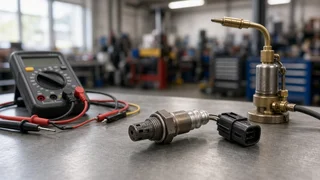
A practical check typically combines live data, a digital multimeter, and an under-hood inspection of the sensor lead and exhaust. Watching a warm upstream sensor switch between roughly 0.1 and 0.9 volts on many older or basic vehicles shows it is responding, while a flat, fixed, or implausibly high reading often indicates circuit trouble, a severe mixture fault, or sensor failure. Before replacement, verify the heater resistance and wiring, then rule out nearby leaks, because outside oxygen entering the exhaust can mimic a false lean sensor.
How to proceed
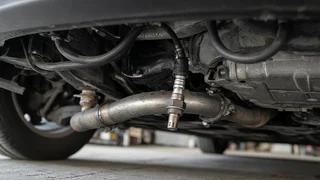
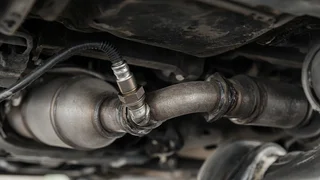
Begin with a cold-engine visual inspection. Locate the sensor ahead of or immediately behind the catalytic converter and check that the mounting is tight and the wiring is not burned, cut, or contaminated by oil or coolant. A cracked manifold, loose flange, or leaking gasket near the sensor admits extra oxygen and can make the signal look lean even when fuel delivery is correct. If the scantool shows a heater-circuit diagnostic, disconnect the sensor and measure heater resistance at the connector; an open circuit or value far outside the expected range indicates a failed heater rather than a signal problem.
After addressing leaks and circuit concerns, run the engine until it reaches operating temperature and read live data. Snap the throttle and watch whether the upstream sensor responds promptly, while the downstream sensor should remain comparatively steady once the catalyst is warm. If the signal is skewed low without an exhaust leak, look at fuel delivery, vacuum lines, or air metering before replacing the sensor. A lazy sensor that was once switching well, combined with normal fuel trims and no emissions-relevant codes, may still warrant replacement, but confirmation should come from a repeatable test rather than a single snapshot.