How to Tell If a Timing Belt Has Been Replaced: Stickers and Receipts
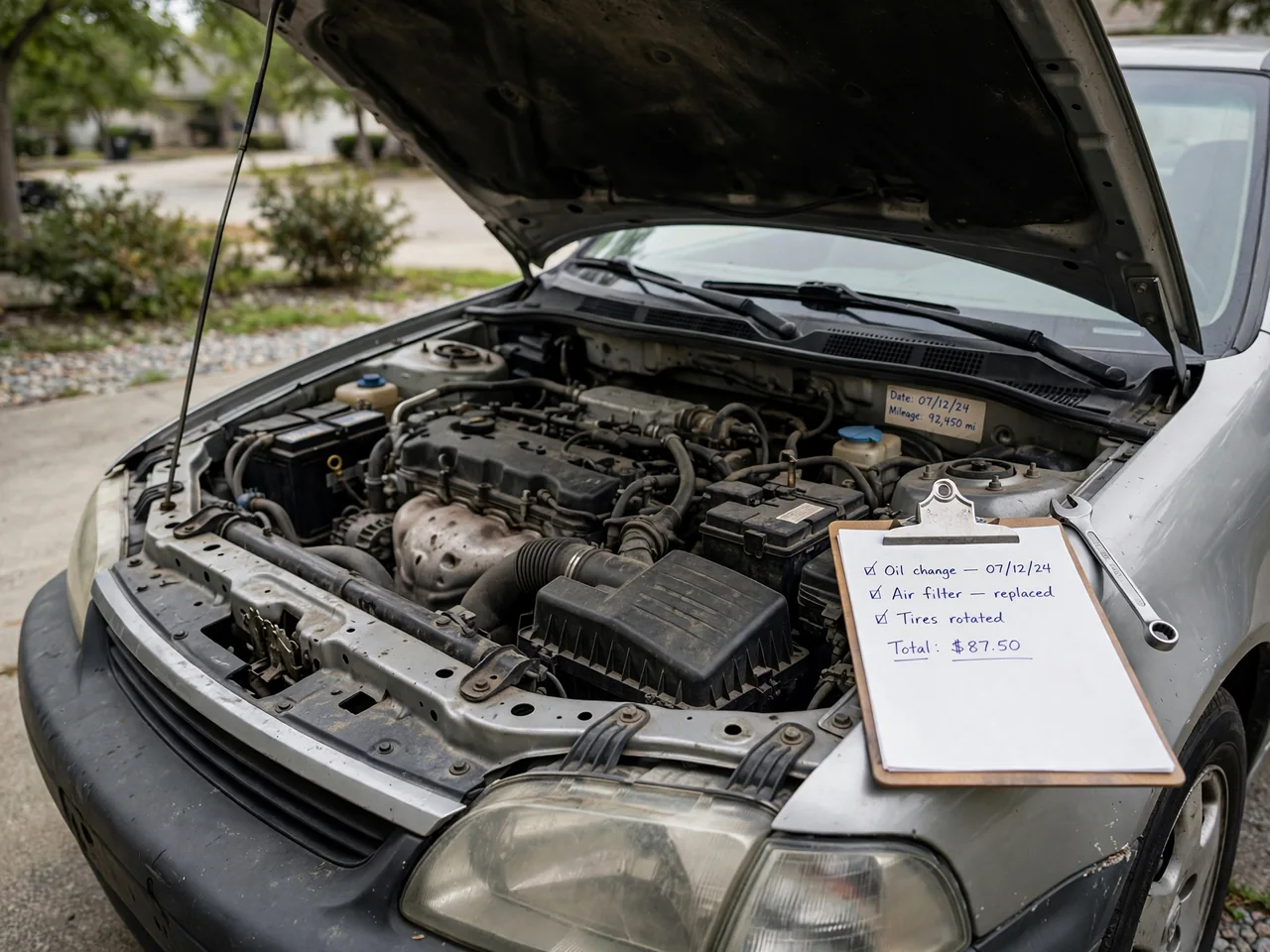
A timing belt receipt and remaining timing belt stickers are among the few documents that can speak to interval-driven engine work on a used car. They do not confirm the engine design or remaining belt life. They can help reconstruct timing belt service history: who claimed to replace the belt, at what replacement date and service mileage, and whether that claim matches other records.
Confirm the Engine Uses a Timing Belt
Not every engine uses a timing belt. Some use a timing chain or gears, and the cam-drive design can change with model year and engine code even inside one model line. A maintenance label that mentions a belt is useful only if it belongs to the engine you are inspecting. Use the vehicle identification number, the owner's manual, and the under-hood engine identification plate to identify the powertrain. If those sources still leave the cam-drive type unclear, a qualified shop can confirm it from the exact engine rather than from a model name.
A timing belt receipt must name the timing belt, not merely a belt. Accessory and serpentine belts sit outside the cam-drive cover and are replaced on a different schedule and for different reasons. An invoice that lists a drive belt, fan belt, or multi-rib belt does not establish that the timing belt was replaced. If the description is vague, treat the document as incomplete until the shop or a later itemized service invoice identifies the camshaft drive belt specifically.
Where to Look for a Timing Belt Service Sticker
There is no single timing belt sticker location. Shops place timing belt stickers where a later technician can see them, which may be near the timing belt cover, on the underside of the hood, on a strut tower, or elsewhere in the engine bay. Search only visible surfaces with the vehicle parked, the parking brake set, and the engine off and cool. Do not remove covers, splash shields, or other parts to hunt for a label. A sticker behind a closed cover is not a record you can safely confirm during a walk-around inspection.
Many independent shops and dealers omit a sticker even after they replace the belt, or they put a handwritten note in a different place than the last shop used. Faded ink, peeling adhesive, and overpainted surfaces can make an old maintenance label unreadable. A missing or illegible sticker does not prove the work was skipped, and finding a sticker does not prove the work was done. Treat the engine-bay label as a pointer toward paperwork, not as a substitute for a timing belt receipt or other dated records.
What the Sticker Records—and What It Leaves Uncertain
A typical timing belt sticker records a replacement date, an odometer reading as service mileage, a shop name, and a short description of the work. Read that description carefully. Some labels mark a completed replacement; others are only a reminder of when the next interval is due. A due-date sticker does not mean the belt was changed. Before you rely on the numbers, confirm whether mileage is in miles or kilometers and whether the date is month-day-year or day-month-year, because an ambiguous format can place the same digits years apart.
Even a complete-looking sticker is only a claim. Anyone can print a maintenance label, and shops sometimes reuse generic belt stickers without naming tensioners, idlers, or a water pump. The sticker cannot independently prove that the timing belt was replaced, that the listed parts were installed, or that the odometer reading was accurate that day. Use it to generate questions for the seller and to compare against a timing belt receipt. If the two disagree on date, mileage, or shop, treat the service history as unresolved until other records close the gap.
Checking a Timing Belt Sticker on a Toyota
A Toyota timing belt sticker is relevant only after you confirm that the exact model year and engine use a timing belt. Toyota has used both belts and chains across engines, and a Camry, 4Runner, or other nameplate can hide more than one cam-drive design. Do not assume a timing belt sticker from another Toyota, or from a similar vehicle, applies to this one. Check the owner's manual, the engine identification on the vehicle, or a Toyota service department that can look up the specific VIN before you treat any engine-bay label as applicable.
There is no universal Toyota timing belt sticker location. Dealer and independent shops may place the label under the hood, near the timing cover, or not at all, depending on the vehicle and the technician. Toyota branding on a sticker does not authenticate the work. Counterfeit or leftover labels exist, and a genuine-looking Toyota mark still does not prove parts, labor, or mileage. Ask the selling dealer or a Toyota service department whether repair shop records for that VIN show a completed timing belt replacement, then compare those notes with any sticker you found.
What a Timing Belt Receipt Should Show
A useful timing belt receipt ties the job to this car. Look for the vehicle identification number or a matching license plate and year, the service date, the odometer reading, and the shop name and address. The line items should state that a timing belt was replaced, not merely inspected or quoted. An estimate, a parts-counter ticket, or a belt sold without labor does not document installation. Prefer an itemized service invoice that lists the belt as completed work, with parts and labor separated so you can see what was actually billed.
Do not assume a water pump, tensioner, or idler pulley was replaced just because the belt was. Those parts appear on the invoice only if they were sold and billed. Compare the receipt with any sticker and with other dated service records. Mileage that jumps backward, a shop name that does not match, or a replacement date that falls after a later oil-change invoice with a lower odometer reading all weaken the claim. Gaps do not automatically mean fraud, but they do mean the timing belt service history is not yet consistent.
Verify the Records Before Committing to the Car
Ask the seller for any missing invoices and for permission to call the shop named on the receipt. Repair shop records can confirm a paid timing belt job, but they can also be incomplete, purged, or withheld because the shop will discuss the file only with the customer of record. Privacy rules often limit what a prospective buyer can obtain even with a VIN. A polite request still helps: if the shop cannot find the job, or if the seller will not authorize a check, treat the paperwork as unverified rather than as proof.
A quiet engine and a clean timing cover do not establish the replacement date or remaining belt life. The belt is hidden, and normal running is not a test of tooth wear or remaining service interval. When stickers and receipts still leave the history uncertain, pay for a professional prepurchase inspection and a vehicle-specific maintenance assessment that addresses the cam-drive design. Treat undocumented replacement as unverified. Price the car as if the belt work may still be due, because buying on an unproven claim shifts the risk of a later belt job onto you.