How to Store Small Car Accessories Without Losing Them
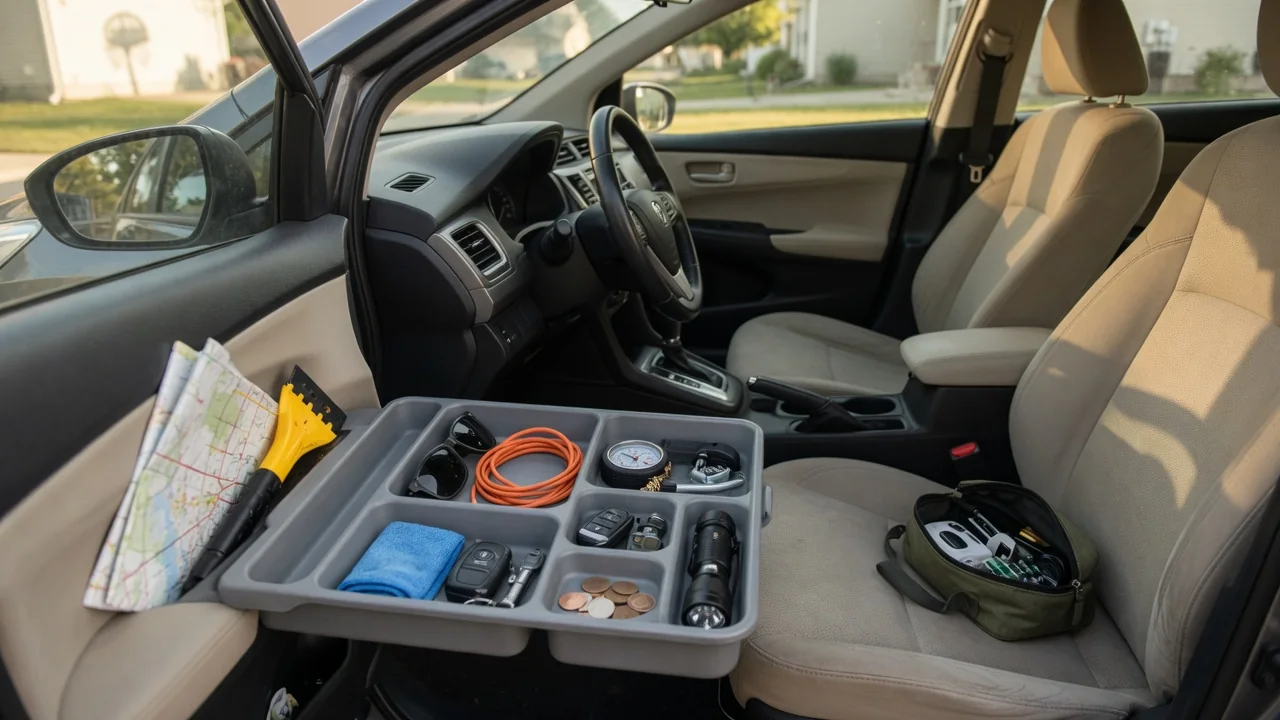
Valve caps, fuse pullers, charging cables, and locking wheel nut keys have a habit of vanishing exactly when they are needed. Learning how to store small car accessories without losing them comes down to a simple routine: give every item a fixed location, record where it lives, and confirm now and then that the record still matches what is actually in the vehicle.
Group items
Start by emptying the glovebox, center console, door pockets, and cargo area onto a clean surface so everything is visible at once. Sort the pile by purpose rather than by size. Tire-related pieces such as valve caps, a pressure gauge, and the locking wheel nut key belong together, while electrical items like spare fuses, a fuse puller, bulbs, and charging adapters form a second group. Cleaning supplies, tie-down hardware, and documents each deserve their own category as well.
Grouping by purpose matters because roadside tasks usually call for several related items at the same moment. Someone changing a flat wants the wheel key, gloves, and gauge in one grab, not scattered across three compartments. Use small zip pouches or lidded containers for each group, choosing soft cases for anything that might rattle against hard plastic trim. Vehicles differ in what they supply from the factory, so check the owner's manual to see which tools and spares originally came with yours.
Label storage
A label turns a container into a fixed address. Mark each pouch or box with plain wording that describes its contents, such as tire items or electrical spares, using a paint marker, printed tape, or a tag tied to the zipper. Clear pouches help because the contents can be confirmed at a glance without unpacking. Avoid labels that rely on adhesive alone in hot climates, since cabin heat can soften the glue and leave the tag curled at the bottom of a bin.
Next, write a short inventory that pairs every group with its location in the vehicle. A note on a phone or a card tucked beside the owner's manual works equally well, provided it names the specific spot, for instance the left cargo cubby or the underfloor tray beside the spare. Storage layouts vary widely between sedans, pickups, and crossovers, and some models hide compartments under seats or behind trim panels, so describe locations in terms that fit your particular cabin.
Recheck periodically
An inventory is only accurate on the day it is written. Items migrate after a car wash, a service visit, a road trip, or a passenger borrowing a charging cable, so schedule a quick review at natural moments, such as a seasonal tire change or a thorough interior cleaning. Open each labeled container, compare its contents against the list, and note anything missing, used up, or relocated. The whole check usually takes only a few minutes once the system is established.
The review is also a chance to inspect condition, not just presence. Look for corroded battery contacts in a flashlight, a cracked gauge lens, frayed cable ends, or spare fuses that were used and never replaced. Temperature swings and humidity inside a parked vehicle can degrade adhesives, rubber, and electronics over time. Confirm that the fuse types and bulb sizes you carry still match the vehicle, especially after buying a different car, because these parts are not universal across makes and models.
Everyday Use and Observations
Daily habits decide whether the system survives. The most reliable rule is that an accessory returns to its labeled home immediately after use, before the engine starts. A valve cap set on a wheel arch or a wheel key left on the garage floor is the usual origin of a lost part. Keep frequently handled items, such as a phone cable or parking pass holder, in the console or door pocket, and reserve the cargo area for emergency gear used only occasionally.
Pay attention to what the car tells you during normal driving. A new rattle from the trunk or a sliding sound under braking often means a container has opened or shifted, and loose objects near the driver's footwell deserve prompt attention because they can interfere with the pedals. Notice, too, which items you reach for repeatedly and which never move. Those patterns suggest where a group should live, and they will differ depending on your commute, climate, and the cabin layout.
Limits and Next Steps
No storage routine prevents every loss, and some locations should stay off limits. Avoid packing accessories where they could obstruct airbag deployment zones, block seat tracks, or cover ventilation openings for hybrid or electric battery systems, and consult the owner's manual when unsure about a compartment's purpose. Heat-sensitive items, including aerosol cans and certain batteries, may be better kept at home than in a cabin that sits in direct sun. Heavy objects belong low and secured, not loose on a parcel shelf.
When something essential does go missing, the replacement path depends on the part. A locking wheel nut key, for example, is typically matched to a specific pattern, so a dealer or the lock manufacturer may need identifying information to supply another; recording any key code card in your inventory saves time later. From here, the next step is modest: photograph each packed container, store the images with your list, and add new accessories to a group the day they arrive.