How to Store Reusable Shopping Bags in a Car
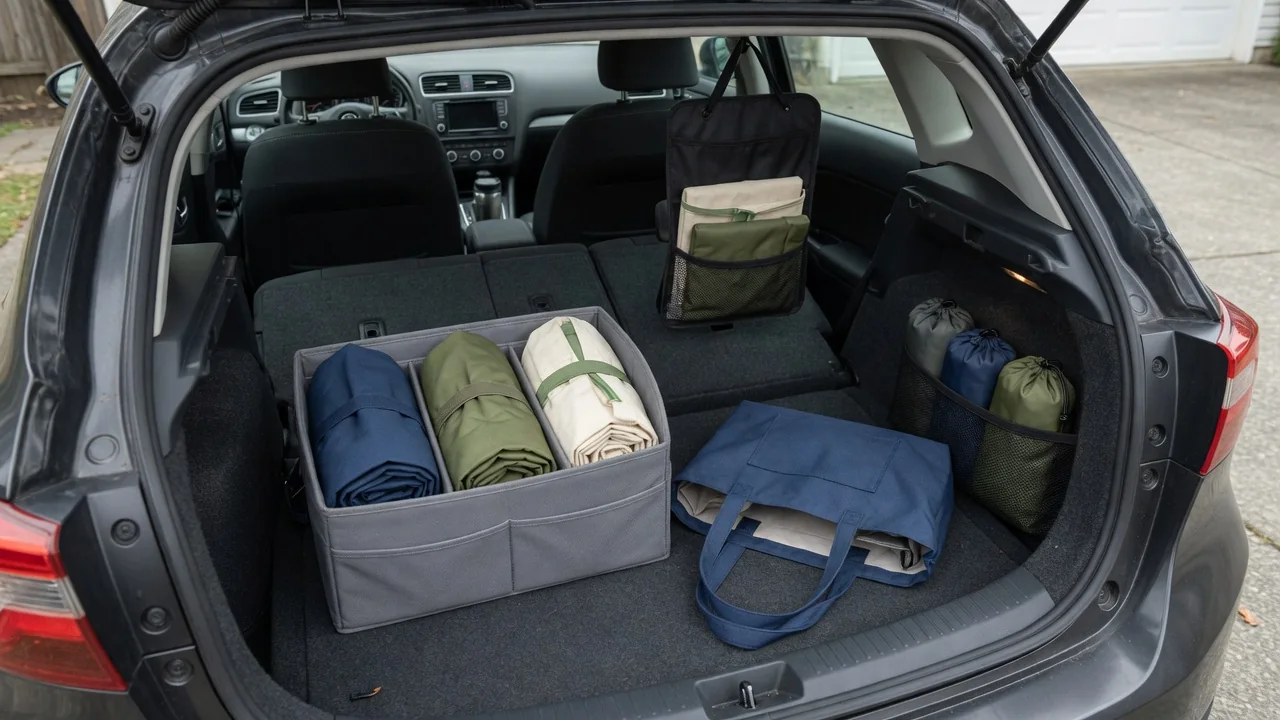
Reusable bags only help if they are in the vehicle when you reach the store and easy to grab when you park. Working out how to store reusable shopping bags in a car comes down to three things: picking a sensible spot, keeping the bags clean, and stopping them from sliding around. The right answer depends on your vehicle's layout and how you shop.
Choose location
The best location is one you can reach without unloading anything else. In a sedan, that often means the side of the trunk nearest the opening, where a folded stack sits against the wheel well trim. Hatchbacks and SUVs usually offer side pockets, cubbies behind the rear wheel arches, or an underfloor compartment above the spare tire well. Pickup owners tend to rely on the cab, using the space under or behind the rear seat, because an open bed exposes fabric to rain and dust.
Cabin locations suit drivers who forget bags in the cargo area. A seatback map pocket holds several flat-folded bags, and a door pocket or the space under a front seat can take a compact roll. Check that nothing interferes with seat tracks, seat adjustment motors, or underseat vents, and keep the driver's footwell completely clear so nothing can migrate toward the pedals. Storage shapes vary widely between models, so look at what your own vehicle offers before buying an organizer that may not fit.
Clean bags
A closed vehicle warms up quickly in the sun, and a bag carrying leftover moisture or food residue will develop odors and mildew in that heat. Before bags go back into the car, empty out receipts, crumbs, and produce debris, and wipe up any leaks from meat, dairy, or cleaning products. Fabric and canvas bags can usually be laundered according to their care label, while laminated and insulated bags are better wiped down with a damp cloth and mild cleaner.
Drying matters as much as washing. A bag folded while still damp traps moisture against trunk carpet or seat fabric, which can leave a musty smell that lingers in the cabin long after the bag is removed. Let bags air out fully before folding them. Many shoppers keep the ones used for raw meat or household chemicals separate from those used for produce and bread, and storing those groups in different bundles makes it easy to grab the right one without sorting through the whole stack.
Prevent loose movement
Loose bags rarely stay where you leave them. Light fabric slides across trunk carpet during cornering and braking, ends up wedged under other cargo, or drifts to the far end of a long cargo floor where it is hard to reach. Nesting the folded bags inside one sturdy bag creates a single bundle that is heavier, easier to carry, and far less likely to wander. Rolled bags secured with their own handles or an elastic band take up even less room.
Vehicles often provide ways to anchor that bundle. Cargo nets, tie-down rings, bag hooks on the trunk sides or seatbacks, and lidded compartments all hold a small bundle in place, though which of these features you have depends on the model and trim level. A collapsible trunk organizer or a small bin with a non-slip base works where built-in options are missing. In the cabin, a closed pocket is preferable to an open seat, since unsecured items can be thrown forward in a hard stop.
Everyday Use and Observations
The storage plan only works if the bags return to the car after each trip. A dependable habit is to refold them as soon as the groceries are put away and hang the bundle on the door handle or set it beside your keys, so it goes back out with you next time. Some drivers keep a main set in the cargo area and one or two compact bags in the glovebox or center console for unplanned stops.
Pay attention to what the setup tells you over a few weeks. If you repeatedly reach the store entrance without bags, the storage spot is probably out of sight and should move closer to the driver's door. A rustling or sliding noise on turns means the bundle is not secured. A stale smell when you open the trunk points to a damp or soiled bag. Bags that come out badly creased or with cracked lining may be folded too tightly or sitting in strong direct sunlight.
Limits and Next Steps
Storing bags in a vehicle has practical limits. Prolonged heat and sunlight can make laminated coatings brittle, weaken plastic stiffeners, and fade printed fabric, so a shaded compartment is kinder than a rear parcel shelf under the glass. Insulated bags slow temperature change but do not keep groceries cold indefinitely in a hot car. Avoid placing bags on top of the spare tire, jack, or emergency kit in a way that delays access when you need that equipment at the roadside.
Some locations should stay off the list altogether. Bags stuffed against the rear window reduce visibility, and anything packed around side airbag areas, seat belt mechanisms, or folding seat latches can interfere with how those parts operate. Your owner's manual shows where cargo features, load limits, and airbag zones are located for your specific vehicle. From there, the next step is simple: try one location for a few weeks, note what annoys you, and adjust until grabbing the bags becomes automatic.