How to Store a Car Cover Without Trapping Dirt
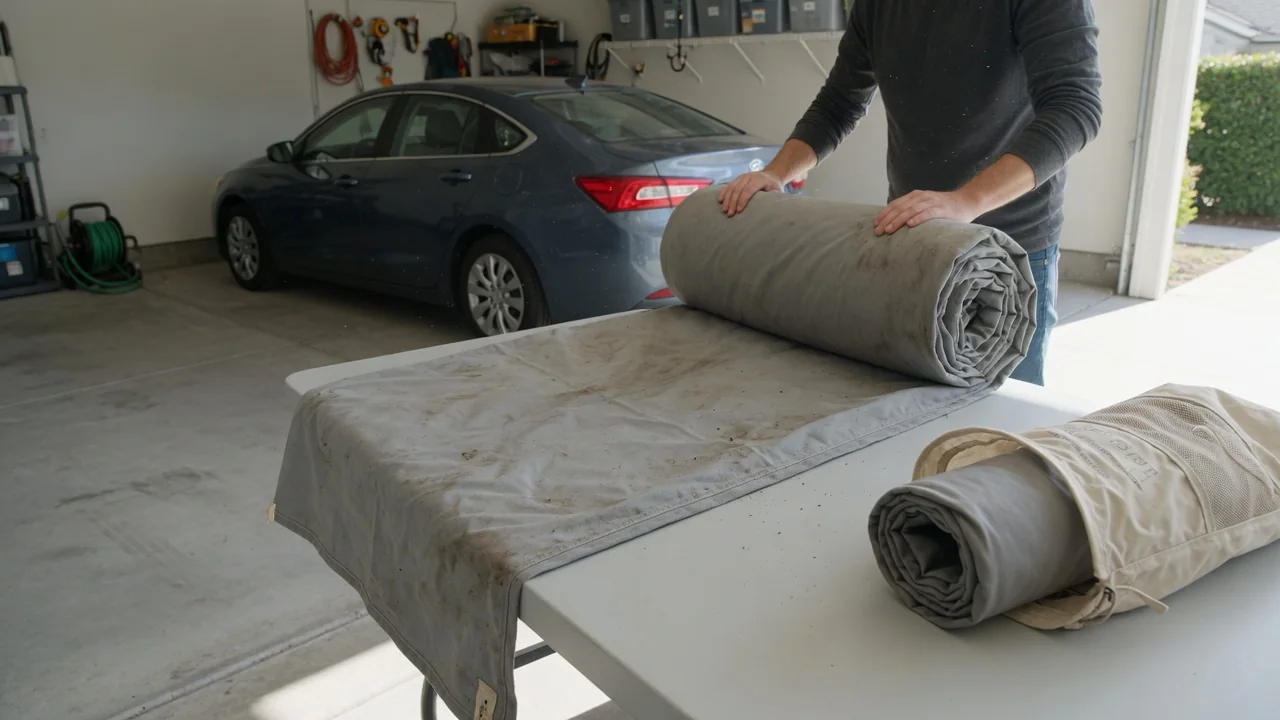
A car cover protects paint only as long as its inner surface stays clean. If you fold a cover while it is dusty, damp, or gritty, that debris gets locked into the fabric. The next time the cover goes on the car, the debris is pressed back against the finish. Storing a car cover without trapping dirt comes down to three habits: wash and dry it properly, fold it so the lining stays protected, and inspect it before storage and again before reuse.
Wash and dry
Start with the care label or the manufacturer's instructions, because cover fabrics vary widely. Multilayer outdoor covers, stretch indoor covers, and coated weather-resistant materials do not all tolerate the same treatment. The label is the only reliable guide to what a specific cover can handle. Before washing, take the cover outside and shake it out firmly to remove loose dust, leaves, and grit. Brushing off dried debris at this stage keeps it from being ground into the fibers during washing.
Many covers can be hand-washed in a large tub. Others can go in a large-capacity front-loading machine without a central agitator, since an agitator can stretch or tear the fabric. A mild, non-bleach detergent is the usual choice. Avoid fabric softener and harsh cleaners, which can leave residue or break down water-repellent treatments. Treat concentrated spots such as bird droppings or tree sap gently rather than scrubbing hard, because aggressive scrubbing can wear down the fabric. Rinse thoroughly. Leftover detergent can attract and hold fresh dirt and may leave a film on the inner surface.
Drying matters as much as washing. A cover folded while even slightly damp can develop mildew and odor, and moisture helps fine dust cling to the fibers. Air drying is the safest default. Drape the cover over a clean line, a railing, or the clean car itself, and turn it so both sides dry. Seams, elastic hems, and multilayer areas hold moisture longer than open panels, so check them closely. Use a dryer only if the label allows it, and only on the setting it specifies, since heat can shrink fabric or damage coatings. The cover is ready to fold only when it is dry all the way through, not just on the surface.
Fold
The goal of folding is to keep the inner lining, the side that touches the paint, away from the outer surface that faces the weather. A widely used approach is to fold the cover while it is still on a clean vehicle. Fold each side panel up onto the roof so the outer surfaces meet. Then fold or roll the cover from front to back into a compact bundle. This method also keeps the cover off the ground, where it would pick up dirt and small stones.
If you have to fold the cover off the car, lay it on a clean, dry surface such as a swept floor or a clean tarp. Avoid bare concrete, gravel, or grass. Fold it the same way each time, keeping the outer surface folded against itself as much as possible. It can help to finish the roll with the front edge on the outside. That way, the cover unrolls onto the car in the correct orientation without being dragged across the paint.
Avoid stuffing the cover into a bag in a loose wad. Random folds let dirty and clean surfaces touch, create deep creases, and make the cover harder to unroll cleanly. Store the folded cover in its own storage bag or another clean, breathable container. A sealed plastic bin or bag can trap any remaining moisture, so if you use one, the cover must be completely dry and the container clean inside. Keep the stored cover off the floor and away from chemicals, rodents, and dust sources in a garage or shed.
Inspect
Inspect the cover before folding it for storage, while it is spread out and easy to see. Run a hand lightly over the inner lining to feel for embedded grit, sand, or small debris that washing missed. Anything caught in the lining can scratch paint later. Look for remaining stains, sap, or droppings. Confirm that the whole cover, including seams and hems, is completely dry and free of musty odor.
Also check the cover's overall condition. Look for tears, holes, and thin or worn spots, especially at mirror pockets, corners, and areas that rub against antennas or roof edges. Check the stitching, elastic hems, tie-down straps, and any grommets or lock cables. On outdoor covers, see whether water still beads on the surface after rinsing. If water soaks in quickly, the water-resistant treatment may be wearing off. Note any problems so you can make repairs before the next season rather than when the car needs covering.
Inspection is not only a storage step. Before putting the cover back on, unroll it and look at the lining again, since dust can settle on stored fabric and pests can damage it. Check the storage bag itself as well. A bag that holds grit or moisture will recontaminate a clean cover every time it is used.
Practical implications and limits
A clean, dry, carefully folded cover still depends on what it goes over. Even a spotless cover on a dusty vehicle can rub that dust against the paint as the wind moves the fabric, so wash or dust the car before covering it. Likewise, no folding method makes up for a cover that fits poorly. A loose cover moves more and is more likely to collect debris inside.
Washing has trade-offs. Each wash adds wear, and on coated or treated fabrics, frequent washing can shorten the life of the water-resistant finish. For that reason, car cover cleaning is usually done when the cover is visibly dirty or before long-term storage, rather than on a fixed schedule. Shaking out and brushing the cover between uses can reduce how often it needs a full wash. Because materials differ, the manufacturer's guidance on washing, drying, and re-treatment products takes priority over general advice.
Storage conditions also set limits. In a humid garage, basement, or shed, moisture can return to fabric that was dry when packed, so a dry, ventilated spot is better for seasonal storage. Finally, covers wear out. A lining that has become rough, stained with ground-in grit, or thin in places may no longer protect paint reliably. At that point, repair or replacement is a better choice than continued storage and reuse.