How to Stop Rust From Spreading on a Car: Treatments, Converters and Inhibitors
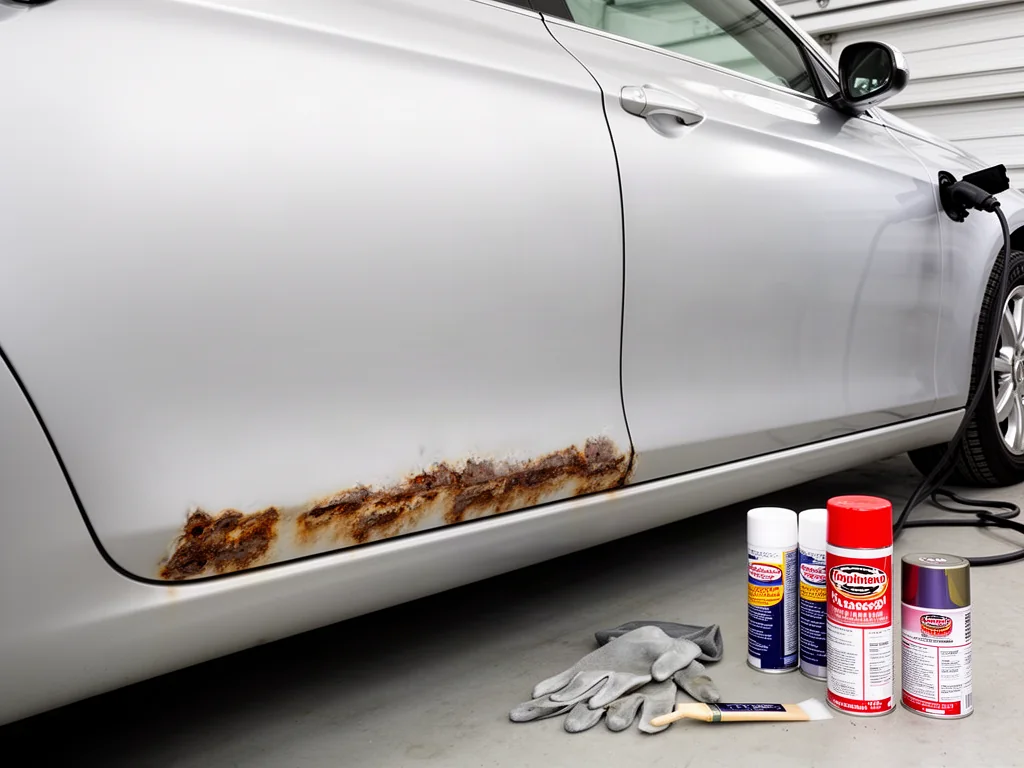
A car rust killer can help keep a small patch of corrosion from growing, but only when the rust is suitable for local treatment and the product is used the way its label directs. This guide covers how to judge a patch, prepare it, choose between converters and inhibitors, seal the result, and watch for signs that corrosion is continuing out of sight.
Check Whether the Rust Is Suitable for Local Treatment
Stopping rust means dealing with the corroded surface and then cutting off the moisture and oxygen that keep the reaction going. No treatment can put back metal that has already turned to oxide, so a thinned panel stays thin even after the rust is stopped. Start by looking closely at the areas you can reach in good light. Reddish or brown discoloration, flaking, paint bubbles, orange staining along seams, and any visible holes all show how far the problem has progressed.
Appearance has limits. A coin-sized spot of surface rust can sit on top of a much wider area of corrosion creeping under the paint or inside a folded seam, so what you see cannot tell you how deep it goes. If the rust involves frame rails, suspension mounts, brake lines, or fuel-system parts, have a professional assess it rather than treating it yourself. Avoid probing weakened metal, pulling components apart, or crawling beneath a vehicle that is not properly supported, since each carries a real risk of injury.
Prepare an Accessible Rust Patch for Treatment
A treatment only works where it reaches clean, sound material. Road salt, dirt, grease, and moisture act as barriers, and loose rust gives any product a crumbling base that can break away and take the coating with it. For a small cosmetic patch you can reach easily, preparation usually means gently washing off grime and salt, then removing flaking material the way the product label describes. Full rust removal and paint restoration are separate, larger jobs.
Before applying anything, read the instructions for how dry the surface must be, how much remaining rust the product expects, and whether it could harm surrounding paint, trim, or plastic. Some products also specify which cleaners or degreasers may be used beforehand, because leftover residues can get in the way. Neutralizing works differently for each formulation, so follow only the steps the manufacturer describes. Skip household acid mixtures and improvised rinsing, which can leave residues, damage finishes, and weaken the treatment you apply next.
Understand Rust Killers, Stoppers, and Converters
Names like rust killer and rust stopper describe a promise, not a chemistry. One product sold under those names may be a converter, another an inhibiting oil, and another a primer, so check the label for what it actually does and which surfaces it suits. A rust converter is designed to react with the right kind of remaining iron rust and turn it into a more stable treated layer, which can often be coated afterward if the surface was prepared as the product requires.
Coverage rate, acceptable temperature and humidity, number of coats, and reaction time all vary by product, so go by the label rather than general rules of thumb. Applying it too thickly or in poor conditions can leave a weak film. Many converters darken as they react, and that color change is encouraging but not proof. Rust under thick scale, in pits, or inside a seam may never have touched the product, so an evenly dark surface can still hide untreated corrosion.
Apply a Rust Inhibitor or Spray to the Intended Area
A corrosion inhibitor slows rust either through a chemical action on the metal surface or by laying down a film that keeps moisture away, depending on the formula. How well it works depends heavily on preparation and on whether it truly covers the affected area. Spray only describes how a product comes out of the container. An aerosol can may hold a converter, an inhibitor, a primer, or a general lubricant, so confirm that the contents are meant for existing rust and for the surface you plan to treat.
Follow the safety directions on the label, which usually include good ventilation, eye and skin protection, and keeping aerosols away from sparks, flames, and hot surfaces. Mask off nearby paint, glass, and trim to control overspray. Keep all rust products off brake rotors, pads, and other friction surfaces, and away from tires, drive belts, and hot exhaust or engine parts, where contamination can cause safety hazards. Rust you cannot see or reach needs to be assessed, not sprayed blindly into cavities.
Seal the Treated Patch After the Required Cure
Some treatments are meant to be covered by a compatible protective coating, because the treated layer alone may not keep moisture and oxygen out for long. The label will say whether a topcoat is required, recommended, or unnecessary. Timing matters. Products usually list cure conditions, such as temperature and humidity, and a recoating window. Sealing too early can trap solvents or unreacted material underneath, while waiting too long can make it harder for the next layer to bond to the surface.
Poor coating adhesion is a common reason repairs fail. Oily or waxy inhibitors are designed to stay soft, and many paints and sealers will not grip them, so check both products' instructions to confirm they can be used together before putting one over the other. Keep the protective layer focused on the treated patch and a small margin around it. Blending, full repainting, and preventive undercoating of the wider underbody are separate projects, each with its own preparation and product choices.
Watch for Returning Rust and Hidden Moisture
After treatment, check the patch now and then for new orange staining, fresh bubbling, lifting edges, cracks in the coating, or an affected area that looks larger than before. Paint blistering near the repair is often the first sign that moisture has gotten back under the surface. Dated photos taken from the same angle and distance make slow changes much easier to spot. Keep in mind that photos only show the surface and cannot tell you what is happening to metal behind a panel or inside a seam.
Rust that comes back may point to incomplete coverage, a damaged or missing seal, moisture trapped during treatment, or corrosion working outward from behind the panel. You cannot tell which from appearance alone, so avoid assuming a cause. If rust returns, spreads along a seam, reveals holes in the metal, or sits somewhere you cannot reach, a professional inspection is the sensible next step. Local treatment can slow the damage, but no product guarantees a permanent fix, so keep checking the area over time.