How to Set Up a Clean Space for Simple Car Checks
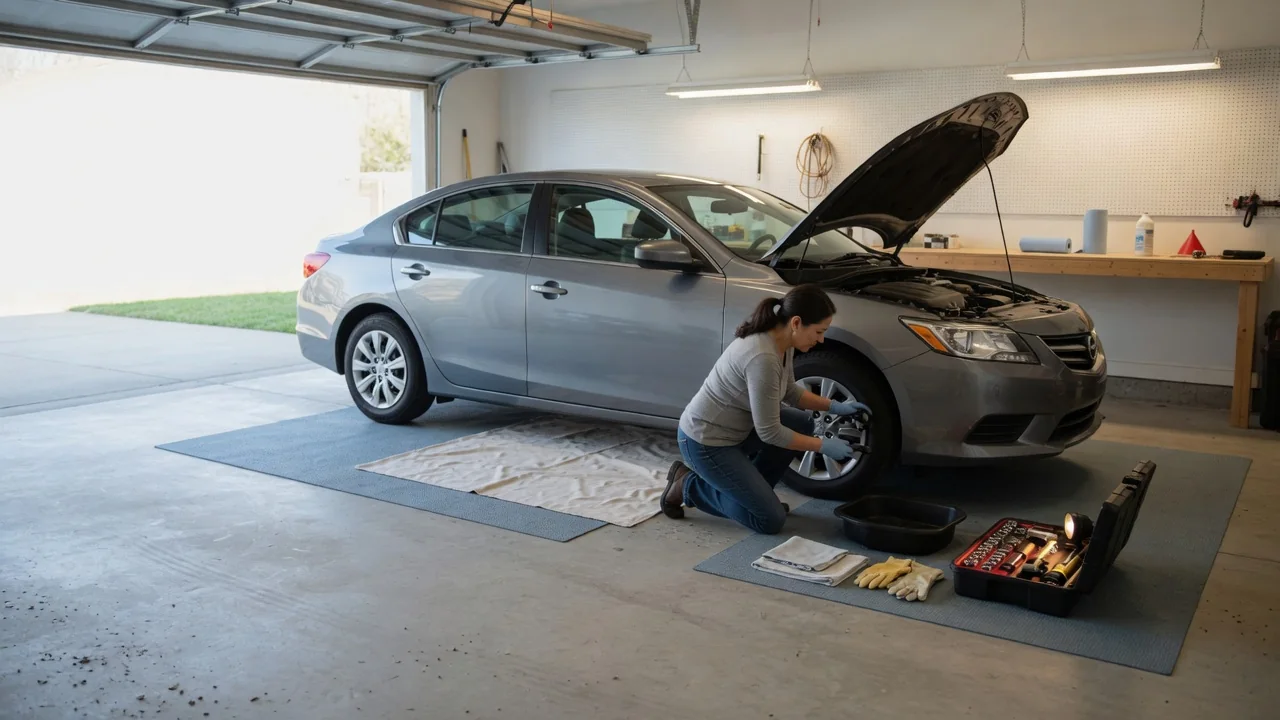
Simple car checks include reading fluid levels, inspecting tires, and looking for leaks or worn parts. They are only as reliable as the space where you do them. A dim corner, a sloped driveway, or a jumble of tools can hide small problems or give misleading readings. Setting up a clean space for simple car checks comes down to three basics: good lighting, level ground, and orderly tool storage. Each one supports accuracy and safety, and each makes the routine easier to keep up.
Lighting
Most routine checks depend on seeing color, texture, and small markings clearly. Oil film on a dipstick, the min and max lines on a translucent coolant or brake fluid reservoir, tread wear indicators, and the fine cracks of an aging drive belt are all easy to misread in poor light. A home car inspection workspace benefits from broad, even overhead lighting that covers the whole vehicle rather than one bright spot. Diffuse light reduces hard shadows under the hood and along the body. Fixtures that light the sides of the car as well as the top help when you inspect tires and lower panels. Neutral, daylight-type white light generally makes fluid colors easier to judge than strongly warm or tinted light, which can make some fluids look darker than they are.
Overhead light rarely reaches everywhere. The lower engine bay, the inner faces of the wheels, and the areas behind the bumpers usually need a portable work light or a headlamp. A headlamp leaves both hands free for holding a dipstick or rag. A magnetic or hook-mounted light can be aimed into one fixed spot. Choose lights that stay cool enough to handle, and keep them away from hot exhaust parts and fuel lines. Battery-powered lights avoid cords trailing across the floor, which reduces tripping hazards and keeps cables out from under a creeper or a tire.
Level ground
Many fluid checks assume the vehicle is sitting level. Engine oil and reservoirs with marked lines are meant to be read with the car on a flat surface. Even a modest slope can shift fluid toward one end of a sump or tank. The result is a reading that looks low or high when the level is actually fine, which can lead you to overfill or to miss a real loss. A level surface also makes it easier to see whether one corner of the car sits lower than the others, which can point to a soft tire. Before checking anything, park on the flattest area available, set the parking brake, and let fluids settle for as long as the owner's manual directs.
The floor matters as much as its angle. A smooth, firm surface such as concrete properly supports a jack and jack stands if you ever need to lift the car. Gravel, soft asphalt on a hot day, or uneven pavers can let a stand shift or sink. A clean, dry floor also becomes a diagnostic tool, because fresh drips stand out against a clear surface. A piece of cardboard or a drip tray placed under the engine overnight can show where a leak is coming from and what color the fluid is. Sweep regularly, absorb spills promptly, and do not leave oily residue where you kneel or walk.
If you are unsure whether a garage or driveway is flat, lay a carpenter's level or a phone level app on the floor in a few directions for a quick indication. Many garage floors slope slightly toward the door or a drain on purpose, so water can run off. The most level spot may therefore be toward the back or along one side. Once you find it, mark it with tape so you park in the same place every time and your readings stay comparable.
Tool storage
Simple checks need only a small set of tools, and keeping them together makes routine inspections quick. A typical kit includes: • a tire pressure gauge; • a tread depth gauge; • clean lint-free rags or paper towels; • disposable gloves; • a funnel; • a flashlight or headlamp; • a notebook or phone for recording readings; Add the specific fluids your vehicle uses, as listed in its owner's manual, so you are not tempted to top up with the wrong type. A wall-mounted shelf, a pegboard, or a single labeled tote kept near the car keeps these items visible and within reach without spreading clutter around the workspace.
How you store items affects both cleanliness and safety. Keep fluids in their original, clearly labeled containers with the caps tightened. Store them off the floor, where they cannot be knocked over or reached by children and pets. Antifreeze is toxic and can taste sweet to animals, so deal with spills and open containers right away. Keep clean rags apart from used ones, and store oily rags in a closed metal container away from heat sources. Wipe funnels and cover them between uses, because dirt carried into a reservoir during a top-up is easy to introduce and hard to remove.
A simple rule helps: every tool has one home, and it goes back there when the check is done. Outlines on a pegboard or labels on drawers make a missing item obvious. That matters because a gauge or rag left in the engine bay can get lost, and a rag can end up near hot parts. Keep storage bins out of the floor area around the car so you can move freely around all four sides.
Practical implications and limits
A well-prepared space improves the quality of your observations, but it does not change what each vehicle requires. Check procedures vary between models. Some engines should be checked warm and others cold. Some automatic transmissions have no conventional dipstick. Some levels are read with the engine running and others with it off. The owner's manual remains the authority on when and how to read each level, which fluids to use, and what counts as within range. A clean workspace makes it easier to follow those instructions, but it does not replace them.
Be realistic about what simple checks can reveal. Looking, measuring, and recording can catch low fluids, uneven tire wear, cracked hoses, and fresh leaks early. They cannot confirm internal problems or diagnose the cause of every symptom. Some findings call for a professional inspection rather than a home fix, such as a fluid level that drops repeatedly, a burning smell, or wear you cannot explain. Never work under a car supported only by a jack. Let a hot engine cool before opening the cooling system, because hot, pressurized coolant can cause serious burns.
Consistency is where the setup pays off. Checking in the same lit, level spot with the same tools turns separate readings into a record you can compare over time, so gradual changes are easier to notice. A shared garage or carport can work too, as long as you can return to a flat area, bring portable lighting, and keep a compact kit ready.