How to Set Up a Car for a Tall Passenger
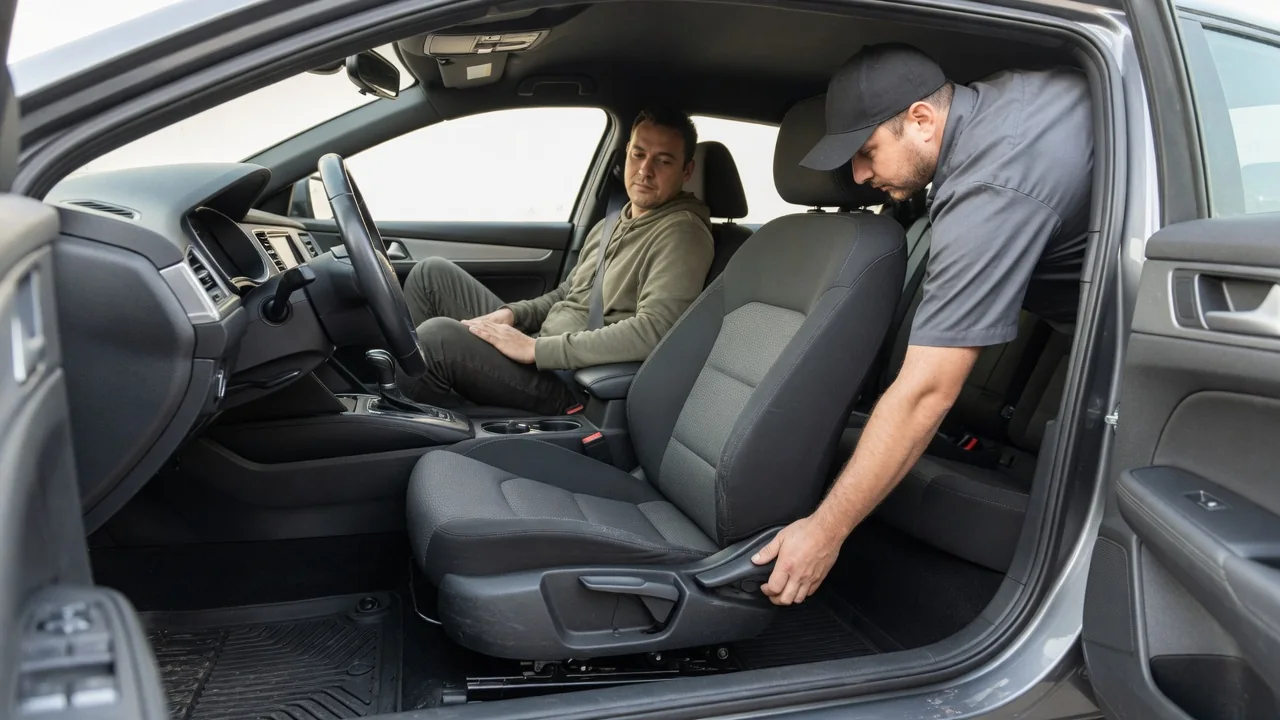
Knowing how to set up a car for a tall passenger comes down to two things: how far the seat can move and how easily a long body can get through the door opening. A few minutes spent adjusting the seat, checking roof clearance and clearing the entry path before a trip makes the difference between a relaxed ride and hours of cramped knees and a tilted neck.
Front seat position
Start by sliding the front passenger seat rearward along its track until the tall occupant can rest both feet flat with knees slightly lower than the hips or level with them. Full rearward travel is not always the best answer, because it can leave the feet reaching for the floor slope under the dashboard. The goal is thigh support along most of the cushion, with a clear gap between the knees and the glovebox door. Seat travel differs a great deal between vehicles, so the usable range has to be found by trying it.
Next, lower the seat if it has height adjustment, then set the backrest angle. A modest recline moves the head rearward and down, which helps, but reclining too far pulls the shoulders away from the seatback and lets the lap belt ride up over the abdomen instead of the hips. Some seats also offer cushion tilt or an extending thigh support, both of which suit long legs well. Manual seats may have only a slide lever and a recline lever, while power seats often add several further adjustments.
Headroom
Headroom is the space between the top of the passenger's head and the roof lining, and it is easy to judge by sight. With the occupant sitting upright in their normal posture, there should be visible clearance above the head, enough that a bump in the road does not bring hair or scalp into contact with the headliner. Lowering the seat cushion is the most direct way to gain space. If the seat has no height adjuster, a small increase in recline is the remaining option, within the limits of proper belt fit.
Roof design changes the result more than many people expect. A sunroof or panoramic roof usually requires a cassette and sliding shade that sit below the roof panel, which can take away clearance compared with the same vehicle with a plain steel roof. Sloping rooflines reduce space further back, so a tall person often fits better in front than in the rear. Also raise the head restraint so its center sits roughly level with the back of the head; left low, it rests against the neck and offers poor support.
Access path
Getting in and out is often harder for a tall person than sitting once inside. The door opening is bounded by the roof rail above, the windshield pillar ahead, the center pillar behind and the sill below, and a long torso has to fold through that frame. Sliding the seat fully back before the passenger arrives gives the legs more room to swing in and moves the hips away from the windshield pillar. The seat can then be brought forward slightly once they are settled, if their legs allow it.
Vehicle height shapes the movement. A low sedan or coupe demands a deep bend and a ducked head, while a taller crossover or truck lets the passenger step across at closer to hip level, sometimes using a grab handle on the pillar or roof rail. Park so the door can open to its widest detent, since a partly opened door forces an awkward twist. Clear bags, bottles and floor mats that have bunched up in the footwell, because long feet need the whole floor area to pivot in cleanly.
Everyday Use and Observations
Once the car is moving, a few simple observations confirm whether the setup is working. The passenger's knees should not touch the dashboard or the lower edge of the glovebox, both for comfort and because that area matters in a collision. The shoulder belt should cross the middle of the collarbone rather than the neck, and many vehicles have a height-adjustable upper belt anchor on the center pillar that can be raised for a tall torso. The sun visor and the top edge of the windshield should not block their forward view.
Moving the front seat rearward takes space from whoever sits behind it. Check that a rear occupant still has room for their knees and feet, and consider placing the shortest person, or nobody, directly behind the tall passenger. A rear-facing child seat in that position can limit how far the front seat may travel, and the child seat's own instructions govern whether contact with the front seatback is allowed. On longer drives, small changes to recline or cushion angle every so often help relieve pressure on the thighs and lower back.
Limits and Next Steps
Adjustment can only go so far, because the track length, roof height and door opening are fixed by the vehicle's design. If the passenger's head touches the lining with the seat at its lowest setting, or their knees reach the dashboard with the seat fully back, that cabin simply does not suit them in that position. Trying the rear seat behind a short front occupant, or the opposite side of the car, is worth a few minutes. Avoid extreme recline as a workaround, since belts and airbags are designed around an upright occupant.
The owner's manual is the right reference for which adjustments a particular seat offers, how the head restraint and belt anchor move, and the manufacturer's guidance on distance from the front airbag. Seat tracks and mounting hardware are part of the restraint system, so modifications such as extended brackets should be discussed with a qualified professional rather than improvised. For anyone choosing a vehicle to carry a tall person regularly, a proper sit test with the actual passenger, including getting in and out several times, tells far more than published interior dimensions.