How to Set Trailer Brake Controller Gain for Smooth, Controlled Stops
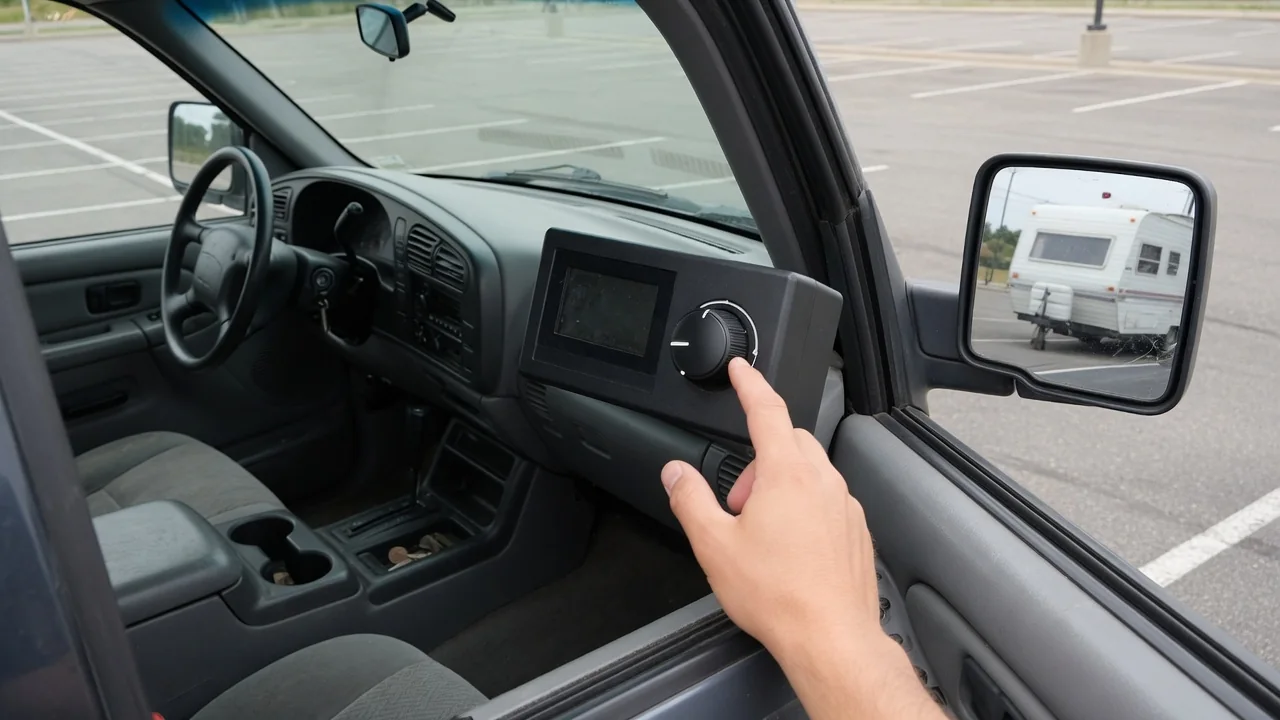
Trailer brake controller settings decide whether a loaded trailer slows in step with the tow vehicle or fights it at every stop. Learning how to set a trailer brake controller is mostly a matter of patient, low-speed testing rather than memorizing a number. This guide explains what gain does, how to adjust it sensibly, and when the setting should be revisited.
What Trailer Brake Controller Gain and Other Settings Actually Control
Gain determines how much electrical power the controller sends to the magnets inside electric trailer brakes. More output pulls the magnets harder against the drums, producing stronger braking. It is not a fixed figure that suits every rig, because the force needed depends on trailer load, brake condition, the tow vehicle and the road surface. A trailer brake controller gain setting copied from another driver's truck may be far too aggressive or too weak for your combination.
Controller type shapes how setup feels. A proportional brake controller senses the tow vehicle's deceleration and scales trailer braking to match, while a time-delayed brake controller ramps up to a preset output over a set interval regardless of how hard you stop. Many units add a boost setting, sensitivity or level adjustment, though names and ranges vary, so the owner's manual is the reference. An integrated trailer brake controller is adjusted through dash buttons or a screen, whereas aftermarket modules use their own knobs or buttons.
Setup Checks Before Adjusting a Trailer Brake Controller
Before adjusting a trailer brake controller, confirm the basics. The coupler should be latched on the ball, safety chains attached, the breakaway switch cable connected to the tow vehicle, and the 7-pin trailer connector pushed fully home. Then check that the controller recognizes the trailer through its connection indicator or display message. A fault or no-trailer warning points to a wiring or connection problem that must be resolved first, because tuning cannot compensate for a circuit that is not complete.
Set up the trailer brake controller with the trailer loaded the way it will actually be towed. An empty trailer needs far less braking output than a full one, so gain chosen with an empty deck will leave a loaded trailer underbraked. Some proportional units also require leveling or mounting-angle calibration under the manufacturer's instructions before gain means anything. Finally, check trailer tire pressure and look over visible brake wiring for chafing or loose sections, without taking any brake components apart.
Step-by-Step: Setting Gain With a Low-Speed Test
Choose a level, dry, open paved area, such as an empty lot, with no traffic or pedestrians nearby. Begin from the moderate starting gain the controller manual recommends rather than an arbitrary number. Drive at the low test speed the manual suggests, apply the tow vehicle brakes firmly, and pay attention to what the trailer does. A trailer that seems to shove the truck forward needs more output; one that grabs sharply needs less.
Raise gain in small increments and repeat the same stop each time, so the only variable changing is the setting. Braking should grow firmer until the trailer slows with the truck as one unit. The target sits just below the point of trailer wheel lockup: if the tires begin to slide, back the gain down slightly and test again. The finished setting should produce a smooth, progressive stop, not an abrupt tug, because a sliding tire grips less than a rolling one.
Fine-Tuning With the Manual Override and Reading the Results
The manual override lever or button applies the trailer brakes alone, which makes it a useful diagnostic at low speed. Rolling slowly and applying it lets you feel how much the trailer can slow the whole combination without help from the truck. Jerky stops, a tugging sensation at the hitch, or trailer wheels locking and skidding indicate gain is too high. A trailer that pushes the tow vehicle, stretches stopping distances, or leaves the truck brakes doing most of the work indicates gain is too low.
Sometimes adjustments change very little, or braking feels uneven from side to side. That pattern suggests a mechanical or electrical issue rather than a setting problem, and turning gain higher only masks it. Treat the override as a testing tool and reserve it for the specific situations your controller manual describes. Improvised techniques picked up secondhand may not suit your controller, trailer or conditions, and they can unsettle the combination instead of steadying it.
When You Should Readjust the Gain Setting
When should the trailer brake controller gain setting be adjusted? Any time the trailer load changes significantly, such as going from empty to fully loaded, because the weight on the trailer tires determines how much braking they can use before sliding. Switching to a different trailer calls for a fresh setup, since brake size and condition differ. Retest after trailer brake service as well; newly serviced brakes can respond differently than the worn components they replaced.
Surface matters too. Wet pavement, gravel and other slippery surfaces offer less traction, so a lower setting may be needed to reduce the chance of lockup, following the controller's guidance. A quick low-speed brake test at the start of every trip is better towing safety practice than assuming the previous setting still fits. If braking feel has drifted gradually over time, treat that as a cue to retest and investigate, not simply to turn the gain up.
Integrated Truck Controllers vs Aftermarket Units: Adjustment Differences
Factory-integrated controllers are usually adjusted with dash controls, with the gain value shown on the instrument cluster, while aftermarket units carry their own display on the module. Because an integrated system is tied into the truck's electronics, some also let the driver choose a trailer brake type or a braking profile. Available options differ between vehicles, so confirm what yours offers in the vehicle owner's manual before assuming a menu item exists or behaves a certain way.
Warning messages deserve the same care. A dash alert about trailer brakes or a disconnected trailer should be read using the vehicle's manual, since wording and meaning are manufacturer-dependent and generic lists can mislead. A message is evidence to interpret, not proof that a particular part has failed. Features, ranges and adjustment steps also change by model and year, which is why the manual, not memory from a previous truck, is the authority for button sequences.
When Trailer Braking Problems Need Professional Testing
Certain symptoms go beyond adjustment. No trailer braking at any gain, braking on only one side, intermittent operation, or controller fault messages that keep returning all warrant inspection. Likely areas include wiring, ground connections, brake magnets and the adjustment of the trailer's drum brakes, but pinpointing the cause takes electrical measurement and hands-on checks. That work is best left to a qualified trailer or brake technician with the equipment to test each circuit and wheel.
Do not tow when trailer brakes appear inoperative or unpredictable; arrange an inspection before the next trip instead. A heavy trailer without working brakes overloads the tow vehicle's brakes and lengthens every stop. Legal requirements matter as well, because rules about when a trailer must have brakes, and related equipment, vary by state and trailer weight. Check the regulations where you tow rather than assuming one jurisdiction's threshold applies everywhere.