How to Run a Car Title Check by VIN Before Buying
A car title check is one of the cheapest protections a used-car buyer has. By running a title search by VIN, you can see whether state records show salvage or flood brands, odometer problems, or signs of title washing before money changes hands. Below we cover free and paid lookup options, how to read the results, and where a title search stops being useful.
Gather the VIN and Confirm Which Vehicle the Title Covers
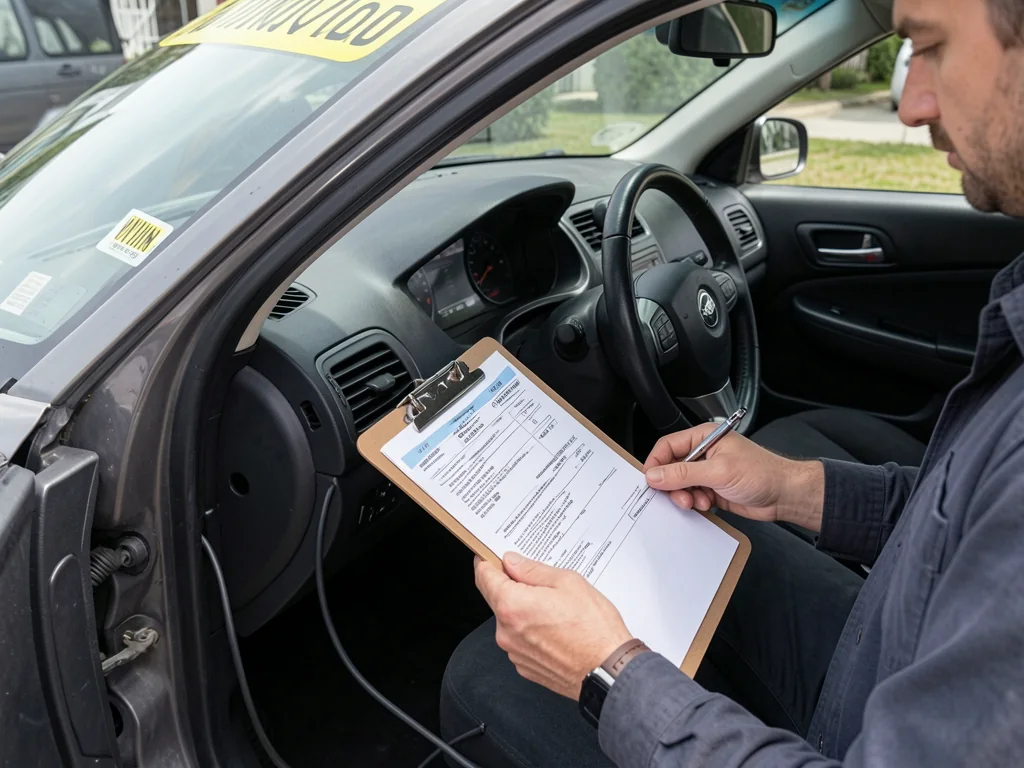
Start by reading the vehicle identification number yourself rather than copying it from an ad. The VIN is usually visible through the windshield on the driver-side dashboard and printed on a label in the driver's door jamb. It should exactly match the number on the seller's title and registration, all 17 characters. Watch for easily confused characters. Modern VINs do not use the letters I, O, or Q, so a lookup built on a typo will search the wrong car or return nothing.
A car title lookup may ask for the VIN, the state that issued the title, and sometimes the title number. Keep in mind what the search can and cannot tell you. It shows recorded title information, not whether the person in front of you has the legal right to sell. If the dashboard VIN, door label, and paperwork disagree, or the title number doesn't match state records, stop and ask the issuing motor vehicle agency to clarify before going further.
Find Free Title Information Through Available Public Checks
Some state motor vehicle agencies offer online title-status tools that work as a free car title check. Access rules, required inputs, and the details shown differ from state to state. Some show only whether a title is active or branded, while others add issue dates. The National Insurance Crime Bureau's free VINCheck service can flag vehicles reported stolen and not recovered, or reported as salvage by participating insurers. It is not a complete title or lien search.
A free VIN decoder is useful for confirming the year, make, model, engine, and factory build details, which helps you catch a mismatched or cloned identity. However, decoding a VIN says nothing about title status. Treat every free car title search result with the same caution. An empty result means only that the source returned no matching record. It does not prove the car has a clean, unbranded title or that no lender holds a lien against it.
Request Title History Records and Understand Paid Access
For a fuller title history, request a National Motor Vehicle Title Information System (NMVTIS) report through one of its approved consumer providers. The report may show which states have issued titles for the vehicle, recorded brands, and odometer readings reported at titling. It may also include junk or salvage information submitted by insurers, auto recyclers, and salvage yards. Because it draws on data from many states, it is a strong tool for spotting a branded past that crossed state lines.
You can also ask the state agency that issued the title for its own records. Expect eligibility rules, privacy restrictions that limit personal information, and possible fees. Commercial vehicle-history reports often combine title data with reported accidents, service visits, and registration events, so read each provider's description of what it covers before relying on it. No report is guaranteed to list current liens, every ownership transfer, or a previous owner's contact details, so plan to fill those gaps some other way.
Read Title Brands, Dates, and Odometer Entries
Title brands are labels that states attach to a vehicle's record. Common ones include salvage, rebuilt or reconstructed, flood, and nonrepairable, but the definitions and consequences vary. One state may let a salvage vehicle return to the road after an inspection, while a nonrepairable brand elsewhere may keep it off the road permanently. Check the issuing state's definitions and restrictions, because a brand can affect registration, insurance options, financing, and resale value long after repairs are finished.
Read the history as a timeline of issuing states, title dates, brands, and odometer disclosure entries. A mileage reading that drops between titlings, or a brand that disappears after a move, needs a documented explanation. Title washing means hiding a branded history, often by retitling in a state with different rules. Still, moving a title to another state is not proof of wrongdoing by itself. Likewise, an unbranded title does not mean the car was never in a crash or is mechanically sound.
Verify Liens and the Seller’s Authority to Transfer Ownership
Compare the seller's driver's license or other ID against the owner name on the title. If a dealer employee, estate executor, or relative is selling for the owner, ask for documents showing that authority, such as a power of attorney or court papers. Confirm them with the issuing office if anything seems off. A title search on the car confirms what the record says. It cannot confirm that the person signing the ownership transfer has the right to do so.
Liens need their own check. Ask the relevant state agency how recorded liens show up and whether it uses electronic titles, since under those systems the lender may hold the title record until the loan is paid off. A history report showing no lien does not prove one was released. A seller's payoff statement alone also doesn't show that the state's lien-release requirements have been met. Before paying, contact the lender using contact details you found and verified yourself to confirm the payoff amount and release process.
Resolve Missing or Conflicting Records Before Paying
When a title search comes back empty, start with the basics. Recheck the VIN character by character, confirm which state issued the current title, and ask the state agency or report provider exactly what its search covers. Gaps can come from reporting delays, incomplete submissions by insurers or states, or access restrictions that hide certain records from public tools. Any of these could explain a blank result, so don't settle on one explanation until someone who holds the records confirms it.
Resolve mismatched VINs, unexplained brands, missing ownership documents, and uncertain liens before any payment or transfer, because you lose your leverage once money changes hands. Even a spotless title report cannot tell you whether the car is roadworthy. Arrange an independent pre-purchase inspection by a qualified technician to check the brakes, suspension, and frame, and to look for signs of past flood damage such as silt or corrosion. Also confirm your state's transfer requirements, including signatures, odometer disclosure, and registration deadlines.