How to Review a Car Repair Invoice
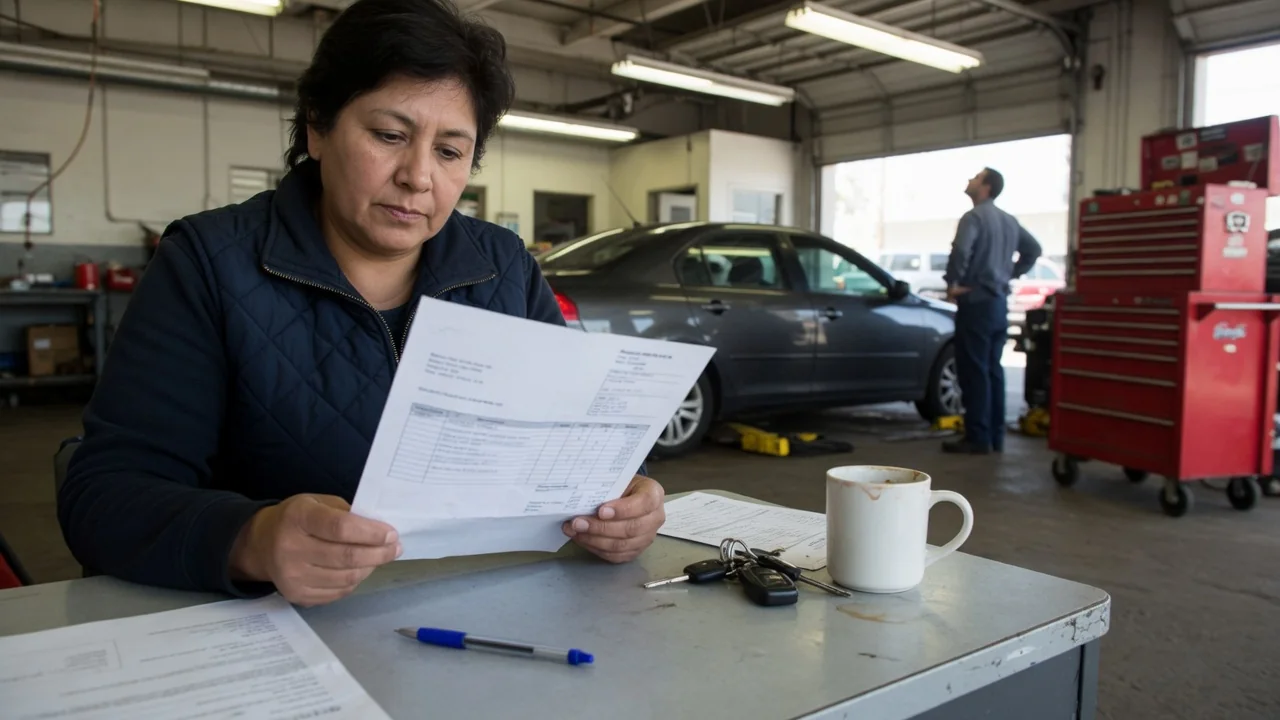
A repair bill is more than a total at the bottom of a page. Learning how to review a car repair invoice means comparing the work you authorized against the labor and parts the shop actually recorded, line by line. That comparison takes only a few minutes at the counter, and it protects both your budget and the service history of your vehicle.
Read itemization
Start with the header before the charges. The invoice should identify your vehicle by year, make, model, and usually the vehicle identification number, along with the odometer reading at drop-off. A mileage figure that is wrong can complicate later warranty claims or resale questions, so it deserves a glance. Then find the description of your original concern, often written as the customer complaint, and confirm it matches what you actually reported, such as a grinding noise when braking or a warning light.
Next, read each line of itemization separately. Parts typically appear with a description, a part number, a quantity, and a unit price, while labor appears as an operation with hours or a flat charge. A brake job, for example, might list pads, rotors, and hardware as parts and one labor operation per axle. Many shops bill labor from published time guides rather than a stopwatch, so hours may not match how long the car sat in the bay. Shop supplies, disposal fees, and taxes usually sit near the bottom.
Ask about changes
Place the written estimate or signed work order beside the final invoice and look for differences. Added lines are the most important ones to question. If you approved front brake pads and the bill also shows rotors, calipers, or a fluid flush, ask who approved the addition and when. Reputable shops normally contact the customer before exceeding an estimate, and many jurisdictions have consumer rules on that point, although the specifics vary by location, so local requirements are worth checking.
Questions about changes work best when they are specific and calm. Ask why a part was replaced rather than cleaned or adjusted, whether the component is original equipment, aftermarket, remanufactured, or used, and whether a diagnostic fee was credited toward the repair. If the invoice cites a fault code, remember that a code points to a circuit or system needing testing; it does not by itself prove a part failed. A service advisor should be able to describe which tests supported the replacement.
Retain records
Keep the final invoice, the original estimate, and any text messages or emails in which you approved additional work. Together they show what was requested, what was promised, and what was delivered. The invoice often states warranty terms for parts and labor, and a shop will usually ask for the document before honoring them. Photographing paper copies and storing them with the date and mileage in the file name makes them easy to find years later.
Organized records also pay off beyond disputes. A folder showing consistent maintenance, with dates and odometer readings, helps a future buyer trust the vehicle and helps a new technician avoid repeating recent work. If a manufacturer warranty or extended service contract applies, proof that scheduled maintenance was performed may be requested during a claim. Part numbers recorded on older invoices are useful too, because they reveal which brand of battery, tire, or brake component is on the car right now.
Everyday Use and Observations
The days after a repair offer the simplest check of whether the invoice reflects reality. If the bill lists new wiper blades, an air filter, or a battery, those items are easy to see and should look new. Fresh brake rotors are often visible through the wheel spokes, and a new tire carries visible tread depth and its own date marking. Asking for replaced parts back at the time you authorize the work, where allowed, gives a direct comparison, though some components are returned to suppliers as cores.
Pay attention to how the vehicle behaves as well. The symptom you originally described should be gone or clearly improved, whether it was a vibration, a leak spot on the driveway, or a dashboard warning. Some results take time to confirm; certain monitors need several drive cycles before a warning light's status settles, and that behavior differs among manufacturers. Note anything new, such as an unfamiliar noise or a pedal that feels different, along with the date and conditions when it occurred.
Limits and Next Steps
An invoice review has limits. Paperwork can show what was billed, but it cannot confirm that a hidden part was installed correctly or that a diagnosis was sound. Labor times, part prices, and fee structures also differ between dealerships, independent shops, and regions, so a number that looks high is not automatically wrong. Without the technician's test results, an owner usually cannot judge from the invoice alone whether an internal engine, transmission, or electrical repair was necessary.
When something does not add up, begin with the service advisor and then the manager, bringing the estimate and invoice with you. Most discrepancies turn out to be clerical errors, such as a duplicated line or a wrong quantity, and are corrected quickly. If a concern remains, a second opinion from another qualified shop can verify the work, and a local consumer protection office can explain what rights apply where you live. Continued driving with a safety-related symptom is not worth the risk while a disagreement is settled.