How to Replan a Road Trip After a Weather Change
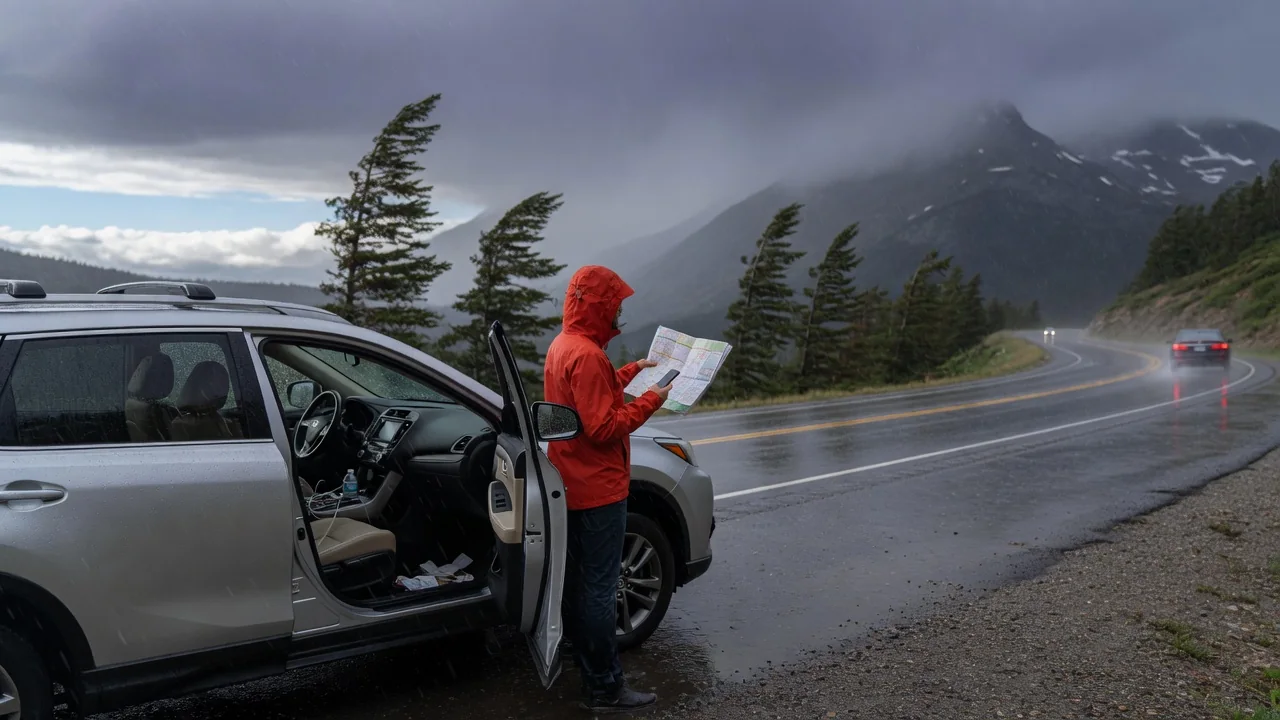
A forecast that changes after you have mapped your stops, booked rooms, and planned driving days does not have to ruin the trip. Knowing how to replan a road trip after a weather change comes down to three questions: how much the forecast has really shifted, when you should move, and whether your vehicle is ready for the conditions you will now face. Working through them in order keeps your decisions practical instead of reactive.
Forecast shift
Start by pinning down exactly what changed. Rain, snow, freezing rain, dense fog, high wind, flooding, and extreme heat each affect driving in different ways, so the type of hazard matters more than a general sense that the weather is turning bad. Also note the difference between a broad outlook and an official alert. A routine forecast update suggests a possibility, while a watch or warning from a national or regional weather service signals that forecasters see a specific, elevated risk for a defined area and time window.
Next, lay the hazard over your route segment by segment rather than looking only at your destination. Mountain passes and high-elevation stretches can see snow while the valleys below get rain. Bridges and overpasses tend to ice before the surrounding pavement because cold air reaches them from above and below. Open plains and long causeways are exposed to crosswinds, and low-lying roads near rivers or washes are the first to flood. State and provincial transportation agencies publish road condition reports, closures, and traction or chain requirements, and those reports describe the road itself, which a weather map cannot.
Finally, weigh the uncertainty. Forecasts several days out carry more error than those for the next day, and a single update can swing back. Watching the trend across several successive updates gives a clearer picture than reacting to one alarming change. If the forecast keeps moving toward worse conditions on your route, treat that consistency as a signal to act.
Timing
Once you understand the hazard, you have four basic timing choices: leave earlier to get ahead of it, wait until it passes, reroute around it, or shorten the trip. Many storm systems move through an area within a defined window, so a delay of a day or even half a day can turn a dangerous drive into an ordinary one. Pushing through to keep a schedule is usually the option with the most risk and the least margin for anything else going wrong.
Whatever you choose, assume each driving day will take longer than your navigation estimate. Lower safe speeds, longer following distances, slower traffic, and possible closures all stretch travel time. Darkness compounds poor visibility and makes it harder to judge standing water or slick patches, so it often makes sense to plan shorter legs that finish in daylight. Refuel earlier than usual, since a closure can leave you idling for a long time. If you hold lodging reservations, check their actual change and cancellation terms instead of assuming flexibility.
It also helps to set a clear go or no-go checkpoint: a specific time and a specific set of conditions under which you will continue, wait, or turn around. Share your route and expected arrival with someone who is not traveling with you, and update them if the plan changes.
Vehicle needs
Tires deserve the first look because they are the only contact between the car and a wet, snowy, or icy road. Check tread depth and look for damage or uneven wear. Tire pressure drops as temperatures fall, so recheck it when the weather turns cold, using the figure on the driver's door placard or in the owner's manual rather than the maximum printed on the sidewall. If you expect snow, consider whether your tires are suited to it and whether the area you are entering requires traction devices. Some vehicles have limited clearance for chains, so confirm what your owner's manual allows before buying or fitting them.
Beyond tires, inspect the systems the new weather will stress. Worn wiper blades and washer fluid that is not rated for freezing temperatures can leave you without a clear windshield. Cold weather is hard on a weak battery, while heat puts extra load on the cooling and air conditioning systems. Make sure all exterior lights work. Keep expectations about drivetrains realistic: all-wheel drive can help a vehicle accelerate on slippery surfaces, but it does not shorten stopping distances or add grip in a turn, and stability control and anti-lock brakes can only manage the traction the tires already have. Drive modes and traction settings differ widely between vehicles, so the owner's manual is the reliable guide to what yours offers and when to use it.
Update the emergency kit to match the forecast. Blankets, water, nonperishable food, a flashlight, a phone charger, a first-aid kit, jumper cables, and an ice scraper cover most situations. Keeping the fuel tank closer to full adds a margin if you are stuck in a closure or need to run the heater while waiting.
Practical implications and limits
A road trip weather replan often involves trade-offs that are easy to overlook. A longer route that stays on major highways may be the better choice because primary roads are typically cleared and treated before secondary ones. Navigation apps tend to optimize for travel time and may divert you onto rural roads to avoid congestion, and those roads can be less maintained, less traveled, and farther from fuel, food, and cell coverage. When conditions are poor, the fastest suggested route and the most dependable one are not always the same.
No amount of planning removes weather risk entirely. Forecasts are probabilities, and road reports can lag behind what is actually happening on the pavement. Vehicles also differ in ground clearance, tire setup, and driver-assistance features, so general advice cannot predict how a particular car will behave on a particular road. The people in the car matter too: medications, pets, and passengers who need regular breaks can make long delays harder to absorb. The most useful mindset is to treat the itinerary as a draft, accept that canceling or postponing is a legitimate outcome, and let the conditions you can verify, not the schedule you set earlier, decide when you drive.