How to Remove Wax From Car Fabric
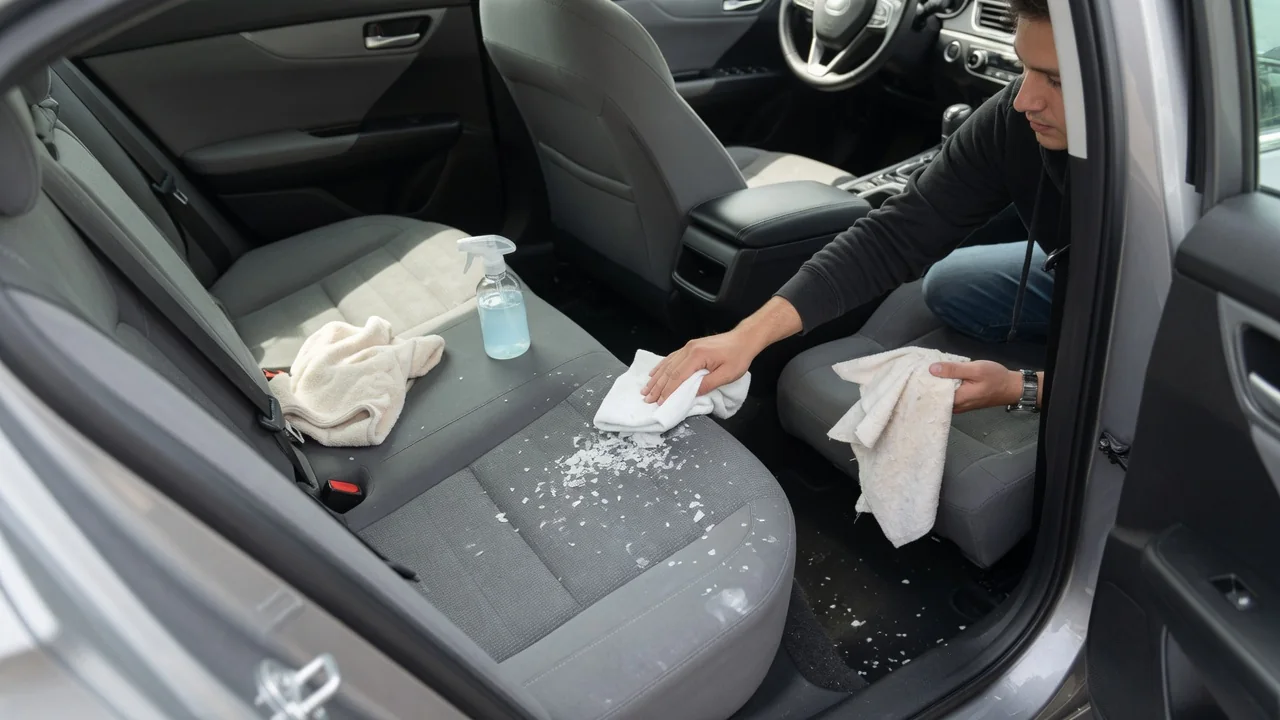
Candle wax, crayon, or a dripped air freshener can sink into seat upholstery, carpet, or a headliner and look permanent. Knowing how to remove wax from car fabric comes down to three gentle stages: firming the solid, lifting it without grinding it deeper, and treating the oily or dyed residue left behind in the fibers.
Harden
Soft wax smears. When a cabin is warm, a spill stays pliable and any attempt to wipe it pushes it between the fibers of woven seat cloth or carpet pile. Chilling the spot changes that behavior. A bag of ice cubes or a cold pack rested on the area for several minutes makes the wax brittle, so it fractures and releases instead of spreading. Keeping the ice inside a sealed bag matters, because meltwater soaking into seat foam creates a separate dampness problem.
The change is easy to see and feel. Hardened wax turns dull and opaque, loses its tacky surface, and clicks faintly when tapped with a fingernail. On a cold morning the cabin may already have done this work, while a car parked in summer sun may need longer contact and shade. Thick drips on flat-woven cloth harden quickly; thin films soaked into plush velour or deep carpet pile take more patience, since the wax surrounds individual fibers rather than sitting on top.
Lift
Once the wax is brittle, the goal is to pry it up rather than scrape it across. A dull edge such as a plastic trim tool, a spoon, or an old loyalty card slipped under the rim of the drip will usually pop larger pieces free in flakes. Working from the outside edge toward the center keeps fragments from scattering onto clean fabric. Sharp blades are a poor choice here, because a single slip can cut threads or snag a seam stitched near an airbag panel.
Loose crumbs should be vacuumed immediately, before body heat or sunlight softens them again. A soft upholstery brush used with light strokes helps dislodge specks caught between the weave. What remains varies by material: tightly woven seat cloth often gives up nearly everything, looped carpet holds small beads at the base of the pile, and headliners demand the lightest touch of all, since their fabric is bonded to a foam backing with adhesive that can separate if rubbed or pulled firmly.
Clean remaining stain
After the solid is gone, a faint greasy shadow or a tint of color usually marks the spot. This residue is wax that melted into the fibers, sometimes with dye or fragrance oil. A common approach is gentle heat transfer: plain white absorbent paper or a clean cotton cloth laid over the mark, warmed briefly with an iron on a low setting or a hair dryer, so the wax liquefies and wicks upward. The paper is shifted to a fresh area as it absorbs.
Heat deserves restraint. Many automotive fabrics are synthetic and can glaze or shrink, and seats may hide heating elements, occupancy sensors, or side airbags, so the warmth should stay low, brief, and moving. Any remaining discoloration generally responds to a fabric or upholstery cleaner applied sparingly to a cloth and blotted, never scrubbed, from the edges inward. Testing the product on a hidden patch first, such as under the seat cushion edge, shows whether the dye is stable before the visible area is treated.
Everyday Use and Observations
Wax reaches car interiors in ordinary ways. Crayons slide between seat cushions and melt on a hot afternoon, a candle softens in a shopping bag, a scented wax freshener drips from a vent, or paste wax intended for the paint falls onto the carpet during detailing. Each behaves a little differently. Crayon and colored candles carry pigment that stains, scented products leave oily fragrance residue, and paint wax may dry to a chalky haze that brushes out more readily than it melts.
Watching the spot over the following days tells whether the job is finished. A treated area that darkens again after the car sits in the sun still holds wax below the surface, which has migrated upward with the warmth. A stiff or crunchy feel points to the same thing, while a pale ring suggests cleaner residue or moisture that spread outward as it dried. Light-colored cloth shows these signs sooner than dark or patterned upholstery, where texture changes are often noticed by touch first.
Limits and Next Steps
Some situations exceed what gentle home methods can fix. Wax that soaked through to the seat foam can keep resurfacing, strongly dyed wax may leave a permanent tint, and materials such as suede-like microfiber, perforated inserts, or aged headliners can be damaged by heat or moisture. Leather and vinyl surfaces follow different rules entirely and should not be treated like cloth. The owner's manual often lists care guidance for the specific upholstery, which is worth checking before repeating any step.
When repeated careful attempts leave a visible mark, stopping is usually wiser than escalating to stronger solvents, which can dissolve backing adhesives, strip color, or leave fumes in a closed cabin. A professional detailer has extraction equipment and fabric-specific cleaners that pull residue from deeper layers with controlled moisture. Describing what the wax was, how long it sat, and what has been tried so far helps them choose a method. Removable floor mats give more freedom, since they can be treated outside the vehicle.