How to Remove Sunscreen From Car Seats
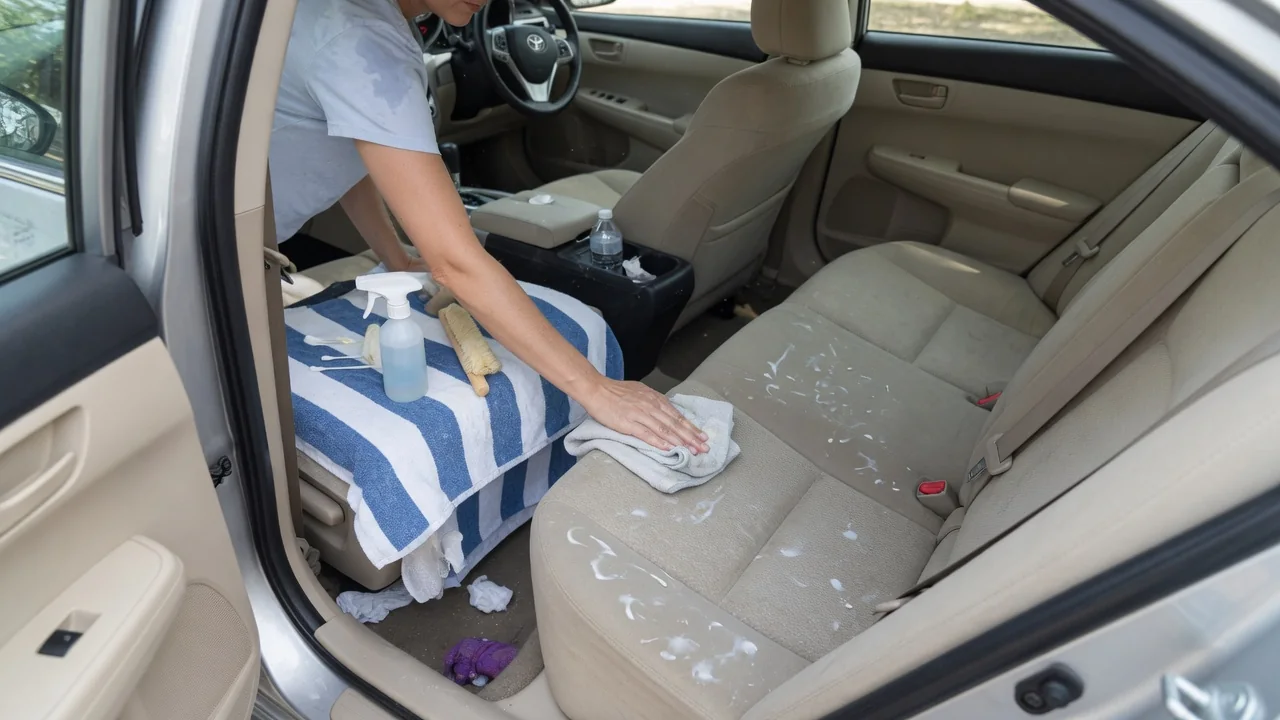
Sunscreen leaves a stubborn mark on car upholstery because it combines oils, waxes, and mineral or chemical UV filters that bond to seating surfaces. Learning how to remove sunscreen from car seats starts with knowing what the seat is made of, testing a mild cleaner in a hidden spot, and lifting the greasy film gradually instead of scrubbing it deeper.
Identify surface
Seating materials react very differently to oily residue, so the first job is working out what you are actually cleaning. Coated leather has a smooth, slightly uniform finish and a drop of water will sit on top of it. Uncoated or aniline leather darkens quickly when damp. Vinyl and synthetic leather feel cooler and more plastic-like, with a very regular grain pattern. Woven cloth and suede-like microfiber absorb lotion into the fibers, which changes how the stain has to be approached.
Many vehicles mix materials on a single seat, with leather on the center panels, vinyl on the side bolsters and seatback, and fabric or perforated inserts in between. The owner's manual or the original window sticker often names the upholstery type, and that description is more reliable than appearance alone. Perforated and ventilated seats deserve special note, because liquid can pass through the holes into the foam and any heating or cooling components beneath, so they need far less moisture than a solid panel.
Test cleaner
Before treating the visible stain, try the cleaner somewhere out of sight, such as the lower edge of the seat skirt, the back of a headrest, or the area hidden by the folded seatback. A mild, pH-balanced interior cleaner or a small amount of gentle dish soap diluted in water is a sensible starting point for cutting oil. Apply it to a white microfiber cloth instead of directly to the seat, then dab the test area and let it dry completely.
Checking the cloth and the surface tells you whether to continue. Dye transferring onto the white cloth, a dull or shiny patch, a tacky feel, or a ring of darker color all suggest the product is too strong or the material is more delicate than assumed. Harsh solvents, bleach-based products, and strong all-purpose degreasers can strip protective topcoats from leather and dry out vinyl. Manufacturer care guidance varies, so the upholstery section of the owner's manual is worth reading before choosing anything stronger.
Remove residue
Fresh lotion should be lifted, not rubbed. Blotting with a dry microfiber cloth or scooping thicker deposits with the edge of a plastic card removes the bulk before any cleaner touches it. On cloth seats, a light dusting of an absorbent powder such as cornstarch or baking soda can draw oil out of the fibers, and it is then vacuumed away. After that, a cloth dampened with the tested cleaner is worked from the outside of the mark toward the center so the stain does not spread.
Gentle degreasing works best in several light passes with fresh sections of cloth, since a saturated cloth simply redeposits the oil. A soft-bristled brush can help on textured grain or woven fabric, used with very little pressure. Wiping afterward with a cloth dampened in plain water removes cleaner residue that would otherwise attract dirt, and the area should then dry naturally with the doors or windows open. On leather, a compatible conditioner applied after drying helps replace moisture lost during cleaning.
Everyday Use and Observations
Sunscreen marks tend to appear where bare skin touches the car: seat bolsters, the backs of thighs on the cushion, headrests, armrests, and door panels. On dark upholstery they usually show as chalky white smears, especially from mineral formulas containing zinc oxide or titanium dioxide. On light upholstery the same residue can look yellowish or greasy and gathers dust over time. Heat makes the problem worse, because a cabin parked in the sun softens the lotion and helps it migrate into the surface.
Simple habits reduce how often a deep clean is needed. Letting sunscreen absorb into the skin before getting in, sitting on a towel or a washable seat cover after the beach or pool, and wiping contact areas with a damp microfiber cloth at the end of the day all keep the film from building up. Child seats and the upholstery beneath them are common trouble spots, and their covers have separate care instructions from the car's own seats that should be followed.
Limits and Next Steps
Some marks will not come out with household-level cleaning. Residue that has baked in over a hot summer can leave a lasting shadow, and certain chemical UV filters are known to discolor light-colored finishes or soften the protective coating on leather and vinyl. If the surface itself looks faded, cracked, or sticky after the lotion is gone, the damage is to the finish and further scrubbing will only make it worse. Repeated aggressive cleaning is a more common cause of worn patches than the original stain.
When gentle methods stall, stopping is the better choice. A professional detailer or upholstery specialist can identify the material accurately, use extraction equipment on fabric, or refinish and recolor a damaged leather panel. It is also wise to be careful around seat-mounted airbag seams, occupancy sensors, and heating elements, which should never be soaked. For vehicles under warranty or with specialty upholstery, the dealer can confirm which products the manufacturer approves before anything stronger is tried.