How to Remove Pollen From a Car Safely
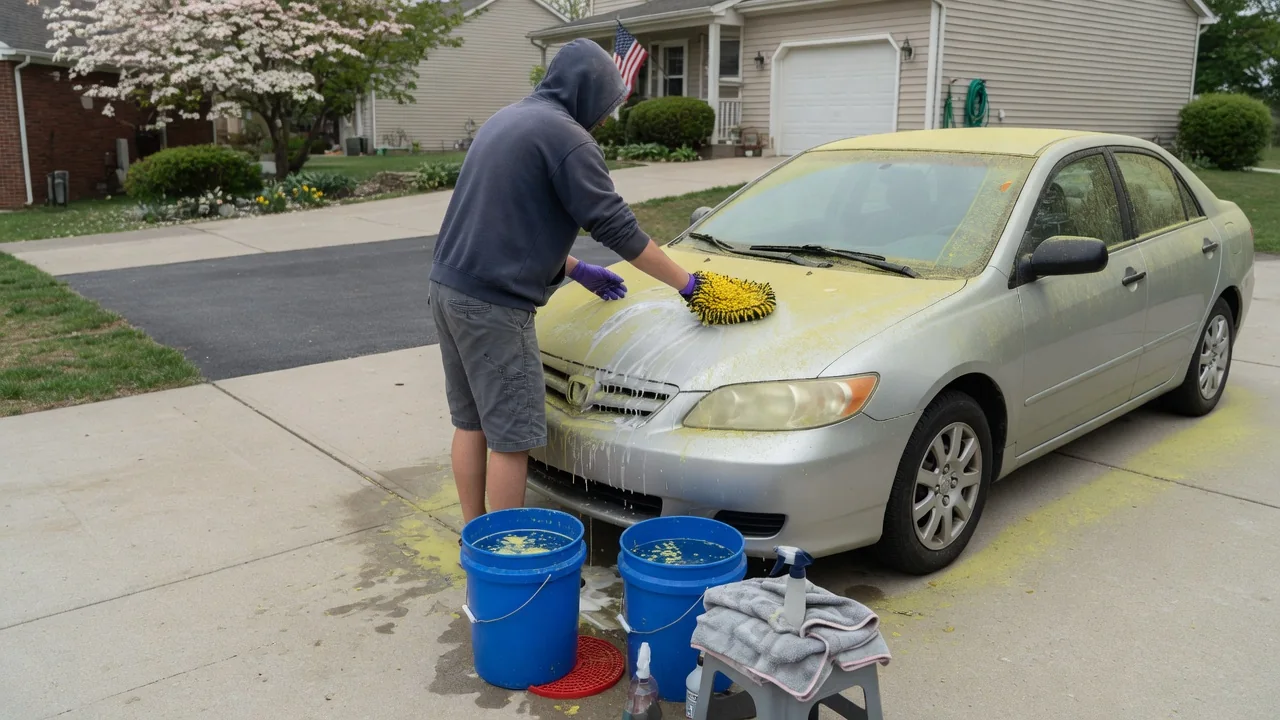
A yellow-green film on the hood every spring looks harmless, but pollen grains are tougher than they appear. Knowing how to remove pollen from a car safely comes down to one idea: float the dust away with water and lubrication instead of dragging it across the clear coat. Dry wiping is where most of the fine scratches begin.
Rinse first
Pollen grains have hard, textured outer shells, and many types carry tiny spines or ridges that help them cling to surfaces. They also rarely land alone; road dust, grit and fine sand settle into the same layer. When a dry towel or a hand sweeps across the hood, those particles get trapped between the cloth and the clear coat and are pushed along under pressure. The result is a pattern of fine swirl marks that shows up most clearly in direct sunlight on dark paint.
A thorough rinse removes most of that loose material before anything touches the finish. Start at the roof and let the water run down, giving extra attention to the cowl below the windshield, the trunk seams, mirror housings and window channels where pollen collects in thick lines. A garden hose with a gentle fan pattern is enough; a pressure washer works if it is kept at a sensible distance. You should see yellow runoff streaming off the panels, and the color fading as the rinse continues.
Wash surface
Rinsing leaves behind a thin film that sticks because pollen carries a slightly tacky coating, especially after dew or light rain has wet and dried it. A pH-balanced car shampoo provides the lubrication needed to release that film. Use a clean microfiber wash mitt, work in straight overlapping passes from the top down, and rinse the mitt often in a separate bucket of clean water so collected grit does not go back onto the paint. Dish detergent is a poor substitute because it can strip wax protection.
Light pressure matters more than scrubbing. If a section still feels gritty under the mitt, rinse it again instead of pressing harder. Wash in the shade when possible, since soap drying on warm panels leaves spots that tempt extra wiping. Dry with a plush microfiber drying towel, blotting or pulling it gently across the surface, or use a blower if you have one. Finishes vary: soft clear coats, matte paint and vinyl wraps mark more easily, so follow the care guidance for your specific vehicle.
Cabin filter check
Pollen does not stay outside. The ventilation system draws outside air through an intake near the base of the windshield, and on most modern vehicles a cabin air filter traps dust and pollen before the air reaches the vents. During heavy pollen season that filter loads up faster than usual. Signs you may notice include weaker airflow from the vents, a musty smell when the fan starts, windows that fog more easily, or a fine yellow dust settling on the dashboard shortly after cleaning.
Filter location differs by vehicle; many sit behind the glove box, others are under the hood near the cowl or beneath the dashboard, and some older models have no filter at all. The owner's manual shows where it is and how often the manufacturer suggests inspecting it. A filter that looks gray, matted or packed with debris is ready for replacement. Inside the cabin the same scratch logic applies: dry-rubbing dusty piano-black trim, instrument lenses or touchscreens leaves hairline marks, so use a slightly damp microfiber cloth.
Everyday Use and Observations
Between washes, the temptation is to brush the hood with a sleeve, a dry duster or a few swipes of a towel at the fuel station. Each of those moves does the same thing: it slides abrasive particles across the finish. Running the wipers on a dry, pollen-coated windshield is a similar mistake, since the blades grind the dust against the glass and wear their own rubber edges. Use plenty of washer fluid first, or rinse the glass before the wipers move.
Parking habits change how quickly the layer builds. A garage or a spot away from flowering trees helps, while a car cover put on over a dusty car can rub pollen into the paint as it shifts in the wind. A coat of wax, sealant or ceramic coating makes the surface slicker, so pollen releases more easily during a rinse. Watch how water behaves: tight beads and fast sheeting suggest protection is intact, while flat, clinging water hints that it is time to reapply.
Limits and Next Steps
Careful washing prevents new damage, but it cannot undo marks already in the clear coat. Swirls from earlier dry wiping usually need machine polishing to reduce, and that removes a small amount of clear coat, so it is worth leaving to a detailer if you are unsure. Pollen left sitting through repeated rain and sun can also leave faint stains, particularly on white or light paint, because moisture can release mildly acidic compounds from the grains. A clay bar or dedicated cleaner may help, used with ample lubricant.
When water is restricted or you live in an apartment, a rinseless wash product with several clean microfiber towels is a reasonable middle path for light dust, though a heavy yellow layer still calls for a real rinse at a self-serve bay. Touchless automatic washes avoid brushes but may leave some film. During peak season, washing more frequently is easier on the paint than letting layers accumulate. If stains, rough texture or reduced airflow persist after these steps, a professional detailer or service shop can assess the vehicle directly.