How to Remove Leaves From a Car Without Scratching It
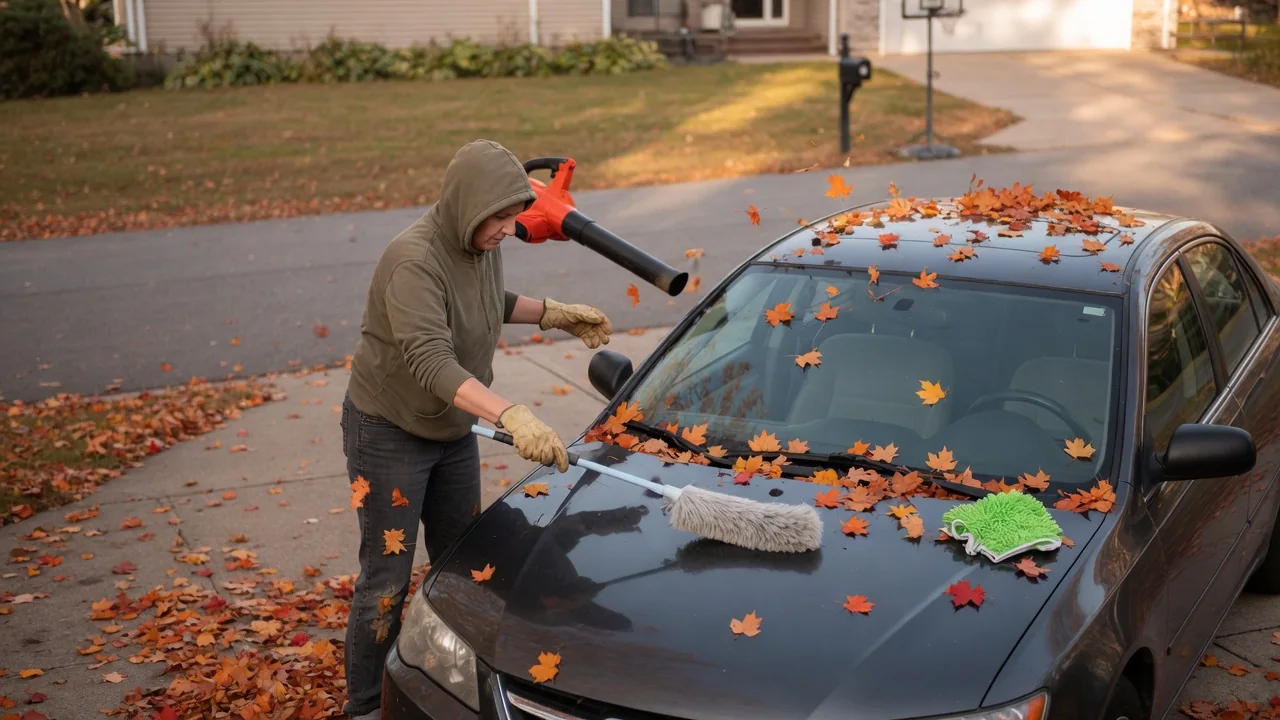
Fallen leaves look harmless, but they trap grit, hold moisture, and collect in the seams and cowl area where water is supposed to drain. Knowing how to remove leaves from a car without scratching it comes down to lifting rather than dragging, letting water do the heavy work, and keeping the drainage paths open. The approach below favors patience over pressure at every step.
Lift loose leaves
Dry leaves resting on the hood, roof, or trunk lid are best picked up by hand rather than swept off. A leaf itself is soft, but the dust and sand sitting beneath it act like a fine abrasive when dragged across clear coat. Pinch each leaf or small cluster and lift straight up, working from the highest panel downward. Dry brushing with a glove, towel, or stiff broom pushes that trapped grit along the paint and leaves faint linear marks that show up later in direct sunlight.
Seams and the cowl need a gentler touch still. The cowl is the grille or plastic panel at the base of the windshield, and leaves wedge under the wiper arms, along the rear edge of the hood, and in the trunk and door channels. Open the hood or trunk to reach them from above instead of digging through the gap. Fingers, a soft detailing brush, or low-pressure air from a blower can coax debris out. Layout varies, so some vehicles hide the cowl beneath the hood edge while others expose it fully.
Rinse
Once the loose material is gone, a thorough rinse carries away what fingers cannot safely touch. Wet leaves often stick flat to the paint, and peeling them off dry can pull grit across the surface. A steady flow from a garden hose softens them and floats fine particles off before any wash mitt makes contact. Start at the roof and let water sheet downward, so dirt travels off the car rather than across clean panels. Soaking stuck leaves for a minute usually releases them with no rubbing.
Around seams and the cowl, moderate water flow is wiser than a concentrated blast. A pressure washer held close can force debris deeper into channels, lift weatherstripping, or push water toward the cabin air intake that many vehicles place in the cowl area. Angle the stream so it flushes debris outward and away from openings. If leaves leave brownish outlines behind, those are tannin stains, which generally respond better to a proper wash with car shampoo than to harder scrubbing on that spot.
Check drains
Every vehicle relies on small drain passages to move rainwater away from the cowl, sunroof tray, door bottoms, and trunk channels. Leaves, seeds, and pine needles break down into a wet mulch that blocks these outlets. While rinsing, watch where the water goes: it should run out freely beneath the car, typically behind the front wheels or along the rocker area. Water that pools at the base of the windshield or drains slowly suggests a partial blockage worth investigating before the next heavy rain.
Clearing visible debris from the drain openings by hand is usually enough, and a gentle stream of water confirms the path is open. Avoid forcing rigid wire or high-pressure air into a drain tube, since tubes can disconnect or puncture inside the body where they are hard to reach. Drain locations and designs differ considerably between makes, and sunroof drains in particular run through the roof pillars. The owner's manual or a service professional can confirm where they sit on a specific vehicle.
Everyday Use and Observations
Habits matter more than any single cleaning session. Leaves left on paint for days hold moisture against the finish, and their tannins and sap can etch or stain clear coat, particularly on lighter colors. Clearing them every day or two during the fall season keeps removal simple and dry. Parking away from overhanging trees helps, and a fitted, clean car cover is useful for longer stays, provided the paint underneath is clean when the cover goes on, since a cover can rub grit too.
A few signs inside the car hint that debris has been building where it cannot be seen. A musty smell from the vents, fogging windows, damp carpet in the front footwells, or a sloshing sound from the doors after rain can all point to trapped water. Reduced airflow from the climate system may mean leaf fragments have reached the cabin air filter, on vehicles equipped with one. Lifting the hood occasionally and glancing along the cowl takes seconds and catches most buildup early.
Limits and Next Steps
Careful hand removal and rinsing handle most situations, but some problems sit beyond a driveway cleanup. Stains that remain after washing may need a clay bar treatment or light polishing, and working on paint with abrasive products carries its own risk of thinning the clear coat. Existing swirl marks will not disappear with gentler leaf removal; they only stop multiplying. A professional detailer can judge whether a mark is on the surface or etched into the finish and choose an appropriate correction.
Drainage problems also have a ceiling for do-it-yourself work. If water continues to pool after visible debris is cleared, or moisture appears inside the cabin, the blockage is likely deeper in a tube or behind trim, and a shop is better placed to reach it without damaging clips, seals, or nearby wiring. Removing cowl panels varies in difficulty by vehicle and may involve the wiper arms. Once everything flows freely, a coat of wax or sealant helps future leaves release with less contact.