How to Remove Grease From a Car Door Panel
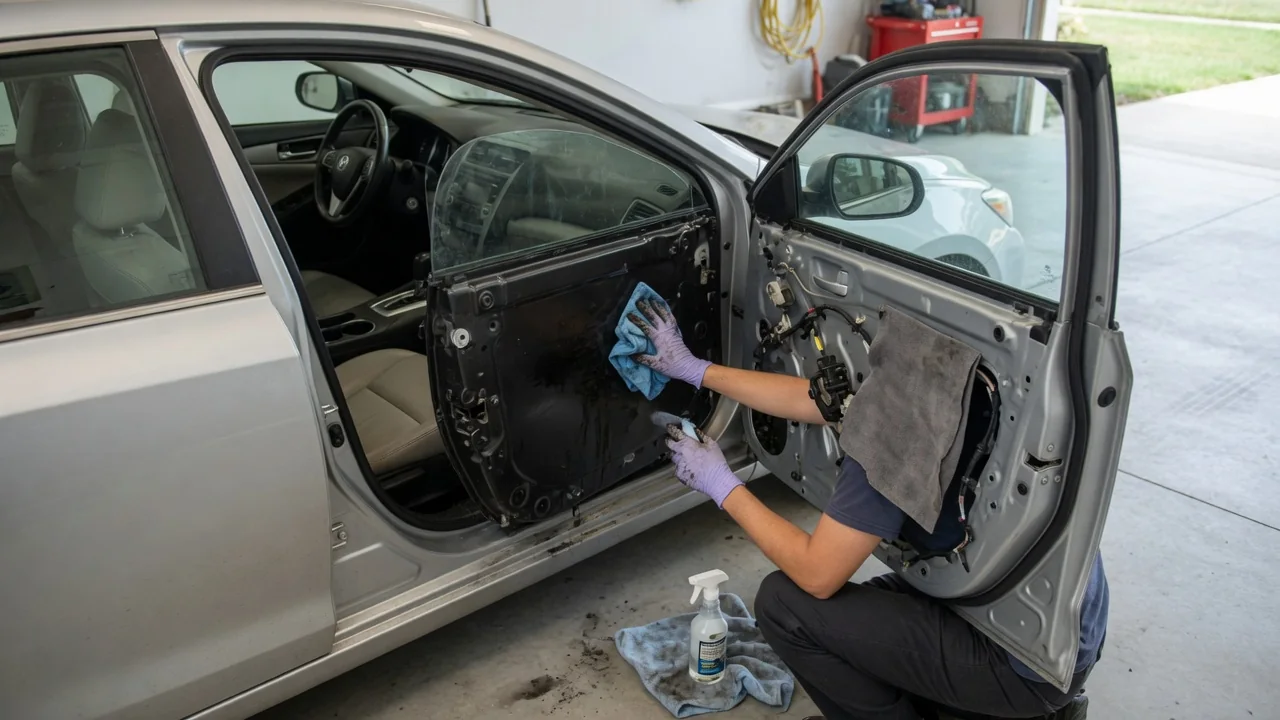
Grease on a door panel usually arrives from a hand that just touched a hinge, latch, or window track, and the first instinct to wipe it is what turns a small spot into a wide smear. Learning how to remove grease from a car door panel comes down to lifting the oil off the surface rather than pushing it across vinyl, plastic, fabric, or leather.
Blot
Blotting works because grease is a thick, sticky film that sits on top of the surface before it migrates into grain, stitching, or fabric weave. Pressing a clean, dry microfiber cloth or paper towel straight down onto the spot lets the fibers absorb the oil. Lifting the cloth straight up, then moving to a fresh section before pressing again, keeps the lifted residue from being redeposited. Any sideways rubbing at this stage drags the oil outward and thins it into a larger, harder-to-see film.
On a textured plastic armrest, you will often see the dark blob shrink with each press while a faint shiny halo remains in the grain. On cloth inserts, the spot may look smaller but darker as the oil wicks into the fibers, which is a sign to keep blotting from the outer edge toward the center. Heavy deposits of hinge or latch grease can be lifted first with the edge of a plastic card, scooping gently upward instead of scraping across the panel.
Mild cleaner
Once the bulk is lifted, a mild cleaner breaks the remaining film so it can be picked up instead of smeared. A few drops of gentle dish soap in warm water, or an interior cleaner labeled for the material in question, is usually enough because both contain surfactants that surround oil and loosen its grip. Apply the solution to the cloth rather than spraying the panel directly, which keeps liquid away from window switches, speaker grilles, and the seams where moisture can seep behind the trim.
Work in short, light passes from the clean area inward, turning the cloth often so the oily section never touches the panel twice. A soft detailing brush helps on deep grain or stitched seams, where residue hides below the surface the cloth reaches. Materials differ between vehicles and even between trim levels, so test the cleaner on a hidden spot first. Leather, suede-like microfiber, and soft-touch coatings can dull, darken, or become tacky with strong degreasers, solvents, or hard scrubbing.
Rinse and dry
Cleaner left on the panel is a problem of its own, because dried soap film attracts dust and can leave a blotchy patch that looks like the stain never left. Rinsing here means wiping with a separate cloth dampened in plain water and wrung out well, not running water over the door. Several light passes with fresh sections of cloth carry away both the loosened grease and the surfactant, and the surface should stop feeling slick or soapy under a fingertip when the residue is gone.
Drying finishes the job and reveals the true result. Pat hard plastic and vinyl with a dry microfiber towel, and press a dry towel firmly into fabric or carpeted lower sections to pull moisture out rather than leaving it to soak toward the padding. Leaving the door open in a shaded, ventilated spot helps the panel air out evenly. Wet material often looks darker than it will once dry, so judge whether a second cleaning round is needed only after the area has dried completely.
Everyday Use and Observations
Knowing where the grease comes from helps keep it from returning. Door hinges, check straps, latches, and strikers are lubricated at the factory and during service, and a sleeve, glove, or seat belt that brushes those parts can carry the lubricant onto the panel. Window regulator grease can occasionally creep past the belt molding at the top of the door, and hands that just handled food, sunscreen, or tools leave similar oily marks on armrests and pull handles, which are the areas touched most often.
Viewing the panel at a low angle in daylight makes leftover film easy to spot, since oily patches show up as glossy areas against a matte finish or as dark shadows on cloth. A spot that reappears after cleaning often points to residue wicking back up from deeper in the fabric or to a nearby source that keeps transferring. Keeping a clean microfiber cloth in the door pocket or glovebox makes it practical to blot a fresh mark right away, before heat and time let the oil settle further into the material.
Limits and Next Steps
Home cleaning has limits, and they depend largely on the material and how long the grease has been there. Oil that has soaked into light-colored cloth, perforated leather, or suede-like trim may leave a shadow even after careful work, and repeated aggressive attempts can do more visible harm than the original mark. Fading color on the cloth, a sticky or shiny patch on soft-touch plastic, or roughened texture are signs to stop, since the finish itself is being affected rather than the stain.
When a stain persists, a professional detailer has material-specific cleaners and extraction equipment that pull oil out of fabric and padding without soaking the door's electronics. The owner's manual is the best reference for what the manufacturer recommends on that particular interior, because care guidance varies between vehicles and upholstery types. If grease keeps showing up in the same place, having a shop look at the hinge, latch, or window mechanism for excess or migrating lubricant addresses the cause instead of repeating the cleanup.