How to Remove Bird Droppings From Car Paint
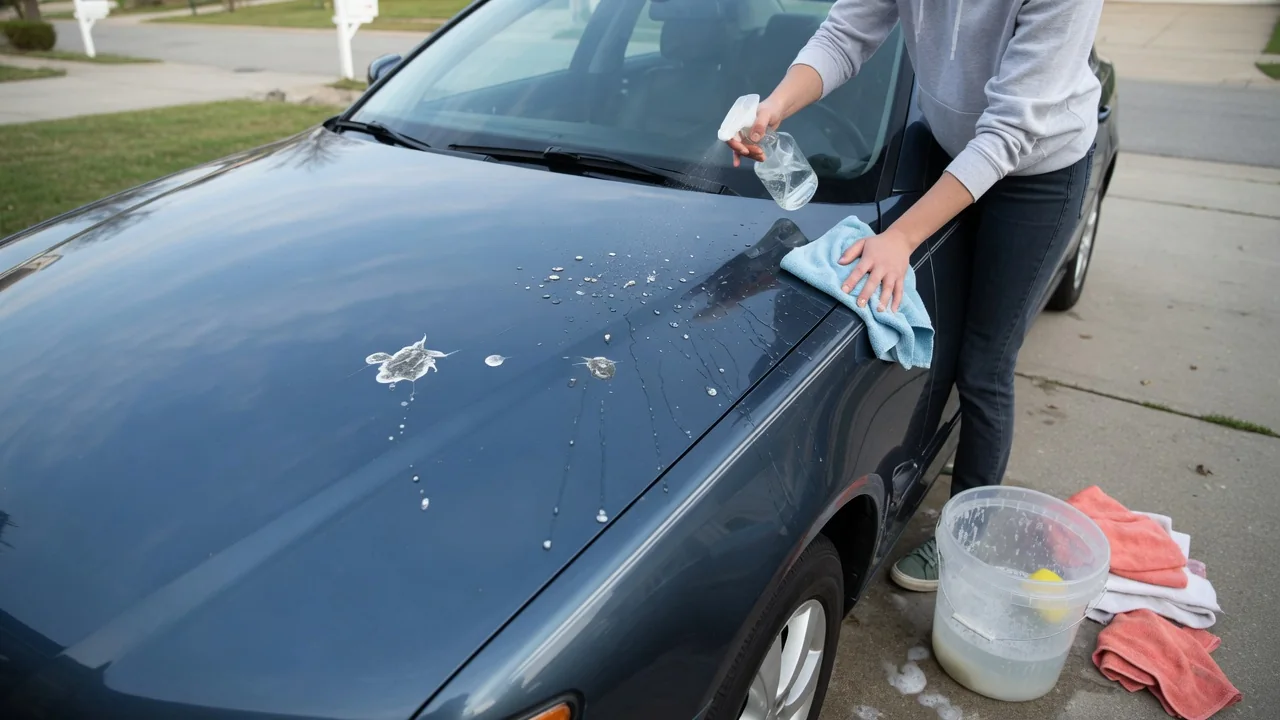
Knowing how to remove bird droppings from car paint comes down to two things: acting promptly and touching the surface as gently as possible. Droppings combine acidic waste with grit and seed fragments, so they can both etch clear coat and scratch it if wiped dry. This guide explains how to soften, lift, and inspect the area without turning a small mess into lasting damage.
Soften residue
A fresh dropping is mostly moisture and wipes away with little effort, but a few hours of sun can turn it into a hard crust bonded to the clear coat. Rubbing that crust drags its gritty contents across the finish. The safer approach is to rehydrate it first. A microfiber towel soaked in clean water or a dedicated quick detailer, laid over the spot for several minutes, lets liquid work back into the deposit until it loosens its grip on the paint.
You can see softening happen: the chalky white edge darkens, the deposit swells slightly, and its outline begins to blur into the wet towel. Thick or layered deposits, common under trees and power lines, may need a second soak. Heat matters as well. A dark hood parked in direct sun dries the towel quickly and speeds the chemical attack, so moving into shade or rewetting the cloth helps. Matte finishes and vinyl wraps follow the same principle, though their care products differ by manufacturer.
Lift without scratching
Once the deposit is soft, the goal is to carry it away from the surface rather than push it along. Fold a clean, plush microfiber towel, pinch gently around the softened mass, and lift upward so the bulk comes off in the cloth. Any remaining film can be wiped with light, straight passes using a fresh side of the towel and plenty of lubricating spray. Pressure is the enemy here; the liquid and the fibers should do the work.
Scratching usually comes from shortcuts. Paper napkins, a dry sleeve, or a gas station squeegee trap seed husks and sand against the clear coat and leave fine hairline marks that show in sunlight. Fingernails and plastic scrapers concentrate force on one point. If the residue resists, it needs more soaking, not more effort. Vehicles with ceramic coatings, wax, or paint protection film often release droppings more easily, while soft or single-stage paints found on some older cars mark more readily and deserve extra care.
Inspect finish
After the area is clean and dry, look at it under good light from a low angle. Healthy paint reflects evenly, with nothing interrupting the gloss. Etching appears as a dull patch, a faint ring matching the dropping's outline, or a slightly wrinkled texture. These marks are generally attributed to acidic contents attacking the finish while heat softens the clear coat, which can then set around the hardened deposit as the panel cools. Washing alone will not remove that impression.
Running a clean fingertip lightly over the spot adds useful information. A mark that looks cloudy but feels perfectly smooth is often shallow staining in the protective layer or the very top of the clear coat. One that catches or feels dimpled suggests deeper etching. Color influences what you notice: black and dark blue panels reveal faint blemishes immediately, while white and silver hide them until the light is right. Horizontal surfaces such as the hood, roof, and trunk lid deserve the closest look.
Everyday Use and Observations
In daily driving, prevention is mostly habit. Keeping a small bottle of quick detailer and a couple of clean microfiber towels in the trunk means a dropping found at lunchtime can be handled before the afternoon sun bakes it. A glance over the car when refueling or returning to a parking spot catches most hits early. Deposits on glass are less urgent than those on paint, yet they still deserve softening first to protect wiper blades and surrounding trim.
Patterns become obvious over time. Parking beneath trees, light poles, or building ledges produces repeated strikes in the same areas, and summer heat shortens the window before marks appear, whereas cool, overcast weather is more forgiving. Owners also notice that a freshly waxed or sealed surface lets residue slide off with far less soaking. That sacrificial layer does not make paint immune, but it buys time, and how long it lasts depends on the product, the climate, and how often the vehicle is washed.
Limits and Next Steps
Gentle cleaning removes the contamination, but it cannot reverse damage that has already occurred. Light etching sometimes fades with a mild polish that levels the surrounding clear coat by a tiny amount, and many owners manage this by hand. Clear coat is thin, however, and its thickness varies between manufacturers, models, and even repainted panels, so aggressive compounding risks removing more than the finish can spare. Repeated polishing of the same spot carries the same concern.
When a mark remains visible after careful polishing, feels rough, or shows cracking or discoloration, a professional detailer or body shop can measure the paint and advise whether machine correction, wet sanding, or refinishing is realistic. Wrapped, matte, and film-protected vehicles should be assessed according to the material maker's guidance, since conventional polishing can alter their appearance. Once the area is sound, renewing wax, sealant, or coating protection restores the barrier that makes the next cleanup quicker and less risky.